A visitor browsing a specialty coffee shop notices the same stainless steel machine behind every third counter — the brushed housing, the integrated grinder, the confident hiss of steam. That machine is almost always a Breville. The full Breville company history makes that ubiquity easier to understand: this is a brand built on nearly a century of iterative engineering, starting not in a café but in a radio workshop. For anyone serious about the coffee culture that now defines home espresso, understanding where Breville came from sheds light on why its products perform the way they do.
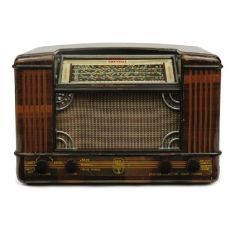
Breville was founded in Sydney, Australia in 1932 by Bill O'Brien and Harry Norville. The brand name blends elements of both surnames with a French patent-derived syllable. Early products centered on consumer electronics — radios, toasters, sandwich presses — built for practical everyday use. That foundational commitment to solving real kitchen problems never left the company's design philosophy, and it carried directly into Breville's later dominance of the premium home appliance market.
The company operates under the Sage brand across the United Kingdom and much of Europe, a licensing arrangement necessitated by an existing trademark conflict. Identical engineering. Different name. The same product lineup that earns consistent praise in North America reaches European home baristas through Sage, reflecting a global expansion strategy built on substance rather than branding shortcuts. Breville products now reach consumers in more than 70 countries, anchored by a reputation for thoughtful innovation and long-term reliability.
Contents
Breville Company History: From Radio Workshop to Kitchen Icon
The Founding Decades
The Breville company history begins in Depression-era Sydney, where two entrepreneurs identified opportunity in consumer electronics. Bill O'Brien and Harry Norville launched Breville in 1932, initially producing radios for Australian households. The company name — a portmanteau of "Norville" with a borrowed French syllable for patent — reflected ambitions beyond the local market from the very beginning. According to the Breville entry on Wikipedia, the company expanded its electronics lineup through the postwar period before pivoting decisively toward kitchen appliances.
The sandwich toaster changed everything. Introduced in the 1970s, it sold millions of units across Australia and the United Kingdom, funding subsequent investments in premium appliance engineering. That single product demonstrated Breville's core competency: identifying a common kitchen task and building a dedicated tool that outperformed improvised alternatives. The same principle applies directly to every espresso machine and grinder the company produces today.
- 1932 — Breville founded in Sydney, Australia
- 1970s — Sandwich toaster becomes a global bestseller, funds appliance pivot
- 1980s — Expansion into juice extractors, food processors, and toasters
- 1990s — Growing North American and Asian distribution networks
- 2001 — Breville Group acquired by Premier Investments (Solomon Lew)
Strategic Global Expansion
Breville's international growth followed a careful, market-by-market approach rather than a simultaneous global push. In North America, the brand launched under its own name. The Sage brand in the UK and Europe addressed trademark conflicts without abandoning the engineering investment already made. This dual-identity strategy allowed Breville to compete in mature markets without rebuilding brand equity from scratch in each region.
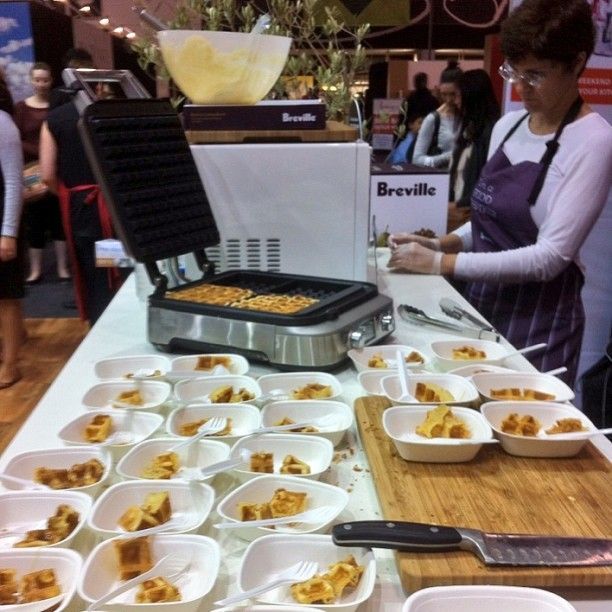
The strategic decision to partner with professional chefs, food personalities, and culinary educators — rather than relying solely on retail shelf presence — gave Breville visibility in contexts where serious cooks actually pay attention. That approach built credibility over time and positioned the brand as a genuine partner to food and coffee professionals, not just another appliance maker competing on price.
The Engineering Standards That Define Every Breville Product
Built for Longevity
Breville's engineering philosophy centers on a clear premise: appliances should perform at a professional level for home users. This means tighter manufacturing tolerances, better materials, and more rigorous testing than most kitchen appliance brands invest in. Die-cast zinc housings, brushed stainless steel finishes, and commercial-grade heating elements all trace back to a deliberate decision to build for the long term. Home baristas who invest in a Breville espresso machine typically keep it for many years — a retention rate that warranties alone cannot explain.
Maintenance accessibility reinforces that durability commitment. Descaling cycles are programmable, filter baskets remove cleanly, and replacement parts are widely stocked by third-party retailers. Breville designs its machines with the assumption that users will actually maintain them — and then makes that maintenance straightforward enough that most people follow through.
A Culture of Continuous Innovation
Breville holds hundreds of patents across its product categories. R&D investment focuses heavily on thermal management (precise temperature control is non-negotiable for quality espresso), motor engineering for grinders, and user interface clarity. The Barista Express — arguably Breville's most recognized machine — integrates a conical burr grinder directly into the machine body, a design that required years of refinement to execute without compromising either the grinder or the espresso system. That kind of integration signals a company willing to solve genuinely hard engineering problems rather than chasing incremental spec improvements.
Breville Coffee Equipment in Real-World Use
Espresso Machines That Perform
Home baristas who switch to Breville equipment report a consistent observation: the gap between home and café results narrows dramatically. The Barista Pro, Barista Express, and Oracle Touch occupy different price points but share a common engineering standard — PID temperature control, adequate pump pressure, and a steam wand capable of producing true microfoam. The Breville Nespresso Creatista Plus demonstrates how the company applies those same standards even to capsule-based systems, producing steamed milk quality that rivals semi-automatic machines at higher price points.
A dedicated bottomless portafilter makes espresso diagnosis considerably easier, and Breville's compatibility with aftermarket accessories exceeds most competitors in its price range. The guide on why a bottomless portafilter matters for Breville machines explains the practical benefits for users ready to refine their extraction technique beyond the basics.
Grinders That Match the Machine
Breville's standalone grinder lineup — the Smart Grinder Pro and Dose Control Pro — offers conical burr grinding at price points that pair naturally with the company's espresso machines. These grinders are calibrated for espresso-fine grind precision, with enough range to cover pour-over and French press. For a broader view of what the conical burr market offers, the best conical burr coffee grinder reviews cover competing options at similar price points.
Grinder selection has a larger effect on espresso quality than most beginners anticipate. The detailed comparison between blade grinders and burr grinders clarifies why Breville's burr designs justify the price premium — and why pairing a quality burr grinder with any Breville espresso machine produces measurably better results than using a blade grinder with the same setup.
The Breville Product Portfolio at a Glance
Beyond Coffee: A Full Kitchen Range
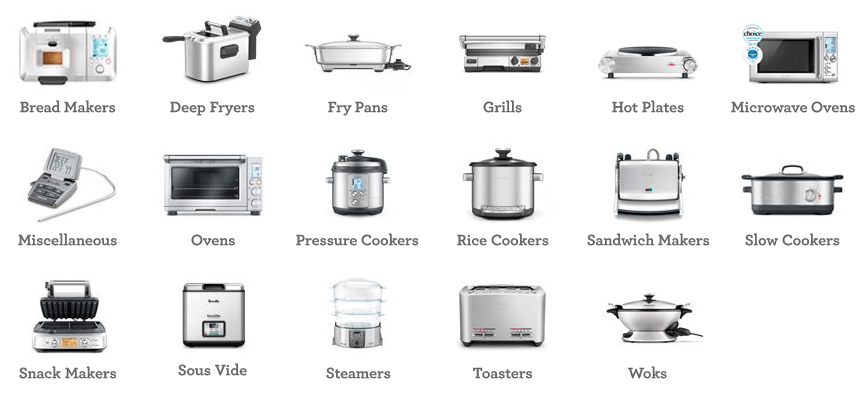
While Breville's coffee equipment earns the most attention in enthusiast communities, the company's portfolio spans several major kitchen categories. Blenders, food processors, air fryers, and ovens all carry the same engineering standards applied to the espresso line. For home setups where counter space is limited, building around a single brand provides consistent build quality and a coherent design language across multiple appliances.
| Product Category | Notable Models | Key Differentiator |
|---|---|---|
| Espresso Machines | Barista Express, Oracle Touch, Barista Pro | PID temperature control, optional grinder integration |
| Coffee Grinders | Smart Grinder Pro, Dose Control Pro | Conical burr, 60 grind settings |
| Drip Coffee | Precision Brewer | SCA-certified brew temperature and timing |
| Blenders | Super Q, Fresh & Furious | High-torque motor, noise-suppression enclosure |
| Air Fryers / Ovens | Smart Oven Air Fryer Pro | Element IQ adaptive heat distribution |
| Juicers | Juice Fountain Cold | Cold-spin technology, wide chute feed |
Specialty Coffee Gear Worth Knowing
Beyond espresso, Breville's Precision Brewer produces drip coffee certified by the Specialty Coffee Association for achieving proper brew temperature and water contact time. For households that prioritize both espresso and drip, it delivers café-grade results in a home-friendly footprint. Machine quality only goes so far — pairing any Breville setup with well-sourced beans makes the real difference. The guide to best Arabica coffee beans covers the selection decisions that affect extraction most at the cup level.

Breville also launched Food Thinkers, a content and community platform designed to connect the brand with professional chefs, culinary educators, and food bloggers. The initiative reflects a broader brand philosophy: positioning Breville as a partner to people who take cooking and coffee seriously, not simply an appliance company competing on specification sheets. Food Thinkers became an early model for brand-as-content-publisher in the kitchen appliance category.
Key Facts Every Buyer Should Know Before Choosing Breville
Understanding the Value Proposition
Breville occupies the mid-to-premium segment of the kitchen appliance market. Machines are priced above mass-market alternatives but below professional commercial equipment. That positioning is intentional: Breville targets home users who want professional results without commercial complexity. For espresso specifically, the brand delivers an exceptional performance-per-dollar ratio within its price tier — a claim supported by consistent independent test results and high long-term owner retention.
Competitors like De'Longhi and Jura exist in the same space with distinct engineering philosophies. Breville's edge lies in grinder integration quality, interface clarity, and the depth of aftermarket support available through third-party retailers. For buyers comparing grinder options independently, the best burr coffee grinders under $200 provides useful context on where Breville standalone grinders sit relative to competing brands at similar price points.
Making the Right Choice for the Home Setup
Selecting the right Breville machine depends on three variables: counter space, daily volume, and desired control level. The Barista Express suits users who want an all-in-one solution with minimal footprint. The Oracle Touch serves home baristas who want automation without sacrificing extraction quality. The Dual Boiler serves users ready for full manual control and simultaneous brew and steam capability.
- Beginners: Barista Express or Bambino Plus — manageable learning curve, fully capable output
- Intermediate users: Barista Pro — faster heat-up, improved grinder interface
- Advanced home baristas: Dual Boiler or Oracle — professional-level control and simultaneous boiler operation
- Capsule users: Creatista series — Nespresso pod compatibility with Breville-quality steam
For espresso-focused buyers adding a standalone grinder to any Breville machine, a purpose-built espresso grinder consistently outperforms the built-in options on entry-level models and produces more consistent puck preparation across brew sessions.
Frequently Asked Questions
Where is Breville headquartered?
Breville is headquartered in Sydney, Australia, where the company was founded in 1932. Global R&D operations remain centered in Sydney, with distribution offices and retail partnerships across North America, Europe, and Asia.
Why does Breville sell as Sage in the UK?
A pre-existing trademark held by another company in the United Kingdom prevents Breville from using its own name in that market. The Sage brand — owned by Breville Group — was established to sell identical products under a different name across the UK and much of Europe.
What was Breville's first major product success?
Breville's first widely recognized consumer product was the radio, produced in the 1930s. The company's first major kitchen appliance breakthrough was the sandwich toaster, introduced in the 1970s, which sold millions of units across Australia and the UK and funded the company's pivot toward premium appliances.
Is Breville a reliable brand for home espresso machines?
Breville is consistently rated among the top home espresso brands in the mid-to-premium price range. Independent reviews and long-term owner data cite PID temperature control, steam wand quality, and build durability as standout strengths across the product lineup.
What does the Breville company history look like in brief?
Founded in 1932 in Sydney by Bill O'Brien and Harry Norville, Breville began as a consumer electronics company producing radios. It pivoted to kitchen appliances in the 1970s via the sandwich toaster, expanded globally through acquisitions and licensing arrangements, and is now a leading name in home espresso equipment across more than 70 countries.
Does Breville manufacture dedicated coffee grinders?
Yes. Breville produces the Smart Grinder Pro and Dose Control Pro, both using conical burr grinding mechanisms with 60 grind settings covering espresso through French press coarseness. Several Breville espresso models also integrate a burr grinder directly into the machine body.
How does Breville compare to De'Longhi and Jura?
Breville emphasizes manual control and grinder integration at the home barista level. De'Longhi leans toward automated bean-to-cup convenience. Jura focuses on fully automatic super-automatic machines with proprietary brewing systems. For users who want hands-on espresso preparation, Breville's philosophy aligns most closely with traditional barista-style brewing.
What is the Food Thinkers platform?
Food Thinkers is a content and community initiative launched by Breville to connect the brand with professional chefs, culinary educators, and food enthusiasts. It represents Breville's strategy to build credibility beyond retail shelf presence by engaging directly with the people who take cooking and coffee most seriously.
A brand built to last earns trust not through marketing claims but through the decade-old machines still pulling clean shots on kitchen counters around the world.


About Jeanette Kierstead
Jeanette Kierstead has spent over six years testing and reviewing coffee equipment with a focus on the home brewing experience — from entry-level drip machines to pour-over setups, single-serve systems, and bean-to-cup grinder combos. Her methodical approach to evaluation covers brew temperature, extraction consistency, ease of use, and long-term reliability across a wide range of brands and price points. At KnowYourGrinder, she covers coffee maker reviews, brewing method comparisons, and practical buying advice for home coffee enthusiasts.
Get FREE Coffee Gifts now. Or latest free grinders from our best collections.
Disable Ad block to get all the secrets. Once done, hit any button below