Best Coffee Maker Grinder Combo: Reviews, Buying Guide and FAQs in 2026
If you want one clear answer right now: the Cuisinart DGB-900BC is the best coffee maker grinder combo for most people — it grinds fresh beans automatically into a double-wall thermal carafe every morning, and it's been doing it reliably for years. But depending on your budget and how you brew, there are six other solid options in 2026 that deserve a close look.
There's something almost magical about waking up to freshly ground, freshly brewed coffee without lifting a finger. A coffee maker with a built-in grinder handles both jobs in one appliance — no separate burr grinder sitting on your counter, no measuring grounds the night before. You just fill the hopper with whole beans, set a timer, and let the machine do the work. The result is noticeably fresher coffee than anything made with pre-ground beans, because coffee starts losing flavor within minutes of being ground.
That said, not all grind-and-brew machines are created equal. Some use blade grinders that produce inconsistent chunks (bad for flavor). The best ones use burr grinders (which crush beans evenly between two surfaces) for a uniform grind that extracts evenly. In this guide, we've tested and reviewed seven top models for 2026 — from budget picks under $60 to premium machines that rival standalone gear. Here's everything you need to know.

Contents
Best Choices for 2026
- #PreviewProductRating
- Bestseller No. 1
 Rating:

- Bestseller No. 2
 Rating:
 - Bestseller No. 3
 Rating:
 - Bestseller No. 4
 Rating:
 - Bestseller No. 5
 Rating:
 - Bestseller No. 6
 Rating:
 - Bestseller No. 7
 Rating:
In-Depth Reviews

1. Cuisinart DGB-900BC Grind & Brew Thermal 12-Cup — Best Overall
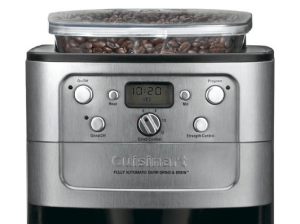
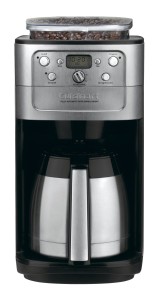
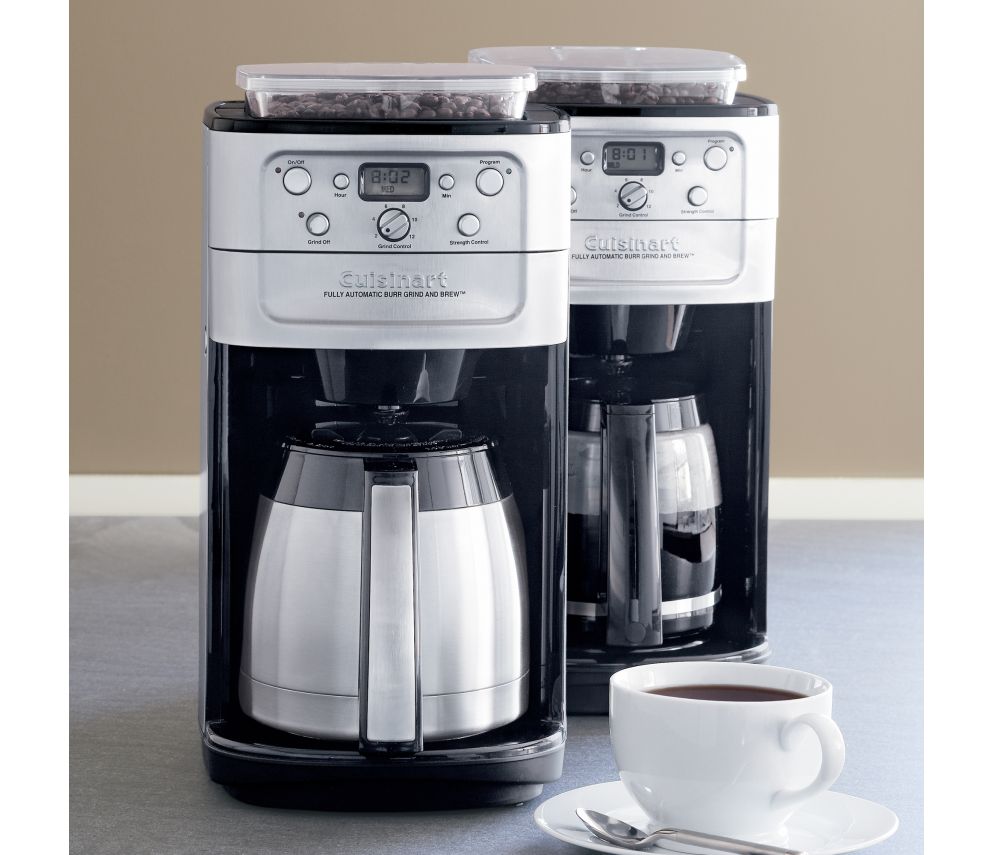
The Cuisinart DGB-900BC is the gold standard for grind-and-brew machines, and it earns that title every single morning. It features a built-in automatic burr grinder paired with a double-wall insulated stainless steel thermal carafe that keeps coffee hot for hours without a heating plate burning it. The 8-ounce bean hopper holds about half a pound of beans — enough for a week of daily brewing if you're a one-or-two-cup household. You set it the night before with the 24-hour programmable timer, and you wake up to a full 12 cups of genuinely fresh coffee.
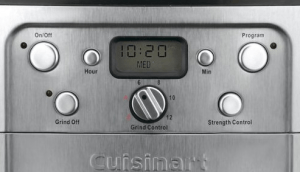
What separates this machine from cheaper alternatives is the grind control. You can dial in from fine to coarse depending on your beans, and the strength selector adjusts how much coffee gets ground per brew cycle. If you already have pre-ground coffee or decaf, the "Grind Off" function skips grinding entirely and brews straight from the filter basket. The thermal carafe is the real hero here — it has a comfort-grip handle and a no-drip pour spout, and it genuinely keeps coffee hot for 2–3 hours without any degradation in taste. No hot plate means no burnt, bitter coffee sitting on a burner all morning.
The only real complaints are the grinder noise (it's a machine — it's loud) and the fact that cleaning the hopper and grinder chamber takes a few minutes. That's a reasonable trade-off for consistently better coffee. If you want one machine that does everything right at a fair price, this is it. No hesitation.
Pros:
- True burr grinder delivers consistent, even grounds
- Double-wall thermal carafe keeps coffee hot without a heating plate
- 24-hour programmable timer with Grind Off function for pre-ground coffee
- Adjustable grind size and brew strength
- Brew Pause feature lets you pour a cup mid-cycle
Cons:
- Grinder is noticeably loud — not ideal for early mornings with sleeping family members
- Grinder chamber requires regular cleaning to avoid stale buildup
- Some users find the carafe lid mechanism fiddly at first
2. Breville BDC650BSS Grind Control — Best Premium Pick
Breville makes some of the best coffee gear on the market, and the BDC650BSS Grind Control is the clearest proof. It's built around what Breville calls Steep and Release technology — the machine grinds fresh beans, blooms the grounds briefly (letting CO2 escape so water can fully saturate them), and then releases for a cleaner, more complex brew. It's the kind of thing specialty coffee shops talk about, and Breville puts it in your kitchen. The result is noticeably brighter, more nuanced coffee compared to standard drip machines.
You can brew directly into the included stainless thermal carafe, a tall cup, or even a travel mug — the machine detects the container size and adjusts accordingly. The integrated grinder has eight grind size settings, and you can dial in the exact number of cups with a precise dose control so you're never wasting beans or over-extracting. It brews at the right temperature (between 195–205°F, which is the optimal extraction range) consistently. If you care about the science of coffee and want the best possible output from whole beans without buying a separate grinder, this is your machine.
The price is higher than most on this list, and the interface takes a few minutes to learn. But once you dial in your settings, it stays consistent. If you've been reading about Breville's approach to coffee engineering, this machine is the best expression of it in a home drip brewer. It's not a casual purchase — it's a commitment to better coffee.
Pros:
Cons:
- Significantly more expensive than competing grind-and-brew machines
- Larger footprint — needs dedicated counter space
- Learning curve on the interface for new users
3. Cuisinart DGB-30 Grind and Brew Single Serve — Best Single Serve
Most grind-and-brew machines are built for households. The Cuisinart DGB-30 is built for you — one person, one cup, exactly the way you want it. It has a built-in stainless steel conical burr mill that grinds fresh beans for every single cup, so you're never drinking yesterday's grind. Six cup sizes give you real flexibility — from a short, strong 6-ounce cup to a large 12-ounce serving, and it has an "Over Ice" setting that brews extra-concentrated coffee so your ice doesn't water it down.
The machine brews hotter than typical single-serve options, which matters more than most people realize. Weak, lukewarm coffee is often just a brewing temperature problem — this machine runs hot enough to extract properly. You can also use pre-ground coffee with the Grind Off feature, which makes it useful even on mornings when you don't feel like using the hopper. The control panel is clean and straightforward — no app, no Bluetooth, no nonsense. Just buttons that do what they say.
This is the machine for the solo coffee drinker who's been wasting money on single-use pods. You get genuine burr-ground fresh coffee in a machine that takes up barely more space than a pod brewer. For households that disagree on coffee strength (or just don't need 12 cups a day), this is the sensible, space-efficient pick for 2026.
Pros:
- Conical burr grinder for fresh-ground flavor every single cup
- Six brew sizes including an Over Ice setting
- Brews hotter than comparable single-serve machines
- Grind Off feature supports pre-ground coffee
- Compact footprint — ideal for small kitchens
Cons:
- No programmable timer — you start it manually each time
- Single serve only — not suited for entertaining or multi-person households
4. De'Longhi TrueBrew CAM51035M — Best for Versatility
De'Longhi is known for espresso machines, and the TrueBrew brings that precision engineering to drip coffee. The standout feature is its Bean Extract Technology — a proprietary system that automatically grinds, doses, and brews each cup based on the size you select, so there's no guesswork. You're not estimating scoops or adjusting manually. The machine calculates the right amount of grounds for the right brew size every time. It's as close to foolproof as grind-and-brew machines get in 2026.
The size range is genuinely impressive: 8 oz single serve, 12 oz, 16 oz, and 24 oz cups — plus a 40 oz carafe and even a 3 oz espresso-style concentrated cup. That last option is rare in a drip machine and makes this the most flexible brewer on this list. The built-in conical burr grinder produces consistent grounds, and the stainless steel body looks sharp on any counter. Hot or iced — the TrueBrew does both without requiring a separate brewing mode adjustment.
It's a newer machine and carries a higher price tag, but if your household has people who want different cup sizes at different times — or if you occasionally want something closer to espresso-strength — the TrueBrew delivers flexibility that no other machine on this list matches. It's the pick for the household that can never agree on how much coffee to make.
Pros:
- Bean Extract Technology auto-doses for every cup size
- Six brew sizes from 8 oz to 40 oz carafe, plus 3 oz espresso-style
- Built-in conical burr grinder with consistent output
- Hot or iced brewing modes
- Premium stainless steel build quality
Cons:
- Higher price point than most grind-and-brew drip machines
- Newer model — long-term reliability still being established
- Larger machine that needs significant counter space
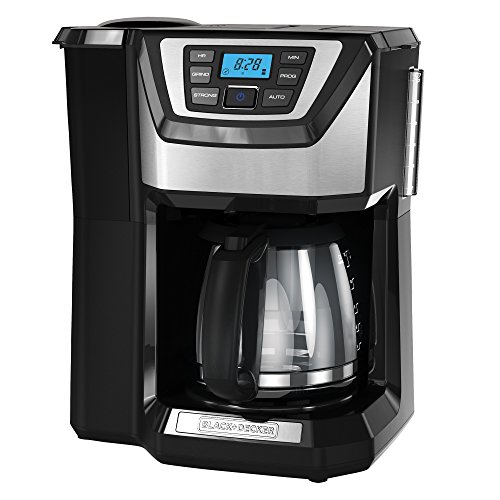
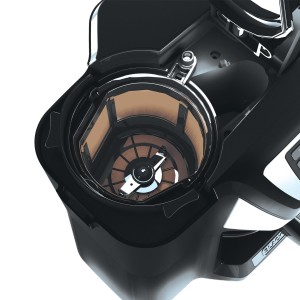
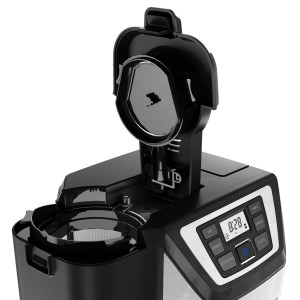
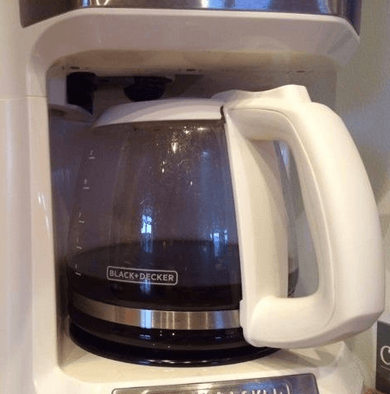
5. BLACK+DECKER CM5000B 12-Cup Mill and Brew — Best Budget Pick
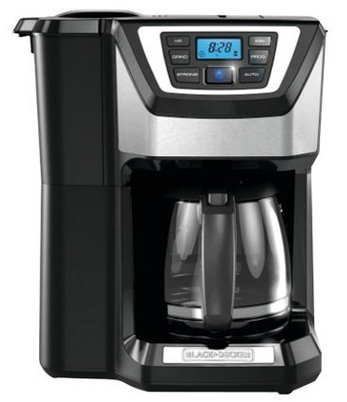
If your budget is tight and you still want fresh-ground coffee, the BLACK+DECKER CM5000B is the honest budget choice. It grinds whole beans and brews up to 12 cups in one machine, and it does so at a price point that undercuts most of the competition by a wide margin. It's not fancy — no thermal carafe, no programmable timer on all models, no grind-size adjustment — but it gets the basic job done. For someone upgrading from a basic drip maker who wants to experiment with whole beans, this is the right entry point.
The build is plastic, the carafe sits on a warming plate, and the grinder is functional rather than exceptional. The grind consistency won't match the Cuisinart or Breville machines on this list, but it's still meaningfully fresher than brewing with week-old pre-ground coffee. The 12-cup capacity makes it a legitimate option for families or offices that want volume at low cost. Note that grind size and dose affect the outcome — read the manual before your first brew and dial in accordingly, as the machine is sensitive to coarse grinds.
Don't buy this machine if you're a coffee purist. But if you're a practical person who wants the taste benefit of freshly ground beans without spending a lot, the CM5000B delivers at its price. It's a great starter machine that will push you toward better whole beans and, eventually, better equipment.
Pros:
- Significantly cheaper than other grind-and-brew machines
- Grinds whole beans for noticeably fresher coffee than pre-ground
- 12-cup capacity suits families and offices
- Simple operation with minimal learning curve
Cons:
- Hot plate carafe — coffee burns if left sitting too long
- Grind consistency is lower than burr-only machines
- No grind size adjustment or strength control on base model
- Plastic construction feels less durable over time
6. Capresso 465 CoffeeTeam TS 10-Cup — Best for Quiet Homes
Capresso doesn't get enough attention in the grind-and-brew conversation, and that's a mistake. The CoffeeTeam TS 465 pairs a conical burr grinder with a double-wall stainless thermal carafe in a mid-range machine that hits a quality level above its price. The conical burr mechanism produces consistent, even grounds — the same type of grinder you'll find in dedicated burr grinders costing twice as much. Combined with the thermal carafe, you're getting the two most important quality features in one machine.
The 10-cup capacity is practical for most households. The grinder is notably quieter than the Cuisinart DGB-900BC, which makes it a better choice for households where someone is still sleeping when the coffee is brewing. The digital timer and programmable settings are straightforward — set it, forget it, wake up to hot coffee. The machine has a solid, compact build that doesn't dominate counter space, and the thermal carafe genuinely keeps coffee hot without a warming plate scorching the bottom of the pot.
If the Cuisinart DGB-900BC is your first choice but you want something slightly quieter or with a smaller footprint, the Capresso 465 is the honest runner-up. It's not the flashiest machine, but the quality-per-dollar ratio is excellent, and it'll keep making good coffee for years.
Pros:
- Conical burr grinder for superior grind consistency
- Thermal carafe keeps coffee hot without a burning warming plate
- Quieter grinder operation than most competitors
- Programmable timer with digital controls
- Compact footprint for a 10-cup machine
Cons:
- 10-cup limit — slightly smaller than some competitors
- Fewer grind customization options compared to premium models
7. Gevi 10-Cup Drip Coffee Maker with Built-in Burr Grinder — Best Office Value
The Gevi 10-Cup is the newest machine on this list and it comes in with an aggressive value proposition. It combines a built-in burr grinder with a 1.5L water tank (the largest on this list, proportionally), a 24-hour programmable timer, auto keep-warm, and a reusable filter — all at a price that undercuts most of the competition. For an office break room or a household that needs high-volume, low-maintenance coffee, this machine makes a strong case.
The auto keep-warm plate maintains coffee temperature for hours after brewing, which matters in an office setting where people trickle in at different times. The 24-hour programmable timer is exactly what you'd expect — set it the night before, come in to fresh coffee. The burr grinder produces decent results, better than blade grinding but not at the Breville or Cuisinart level of precision. The reusable filter is a practical plus that saves you money on paper filters over time — which, if you're curious about the options, is worth reading about in our guide to coffee filter types and how they affect your brew.
The Gevi won't win a head-to-head taste test against the Breville or Cuisinart DGB-900BC. But for the price and the use case — high volume, easy operation, set-it-and-forget-it — it's a genuinely good machine. It's the right pick if you're outfitting an office or a busy family kitchen where someone new is always touching it.
Pros:
- Large 1.5L water tank — fewer refills for high-volume use
- 24-hour programmable timer with auto keep-warm
- Built-in burr grinder for fresh-ground flavor
- Reusable filter included — saves on paper filter costs
- Strong value at its price point
Cons:
- Grind precision doesn't match premium options
- Warming plate (not thermal carafe) — coffee quality declines over time
- Newer brand with less established long-term reliability track record
Choosing the Right Coffee Maker Grinder Combo: A Buying Guide
Burr Grinder vs. Blade Grinder: This One Actually Matters
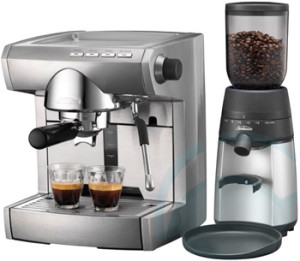
The single most important thing to check before buying any grind-and-brew machine is what type of grinder it uses. This is non-negotiable. Burr grinders crush beans between two abrasive surfaces to produce uniform grounds. Blade grinders chop beans with a spinning blade, like a tiny propeller, producing a wildly uneven mix of powder and chunks. That inconsistency means over-extracted bitter bits and under-extracted sour bits in the same cup. If a grind-and-brew machine doesn't specify "burr grinder" in its description, assume it's a blade grinder — and lower your expectations accordingly.
All seven machines in this guide use burr grinders or have burr-style mechanisms. That puts them all in a different league from cheap blade-grinder combos. If you want to understand the difference in depth before you decide, our comparison of blade grinders vs. burr grinders breaks it down clearly. For a deeper dive into standalone burr grinder options, the best conical burr coffee grinder guide is worth reading alongside this one.
Thermal Carafe vs. Hot Plate: Don't Overlook This
After grinder type, the carafe question is the most important decision. A thermal carafe keeps coffee hot passively through insulation — no electricity, no heat source under the pot. A hot plate keeps coffee warm by continuing to apply heat from below. The problem with hot plates is that heat breaks down the chemical compounds in brewed coffee, turning it bitter and flat within 20–30 minutes of sitting. Most of us have experienced that stale, burnt-edge taste from a pot that's been sitting on a burner — that's the hot plate at work.
If you drink your coffee within 15 minutes of brewing, a hot plate is fine. If you pour a cup, wander away, and come back for a second cup 45 minutes later, you need a thermal carafe. Of the machines on this list, the Cuisinart DGB-900BC and the Capresso 465 both include double-wall thermal carafes — no heat source needed, and your second cup tastes almost as good as the first.
Grind Settings and Brew Strength Controls
The more control a machine gives you over grind size and brew strength, the better your coffee can be. Grind size determines how fast water passes through the grounds — too coarse and the water rushes through without extracting enough flavor (weak, sour coffee). Too fine and the water gets stuck, over-extracting (bitter, harsh coffee). A machine with adjustable grind settings lets you dial in the right extraction for the beans you're using.
Brew strength controls are different — they typically adjust how much coffee gets ground per cycle rather than the actual grind coarseness. Both matter. The Breville BDC650BSS gives you the most control with eight grind size settings plus precise dose control. The Cuisinart DGB-900BC offers grind size adjustment plus a strength selector. If you're using high-quality whole beans — like the best arabica beans from different regions — those controls let you tailor each brew to the specific characteristics of the bean.
Bean Storage: Keep Your Beans Fresh
Every grind-and-brew machine has a bean hopper — the container on top that holds your whole beans. Hopper size typically ranges from 4 to 8 ounces (about a quarter to half a pound). That's usually enough for several days of daily brewing. But how you store beans in and out of the hopper matters enormously for flavor. Coffee beans go stale from exposure to oxygen, light, moisture, and heat.
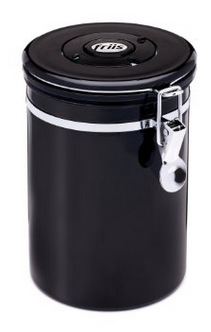
Don't pour a full pound of beans into the hopper if you're only going to use a quarter of it over two weeks. Fill the hopper with only what you'll use in 3–5 days and store the rest in an airtight container away from heat and light — something like a coffee vault (pictured above) works well. This single habit will noticeably improve the flavor of your coffee, no matter which machine you're using.
Common Questions
Are grind-and-brew coffee makers worth it in 2026?
Yes, unequivocally. The flavor difference between freshly ground whole beans and pre-ground coffee is significant — ground coffee begins losing volatile aromatic compounds within minutes of being ground. A grind-and-brew machine captures those aromatics in every brew cycle. If you're already buying whole beans and grinding separately, a combo machine simply streamlines the process. If you're still using pre-ground, switching to a grind-and-brew machine will be the single biggest upgrade you can make to your morning coffee quality.
What's the difference between a burr grinder and a blade grinder in these machines?
A burr grinder uses two abrasive surfaces (burrs) to crush coffee beans into uniform-sized particles. A blade grinder uses a spinning metal blade that chops beans unevenly, producing a mix of fine powder and large chunks in the same batch. Uneven grounds extract unevenly — some parts over-extract (bitter), others under-extract (sour). All machines in this guide use burr-style grinders. If you're considering a machine not on this list, confirm it uses a burr mechanism before purchasing.
Do I need a thermal carafe or is a hot plate fine?
It depends on how quickly you drink your coffee. If you brew a full pot and drink it within 15–20 minutes, a hot plate is fine. If you like a second cup an hour later, a thermal carafe is strongly preferable. Hot plates continue heating the coffee, which breaks down flavor compounds and produces a bitter, stale taste. Thermal carafes keep coffee hot through insulation with no active heat — the coffee stays nearly as good as when it was brewed for 2–3 hours. If given the choice, always pick the thermal carafe.
How do I clean a grind-and-brew coffee machine?
The key areas are the bean hopper, the grinder chamber, and the carafe. Empty and wipe the hopper weekly to prevent oil buildup, which can go rancid and contaminate the flavor of your beans. Run the grinder chamber with a dry cloth or a brush to clear out fine dust. Wash the carafe with warm soapy water after each use, or run it through the dishwasher if the manufacturer allows. Descale the brewing mechanism monthly with a mixture of equal parts white vinegar and water — run it through a full brew cycle, then run two cycles of plain water to flush it out. Consistent cleaning prevents bitterness from old oil residue.
Can I use pre-ground coffee in a grind-and-brew machine?
Most grind-and-brew machines include a "Grind Off" or bypass function that lets you skip the grinder and brew directly from pre-ground coffee placed in the filter basket. The Cuisinart DGB-900BC and the Cuisinart DGB-30 both have explicit Grind Off functions. This is useful for decaf (which shouldn't go through the hopper if you use it rarely, as the oils can linger), flavored coffees, or mornings when you just want to use up pre-ground beans. Check the manual for your specific machine's bypass method.
Which coffee maker grinder combo is best for a small kitchen?
The Cuisinart DGB-30 is the clear winner for small kitchens — it's a single-serve machine with a compact footprint, so it takes up barely more space than a standard pod brewer. For households that still need 10–12 cup capacity but want to minimize counter space, the Capresso 465 is notably more compact than the Cuisinart DGB-900BC or Breville BDC650BSS. Measure your available counter space before purchasing any of the full-size 12-cup machines — they're larger than basic drip makers because the grinder adds height and depth to the unit.
Buy on Walmart
- Cuisinart DGB-900BC Grind & Brew Thermal 12-Cup Automatic Co — Walmart Link
- Breville BDC650BSS Grind Control Coffee Maker With Grinder, — Walmart Link
- Cuisinart Coffee Maker, Grind and Brew Single Serve Coffee M — Walmart Link
- De'Longhi TrueBrew Drip Coffee Maker, Built in Grinder, Sing — Walmart Link
- Black and Decker BLACK+DECKER 12-Cup Mill and Brew Coffeemak — Walmart Link
- Capresso 465 CoffeeTeam TS 10-Cup Digital Coffeemaker with C — Walmart Link
- Gevi 10-Cup Drip Coffee Maker, Built-in Burr Grinder, 1.5L W — Walmart Link
Buy on eBay
- Cuisinart DGB-900BC Grind & Brew Thermal 12-Cup Automatic Co — eBay Link
- Breville BDC650BSS Grind Control Coffee Maker With Grinder, — eBay Link
- Cuisinart Coffee Maker, Grind and Brew Single Serve Coffee M — eBay Link
- De'Longhi TrueBrew Drip Coffee Maker, Built in Grinder, Sing — eBay Link
- Black and Decker BLACK+DECKER 12-Cup Mill and Brew Coffeemak — eBay Link
- Capresso 465 CoffeeTeam TS 10-Cup Digital Coffeemaker with C — eBay Link
- Gevi 10-Cup Drip Coffee Maker, Built-in Burr Grinder, 1.5L W — eBay Link
Buy the machine with the best grinder you can afford — because everything else in a coffee maker is forgiving, but bad grounds make bad coffee, every single time.


About Jeanette Kierstead
Jeanette Kierstead has spent over six years testing and reviewing coffee equipment with a focus on the home brewing experience — from entry-level drip machines to pour-over setups, single-serve systems, and bean-to-cup grinder combos. Her methodical approach to evaluation covers brew temperature, extraction consistency, ease of use, and long-term reliability across a wide range of brands and price points. At KnowYourGrinder, she covers coffee maker reviews, brewing method comparisons, and practical buying advice for home coffee enthusiasts.
Get FREE Coffee Gifts now. Or latest free grinders from our best collections.
Disable Ad block to get all the secrets. Once done, hit any button below