Best Espresso Cups: Demitasse Cup and Saucer Sets Reviewed
The Fellow Monty Milk Art Espresso Cups earn the top spot in 2026 — their double-wall ceramic construction and latte-art-optimized interior make them a serious upgrade for any home barista. But the right espresso cup depends on more than one feature, and this roundup covers every contender worth your money.
Your espresso experience starts before the first sip. The weight of the cup in your hand, the way it holds heat, the shape of the rim against your lip — these details shape what you taste and how you feel drinking it. A thin, cold cup pulls warmth out of your shot within seconds. A well-designed demitasse keeps the crema intact, preserves the temperature, and turns a 30-second drink into a ritual worth repeating every morning.

The word demitasse comes from the French for "half cup" — traditionally 2 to 4 oz, compared to a standard 8 oz coffee mug. These small cups are purpose-built for concentrated espresso, cortados, ristrettos, and Turkish coffee. If you've been pouring shots into a regular mug, you're losing heat and diluting the experience. The right vessel matters more than most people realize, and if you're already investing in a quality grinder — check our guide to the best coffee grinders for espresso — it's worth pairing it with cups that do the shot justice.
In this 2026 review, we tested and evaluated seven of the best espresso cups available on Amazon, covering everything from budget-friendly porcelain to premium double-wall ceramic. Whether you're outfitting a home espresso bar or looking for a gift, one of these sets belongs in your kitchen. Browse more essential equipment in our coffee accessories section for the full picture.
Contents
- Standout Models in 2026
- Detailed Product Reviews
- Fellow Monty Milk Art Espresso Cups — Best Overall
- DeLonghi 3oz Espresso Double Wall Thermal Glasses — Best Glass Option
- Sweese Porcelain Espresso Cups Set — Best Value Set
- notNeutral LINO Porcelain Cup & Saucer — Best Minimalist Design
- Coffeezone Vincent Van Gogh Espresso Cup — Best for Art Lovers
- Bialetti Ceramic Espresso Cup Set — Best Multi-Pack
- 2 X Espresso Porcelain Cups and Saucers 2oz — Best Budget Pick
- Key Features to Consider When Choosing
- FAQs
Standout Models in 2026
- #PreviewProductRating
- Bestseller No. 1
 Rating:

- Bestseller No. 2
 Rating:
 - Bestseller No. 3
 Rating:
 - Bestseller No. 4
 Rating:
 - Bestseller No. 5
 Rating:
 - Bestseller No. 6
 Rating:
 - Bestseller No. 7
 Rating:
Detailed Product Reviews
1. Fellow Monty Milk Art Espresso Cups — Best Overall
Fellow built the Monty with one priority: making your espresso look and taste as good as it can. The 3 oz double-wall ceramic construction insulates your shot so you're not racing against a cooling cup. The real engineering story is the interior base — a curved slope that lifts crema to the surface without disrupting it. If you pull good shots and want to practice latte art, this cup is designed to show it off.
The matte black finish with a polished graphite base is understated and sharp. These cups feel premium in the hand — weighted, smooth, and substantial without being heavy. The double-wall design also means the outside stays cool to the touch, which matters if you're handing a cup to someone. Fellow sells these as a set of two, which is ideal for a two-person household or hosting.
At 3 oz, the Monty is sized for a double espresso, cortado, or a short macchiato. It's not meant for lungo or americano — Fellow built it specifically for concentrated drinks. If you're also interested in Turkish coffee, the cup size is compatible, though you'd want to check our best Turkish coffee pot reviews to match the full setup.
Pros:
- Double-wall ceramic keeps espresso at optimal temperature longer
- Interior base curvature designed specifically to float crema to the top
- Sleek matte black aesthetic with polished graphite base
- Exterior stays cool — safe to handle immediately after pouring
- Ideal 3 oz size for double espresso, cortado, and Turkish coffee
Cons:
- Only comes in a set of two — no larger pack options
- Premium price point compared to standard ceramic sets
2. DeLonghi 3oz Espresso Double Wall Thermal Glasses — Best Glass Option
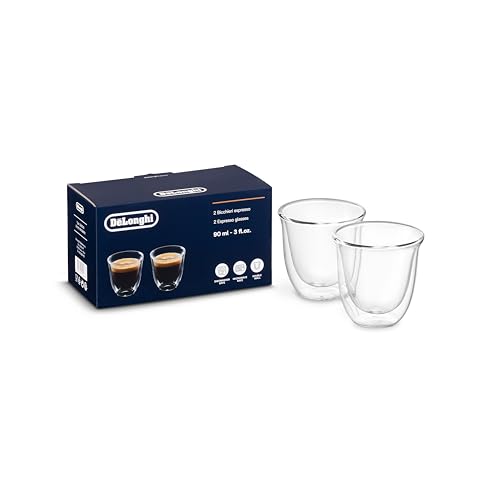
DeLonghi is the world leader in espresso machines, and their double-wall thermal glasses bring that same engineering precision to the cup itself. Made from borosilicate glass with a tulip shape, these glasses elevate the visual side of espresso drinking — you can watch the crema layer settle and see the rich amber color of a well-pulled shot. The double-wall construction creates an insulating air layer that keeps your drink hot while the outer surface stays cool.
The 3 oz capacity handles a standard double espresso or a cortado cleanly. Borosilicate glass is notably more durable than standard glass — it handles thermal shock better, so you can go from a cold rinse to a hot pour without worry. The tulip shape also concentrates the aromatics toward your nose as you sip, which DeLonghi specifically engineered to enhance the sensory experience.
These glasses work equally well with hot and cold espresso drinks — a cold brew shot or iced cortado looks stunning in the clear glass. The set includes two glasses, which suits most home setups. One trade-off: glass requires more careful handling than ceramic, and these aren't stackable.
Pros:
- Borosilicate glass handles thermal shock — more durable than standard glass
- Double-wall insulation keeps drinks hot without burning your hands
- Tulip shape concentrates espresso aromas for a richer tasting experience
- Works beautifully with both hot and cold espresso drinks
- From a trusted, established espresso brand
Cons:
- Glass requires more careful handling than ceramic or porcelain
- Not stackable — takes more cabinet space than stacking sets
3. Sweese Porcelain Espresso Cups Set — Best Value Set
If you want a complete espresso cup set that handles everyday use without demanding careful treatment, the Sweese set delivers. Four 4 oz porcelain cups with saucers and a metal stacking rack — all dishwasher safe, microwave safe, and oven safe. This is the set for households where cups go through the dishwasher daily and need to stay looking sharp without special care.
The slightly larger 4 oz size accommodates a double espresso with a little room, or works well for a lungo or smaller cappuccino. The premium porcelain construction is dense and chip-resistant — noticeably more durable than thin budget porcelain. What really sets this set apart practically is the stacking rack: all four cups stack into the footprint of a single saucer. That's a real storage advantage if your cabinet space is limited.
The clean white design is versatile — it works in any kitchen aesthetic and presents well for guests. At 4 oz, these cups are slightly oversized for a strict ristretto, but they're the right call if your household has varying preferences or you want one cup that covers espresso and short-pour drinks equally.
Pros:
- Set of 4 with saucers and a space-saving metal stacking rack
- Dishwasher safe, microwave safe, and oven safe — genuinely low-maintenance
- Premium porcelain construction with good chip resistance
- Stacking design minimizes cabinet footprint significantly
- Strong value for a complete four-person set
Cons:
- 4 oz is slightly larger than a traditional 2–3 oz demitasse
- No double-wall insulation — shots cool faster than thermal cups
4. notNeutral LINO Porcelain Cup & Saucer — Best Minimalist Design
notNeutral is a Los Angeles-based design brand that's carved out a reputation in the specialty coffee world for cups that are as functional as they are beautiful. The LINO line is their flagship — fine porcelain, clean geometric lines, and a 3 oz capacity that fits a double espresso precisely. These cups are used in specialty cafes around the world, and that café-quality pedigree is exactly what you're buying.
The fine porcelain is notably thinner than standard porcelain cups — this is a deliberate design choice that improves the tactile experience at the lip and keeps the cup's weight balanced. The glaze is food-safe and shows natural variation, especially around the lip and sharper edges, which gives each cup a handcrafted quality. Available in white, matte black, light gray, and indigo, so you can match your kitchen or espresso bar aesthetic precisely.
The LINO is sold as a set of two cups with saucers. It's the most design-forward option in this roundup — the kind of cup that becomes a daily ritual you look forward to using. If the aesthetic matters to you as much as the function, this is your pick in 2026.
Pros:
- Fine porcelain construction used in specialty cafes worldwide
- Available in four colorways — white, matte black, light gray, and indigo
- Thin-walled design improves lip feel and overall drinking experience
- Natural glaze variation gives each cup a handcrafted character
- Precisely sized at 3 oz for a double espresso
Cons:
- Thin walls mean less heat retention compared to thicker ceramic
- Premium price for a two-cup set
5. Coffeezone Vincent Van Gogh The Starry Night Espresso Cup — Best for Art Lovers
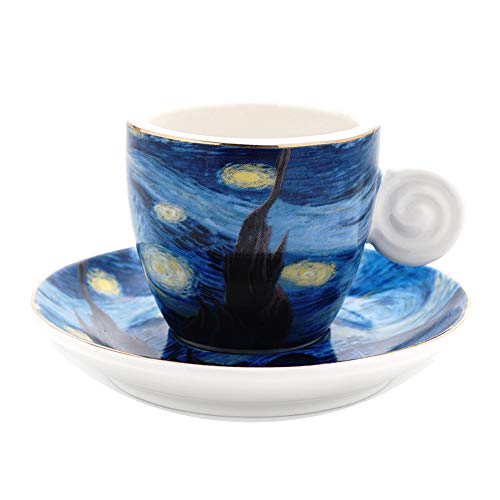
For the coffee drinker who wants their morning espresso served alongside one of the most iconic paintings in art history, this cup delivers. Van Gogh's The Starry Night wraps around a 3 oz porcelain demitasse fired at over 1300°C — the high-temperature firing process produces a dense, stable porcelain body that holds heat well and resists chipping better than low-fire alternatives.
The thick body is a practical advantage beyond aesthetics: denser walls mean slower heat loss, so your shot stays in the optimal temperature window longer than it would in thin-walled fine porcelain. The cup shape is a classic professional espresso form — straight sides, a defined foot ring, and the right proportions for crema presentation. It pairs with a matching saucer that carries the same Starry Night design.
This cup makes an excellent gift — it's visually striking, practical, and arrives presentation-ready. As a daily driver, it's a solid choice for anyone who wants their espresso setup to reflect a personal aesthetic. The trade-off is that the bold design doesn't suit every kitchen, and it's a single cup and saucer rather than a full set.
Pros:
- Distinctive Van Gogh Starry Night artwork — a genuine conversation piece
- High-temperature fired porcelain (1300°C) for exceptional durability and density
- Thick body provides good heat retention for a single-wall cup
- Professional espresso cup shape promotes proper crema presentation
- Excellent gift option — visually impressive and practical
Cons:
- Single cup and saucer — not a full set
- Bold design won't suit minimalist aesthetics
6. Bialetti Ceramic Espresso Cup Set — Best Multi-Pack
Bialetti is one of the most recognized names in espresso — their iconic octagonal Moka pot has been a kitchen fixture since 1933. This six-pack of ceramic espresso cups carries the same design DNA: an exclusive octagonal shape with an embossed Bialetti logo on each cup. If you host regularly or have a larger household, this is the set that covers everyone without repeating the same cup twice — each cup in the set comes in a different color.
The ceramic construction is solid and practical. These cups are designed for daily use — they go in the dishwasher, handle everyday bumps, and maintain their color well over time. The octagonal profile is distinctive and immediately recognizable to anyone who knows the brand. The embossed logo adds a premium feel without being over-the-top.
At six cups, this set has the best per-cup value of any option in this roundup. The multi-color design makes it easy to remember whose cup is whose at a dinner party or gathering. If you entertain often or simply want variety in your morning routine, the Bialetti set checks every practical box at an accessible price.
Pros:
- Set of 6 cups — best value for households or entertaining
- Exclusive octagonal shape with embossed Bialetti logo
- Multi-color set adds visual interest and practical identification
- Durable ceramic construction — dishwasher safe for daily use
- Iconic brand design with a long heritage in espresso culture
Cons:
- No saucers included
- No double-wall insulation — average heat retention
7. 2 X Espresso Porcelain Cups and Saucers 2oz — Best Budget Pick
Sometimes you just need a proper demitasse cup that does the job without overthinking it. These 2 oz porcelain cups with matching saucers are the most traditional option in this roundup — a genuine demitasse at the historically correct capacity, the right size for a single ristretto or a short traditional espresso. At 75cc capacity and 58mm height, these match the dimensions used in European espresso bars for decades.
The porcelain is clean and white, the design is unadorned, and the saucers match properly. If you care about the authentic Italian espresso experience — standing at the bar, drinking a single shot in two or three sips — this is the correct vessel. No gimmicks, no special features, just a well-proportioned traditional cup.
The set of two keeps the price accessible. These work perfectly as spares, as a gift for a coffee purist, or as your entry point to proper demitasse drinking. They're not going to impress guests with design, but they'll produce a more authentic espresso experience than drinking from an oversized mug. For the price, they're an easy recommendation if you're just getting started with espresso service at home.
Pros:
- True 2 oz demitasse — correct sizing for traditional single ristretto
- Classic European espresso bar proportions (75cc, 58mm height)
- Clean white porcelain with matching saucers — understated and versatile
- Most affordable entry point in this roundup
- Great starting point for anyone new to traditional espresso service
Cons:
- Set of only 2 cups — not suitable for larger households without buying multiple sets
- Minimal features — no insulation, no special design elements
Key Features to Consider When Choosing Espresso Cups
Once you narrow down your budget, a few specific factors separate a cup you'll use every day from one that ends up at the back of the cabinet. Here's what to prioritize.
Material: Porcelain vs. Ceramic vs. Glass
The three main materials you'll encounter — porcelain, ceramic, and borosilicate glass — each have real trade-offs.
- Porcelain is fired at higher temperatures, producing a denser, harder, and usually heavier material with better heat retention than standard ceramic. Most professional espresso cups are porcelain.
- Ceramic is more porous and lighter, typically less expensive, and available in more color options. Good for everyday use but generally retains heat less effectively than high-fire porcelain.
- Borosilicate glass handles thermal shock well, lets you see the drink, and works equally well hot or cold. The visual element is a genuine plus for presentation. The trade-off is fragility compared to ceramic.
- Double-wall construction — available in both ceramic and glass — creates an insulating air layer that significantly outperforms single-wall cups on heat retention. If keeping your shot hot is a priority, double-wall is the clear winner.
Capacity: Getting the Size Right
Espresso cup size is one of the most important and most overlooked specifications. Using the wrong size undermines the drink you're making.
- 2 oz (60ml): Traditional single ristretto or single espresso. Strict European espresso bar sizing.
- 3 oz (90ml): Standard double espresso. The most versatile size for home use — also works for cortado and macchiato.
- 4 oz (120ml): Double espresso with room, or a short cappuccino. Better for households where one cup covers multiple drink styles.
According to Wikipedia's espresso entry, a standard espresso shot is 1 oz (30ml), so a 3 oz cup gives you the standard double with a small margin. If you're serious about the craft, matching cup volume to your actual shot volume is worth paying attention to. A well-matched grinder is equally important — see our roundup of the best coffee grinders for espresso to complete your setup.
Heat Retention: Why It Matters More Than You Think
A properly extracted espresso should be served and consumed at 160–165°F. Most single-wall cups drop temperature faster than most drinkers realize — within 30–60 seconds, a thin single-wall cup can pull 15–20°F out of your shot.
- Pre-warm your cups — run hot water through them before pulling your shot. This is standard practice in any professional setting and makes a measurable difference.
- Double-wall cups (Fellow Monty, DeLonghi glass) maintain temperature significantly longer and don't require pre-warming to the same degree.
- Thicker porcelain retains heat better than thin fine porcelain — the Coffeezone Van Gogh cup's thick walls are a real advantage here, despite being single-wall.
Saucers, Sets, and Storage
Whether saucers are included matters more than it might seem. A saucer provides a stable resting place, protects your countertop, and keeps the cup elevated from surfaces that can wick heat. Sets that include saucers — the Sweese, notNeutral LINO, Bialetti, and the 2 oz porcelain set — are complete units ready for serving. The Bialetti set skips the saucer, which is worth noting if presentation matters to you.
- If storage space is tight, prioritize stackable designs like the Sweese set with its metal rack.
- For hosting, a set of 4 or 6 makes more practical sense than multiple sets of 2.
- Consider how easily replacement cups can be sourced — sets from established brands like Sweese, Bialetti, and notNeutral tend to have better long-term availability.
FAQs
What is a demitasse cup and how is it different from a regular coffee cup?
A demitasse cup — from the French for "half cup" — is a small cup designed specifically for concentrated espresso drinks. Standard demitasse capacity runs between 2 and 4 oz, compared to a typical coffee mug at 8–12 oz. The smaller size is intentional: espresso is a concentrated, quick drink meant to be consumed in a few sips. Using a regular mug dilutes the experience by dropping shot temperature rapidly and overwhelming the visual presentation of the crema layer. A proper demitasse keeps your shot in the right temperature range and presents the drink the way it was meant to be served.
Should I pre-warm my espresso cups before pulling a shot?
Yes — pre-warming is one of the easiest ways to improve your espresso without changing anything about your machine or grinder. Pour hot water into your cups and let them sit for 30–60 seconds before pulling your shot. This brings the cup's internal temperature up so it stops pulling heat out of your espresso the moment the shot lands. Most espresso machines have a cup warming tray on top for exactly this purpose. Double-wall cups (like the Fellow Monty or DeLonghi glass set) mitigate this issue significantly, but even they benefit from pre-warming.
What's the best espresso cup material for heat retention?
Double-wall construction — whether in ceramic or borosilicate glass — delivers the best heat retention by a significant margin. The air gap between the two walls acts as insulation, slowing heat transfer out of the cup. Among single-wall options, high-fire dense porcelain (like the Coffeezone Van Gogh cup, fired at over 1300°C) retains heat better than thin fine porcelain or standard ceramic. If heat retention is your top priority and you're willing to pre-warm your cups, thick single-wall porcelain is the traditional choice; if you want the lowest-maintenance solution, invest in double-wall cups.
How many ounces should an espresso cup be?
For a traditional single espresso (1 oz shot), a 2–3 oz cup is ideal — it holds the drink without excess space that would cool it prematurely. For a standard double espresso (2 oz), a 3 oz cup is the standard professional sizing — just enough room for the shot with a small margin. A 4 oz cup works for a double with a larger headspace, or for a short cappuccino or lungo. If your household drinks a mix of espresso styles, a 3 oz cup is the most versatile single choice.
Are glass espresso cups better than porcelain ones?
Neither is strictly better — they offer different advantages. Glass lets you see the drink, which is a genuine visual plus for espresso, and borosilicate glass handles thermal shock well. Double-wall glass (like the DeLonghi set) also delivers excellent heat retention. Porcelain, especially high-fire dense porcelain, is generally more durable for daily use, more forgiving of bumps, and retains heat better as a single-wall option. The right choice depends on your priorities: if presentation and visual appeal matter most, glass is compelling; if durability and long-term daily use are the priority, porcelain wins.
Can I use espresso cups for Turkish coffee?
Yes — the size and shape of most 2–3 oz demitasse cups work well for Turkish coffee, which is also served in small portions (typically around 2–3 oz including grounds). The thick walls of high-fire porcelain cups are particularly suited to Turkish coffee, which is served very hot and benefits from cups that hold temperature. If you're building out a complete Turkish coffee setup, pair your cups with a proper cezve — our best Turkish coffee pot guide covers the full setup.
Buy on Walmart
- DeLonghi 3oz Espresso Double Wall Thermal Glasses, Set of 2 — Walmart Link
- Sweese Porcelain Espresso Cups Set, 4 oz Stackable Cups with — Walmart Link
- 2 X Espresso Porcelain Cups and Saucers 2Oz Capacity Cc 75 H — Walmart Link
- Coffeezone Vincent Van Gogh Art The Starry Night Porcelain E — Walmart Link
- Fellow Monty Milk Art Espresso Cups - Small Double Wall Cera — Walmart Link
- Bialetti Ceramic Espresso Cup Set - Multi Coloured (6pk) — Walmart Link
- notNeutral LINO Porcelain Cup & Saucer (White) (2, 3 oz) — Walmart Link
Buy on eBay
- DeLonghi 3oz Espresso Double Wall Thermal Glasses, Set of 2 — eBay Link
- Sweese Porcelain Espresso Cups Set, 4 oz Stackable Cups with — eBay Link
- 2 X Espresso Porcelain Cups and Saucers 2Oz Capacity Cc 75 H — eBay Link
- Coffeezone Vincent Van Gogh Art The Starry Night Porcelain E — eBay Link
- Fellow Monty Milk Art Espresso Cups - Small Double Wall Cera — eBay Link
- Bialetti Ceramic Espresso Cup Set - Multi Coloured (6pk) — eBay Link
- notNeutral LINO Porcelain Cup & Saucer (White) (2, 3 oz) — eBay Link
The best espresso cup is the one that keeps your shot hot, fits your hand, and makes you want to pull another.


About Jeanette Kierstead
Jeanette Kierstead has spent over six years testing and reviewing coffee equipment with a focus on the home brewing experience — from entry-level drip machines to pour-over setups, single-serve systems, and bean-to-cup grinder combos. Her methodical approach to evaluation covers brew temperature, extraction consistency, ease of use, and long-term reliability across a wide range of brands and price points. At KnowYourGrinder, she covers coffee maker reviews, brewing method comparisons, and practical buying advice for home coffee enthusiasts.
Get FREE Coffee Gifts now. Or latest free grinders from our best collections.
Disable Ad block to get all the secrets. Once done, hit any button below