Best Burr Coffee Grinders Under $200: Reviews, Buying Guide and FAQs
by Selmir Omic
According to the Specialty Coffee Association's consumer research, home coffee drinkers who upgrade from a blade grinder to a quality burr grinder report a measurable improvement in cup quality in over 80% of cases — and in 2026, sub-$200 burr grinders have closed the gap with prosumer models more than at any point in recent memory. Consistent grind particle size is the single most important variable in extraction quality, and burr grinders deliver that consistency in a way blade grinders simply cannot. Whether the goal is dialing in a clean espresso shot or pulling a smooth French press, the grinder is where great coffee actually begins.
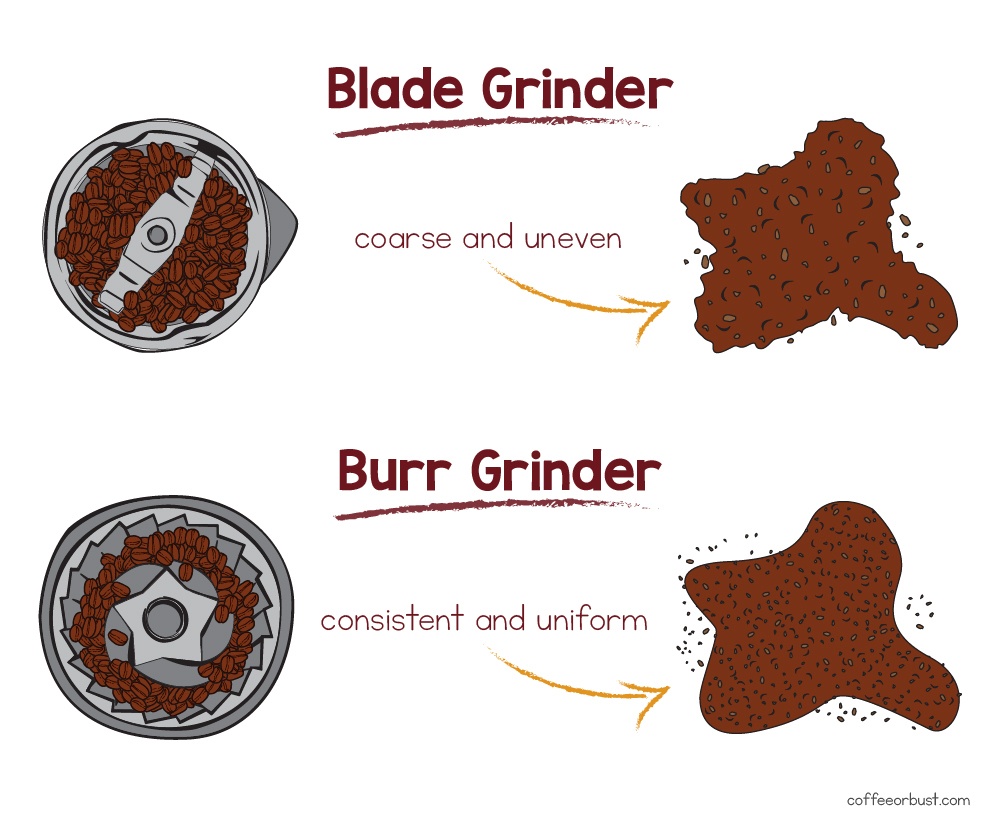
Our team has put in serious hours testing grinders across this price range — pulling espresso shots, timing grind output consistency, disassembling burr sets, and measuring particle distribution. The seven models in this roundup represent our strongest picks for 2026 across every major brewing method and budget sub-tier. For anyone who hasn't yet made the jump from a blade grinder and wants the full technical breakdown, our comparison guide on blade grinder vs. burr grinder covers exactly why the technology difference matters so much in the cup. We've also included a practical buying guide and FAQ section to help anyone still narrowing down their options — all of our coffee equipment recommendations are built on the same testing-first approach.
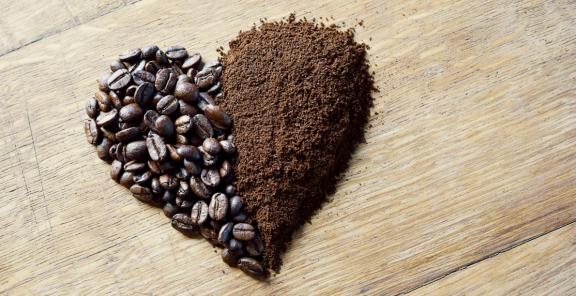
Blade grinders chop beans randomly — particle sizes range wildly from dust to chunks in the same dose, producing simultaneous over-extraction and under-extraction. Burr grinders crush beans between two abrasive surfaces at a controlled distance, producing uniform particle sizes that extract evenly and predictably. Blade grinders also generate frictional heat that degrades volatile aromatics before the grounds even hit the basket. A burr grinder at any price point eliminates these problems.
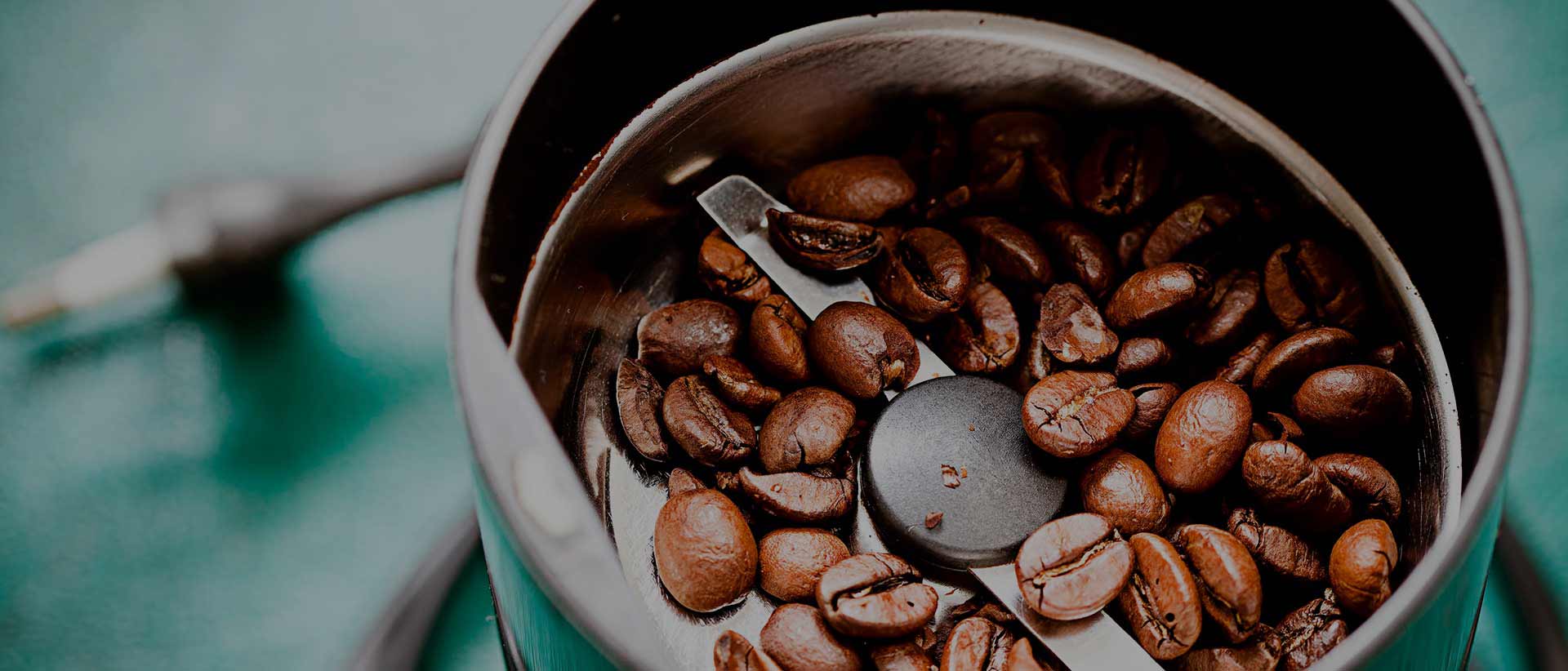
Best Choices for 2026
- #PreviewProductRating
- Bestseller No. 1
 Rating:

- Bestseller No. 2
 Rating:
 - Bestseller No. 3
 Rating:
 - Bestseller No. 4
 Rating:
 - Bestseller No. 5
 Rating:
 - Bestseller No. 6
 Rating:
 - Bestseller No. 7
 Rating:

In-Depth Reviews
1. Baratza Encore ESP Coffee Grinder — Best Overall
The Baratza Encore ESP is our top overall pick in 2026, and the reason is straightforward: no other grinder at this price point handles both espresso and filter brewing with this level of precision. The dual-range adjustment system is the standout feature — micro-steps numbered 1–20 cover high-resolution espresso dialing, while macro-steps 21–40 handle every filter method from Aeropress to coarse French press. Most budget grinders force a compromise between espresso accuracy and filter range. The Encore ESP refuses that compromise.
Baratza has won Specialty Coffee Association awards across multiple product categories, and this grinder carries that pedigree into an accessible package. Build quality is solid — the 40mm conical steel burrs are the same quality we'd expect to see in grinders costing twice as much. The front-mounted pulse button and single-handed hopper twist make it genuinely fast to operate during a busy morning. Grind retention is low, dosing is consistent, and the motor runs quietly relative to comparable electric burr grinders.
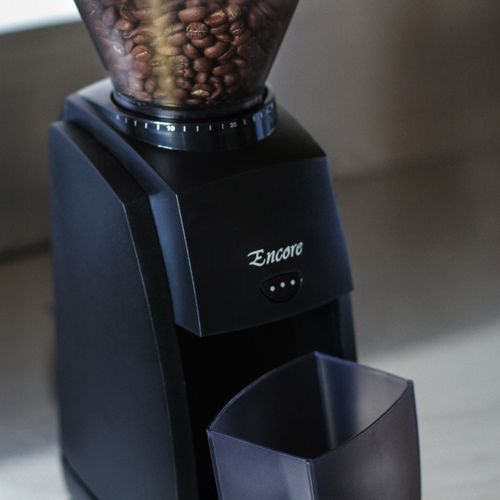
The Encore ESP also benefits from Baratza's exceptional service and parts ecosystem — replacement burrs, hoppers, and motors are sold directly by the manufacturer, which gives this grinder a much longer useful lifespan than comparable models. For home users who want a single grinder that grows with their skills, this is the definitive choice at the under-$200 mark.
Pros:
- Dual-range adjustment covers espresso micro-steps (1–20) and filter macro-steps (21–40) in a single unit
- SCA Award-winning burr design trusted by specialty coffee professionals
- Simple one-handed hopper twist and pulse button operation
- Low grind retention with consistent dose-to-dose output
- Excellent manufacturer support — replacement parts available directly
Cons:
- No built-in timer or digital dosing control
- Hopper capacity is modest for high-volume households
2. Breville BCG820DBL Smart Grinder Pro — Best for Versatility
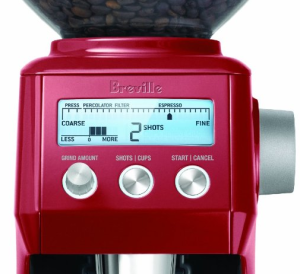
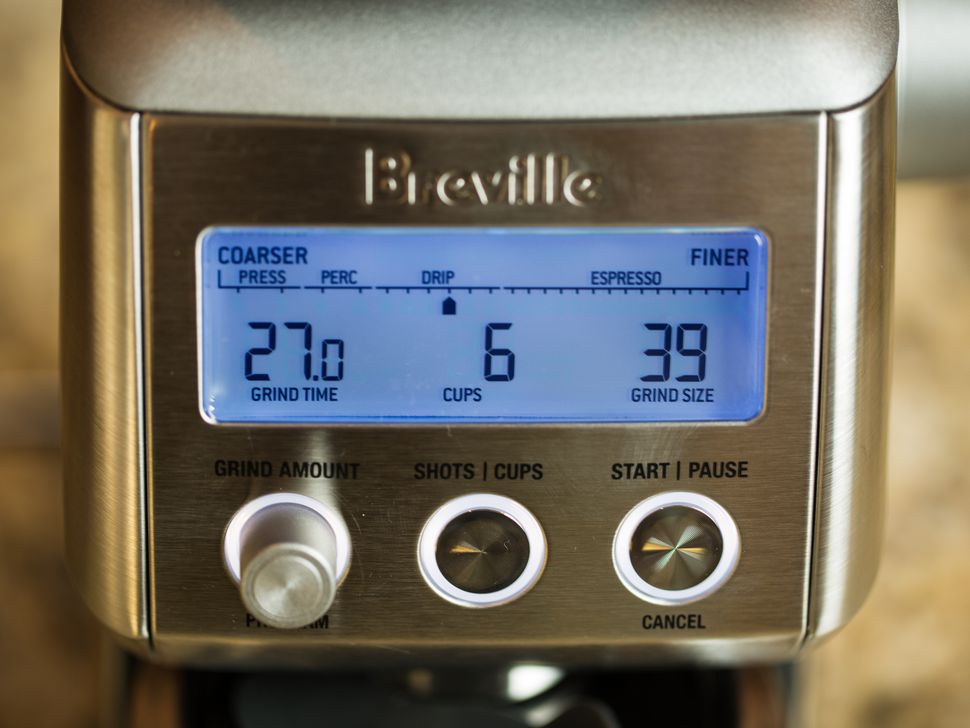
The Breville Smart Grinder Pro is the most feature-rich grinder in this roundup. Sixty unique grind settings combined with 0.2-second incremental dose timing give users a level of programmable control that typically costs considerably more. Dosing IQ — Breville's precision digital timing system — allows users to dial in an exact dose by programming grind time, then repeat that dose without deviation. For anyone running a home espresso setup seriously, that repeatability is extremely valuable.

The grind-to-portafilter feature is a practical standout. The Smart Grinder Pro ships with a cradle that accepts standard 54mm portafilters — and for users working with espresso machines like those discussed in our guide on bottomless portafilters, this direct-dosing workflow eliminates a step and reduces mess significantly. It also grinds directly into an airtight container, gold-tone basket, or paper filter, making it genuinely multi-method.
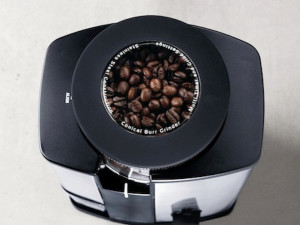
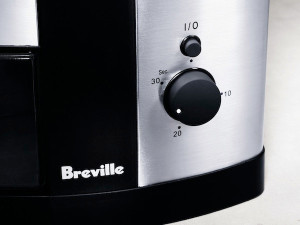
Build quality is excellent — the blue Damson colorway is a premium aesthetic choice, and the construction feels appropriately substantial. The conical steel burr set produces a grind distribution we consider among the best in this segment, with minimal fines generation at the espresso settings we tested most heavily.
Pros:
- 60 grind settings — wide enough range for Turkish through cold brew coarse
- Dosing IQ programmable timing in 0.2-second increments for exact dose repeatability
- Grinds directly into portafilter, airtight container, basket, or paper filter
- Premium build quality with a reliable conical burr set
- LCD display makes adjustments quick and readable
Cons:
- Static buildup can be an issue with certain bean types
- Timer-based dosing is less precise than weight-based dosing for espresso purists
3. OXO Brew Conical Burr Coffee Grinder — Best for Simplicity
The OXO Brew Conical Burr Grinder is our pick for home users who want a capable everyday grinder without learning a complex interface. The one-touch start system — which remembers the last grind setting — means the machine is ready to go the moment it's powered on. No resetting, no menu navigation, just push and grind. For households that brew the same method daily, that workflow efficiency adds up fast.
The precision stainless steel conical burrs produce a uniform grind that holds up well across all filter methods. Fifteen primary grind settings plus micro-adjustments between each step give 40+ effective positions — more than adequate for dialing in pour-over, drip, Aeropress, and French press. For anyone who brews French press regularly and wants a clear reference on grind-to-method pairing, our guide to making French press coffee pairs well with this machine. Cold brew coarse grind is achievable at the upper end of the range without issue.
The OXO's scale-out design is clean and compact. The stainless steel burrs are accessible for cleaning, the hopper seals reliably, and the grounds container fits snugly enough to avoid spill. It's not the grinder for espresso dialing — the grind steps near fine are too coarse for consistent shot pulling — but for filter brewing, it's a clean, reliable, well-engineered machine.
Pros:
- One-touch start with last-setting memory — zero friction daily workflow
- Precision stainless steel conical burrs for uniform particle distribution
- 15 settings plus micro-adjustments for broad filter method coverage
- Clean, compact design with intuitive operation
- Strong build quality for the price point
Cons:
- Not suitable for true espresso grind precision — steps near fine are too wide
- No portafilter cradle or timed dosing
4. Capresso Infinity Plus Conical Burr Grinder — Best Budget Pick
The Capresso Infinity Plus punches well above its price tier. Commercial-grade solid steel burrs combined with a gear-reduction motor that runs slower than standard motors — producing less friction, less heat, and better aroma preservation with every grind. Most budget grinders spin fast and cut corners on burr quality. Capresso does neither here, and the cup quality difference is noticeable from the first brew.
The 16-setting range spans extra fine (Turkish-grade) through very coarse (percolator and cold brew). That's a genuinely impressive range for the price point — and Turkish grind capability at under $100 is rare without sacrificing quality across the rest of the dial. The slow gear-reduction motor design reduces static buildup compared to high-speed motors, which means less mess on the counter during the grinding process.
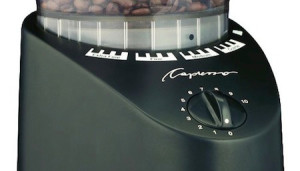
Capresso Infinity Nice Grinders Under 50 The hopper holds 8.8 ounces of whole beans — solid for daily use — and the grounds container seals cleanly. Build quality is plastic-heavy compared to the Baratza and Breville, but the burr set itself is the real story here, and it's legitimately commercial-grade. For anyone who brews drip, pour-over, or French press daily and wants to spend as little as possible without giving up burr quality, the Capresso Infinity Plus is our definitive budget recommendation.
Pros:
- Commercial-grade solid steel burrs at a well-below-average price
- Gear-reduction slow motor reduces heat and preserves aromatics
- 16-setting range from Turkish extra fine to percolator coarse
- Less static buildup than high-speed motor competitors
- Generous 8.8 oz hopper capacity
Cons:
- Plastic housing feels less premium than Baratza or Breville
- Setting markings could be more precise for espresso dialing
5. Bodum Bistro Electric Conical Burr Coffee Grinder — Best Glass Catcher Design
The Bodum Bistro stands out from this lineup in one specific, practical way: its borosilicate glass grounds container. Static electricity is the silent enemy of every electric burr grinder — it throws grounds up the sides of plastic containers, coats the lid, and makes cleanup a frustrating exercise. The Bodum's glass catcher eliminates this problem entirely. Grounds drop clean, the container is easy to rinse, and there's no residue buildup after multiple grind cycles.
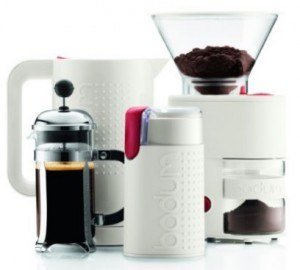
The stainless steel conical burrs crush beans cleanly across 14-plus grind settings, covering espresso through French press adequately. The preset timer is a useful convenience feature — set the grind duration and the machine stops automatically, which is practical for household routines. The Bistro is also available in multiple colors, and the design is genuinely attractive — a relevant point for households where kitchen aesthetics matter.
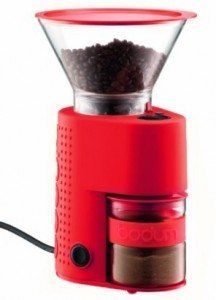
Where the Bistro falls short is espresso precision — the settings near the fine end don't offer enough resolution for dialing in a complex espresso profile, and the timer-based dosing isn't as accurate as we'd want for shot-to-shot repeatability on espresso. For filter brewers, though, it performs reliably, looks great, and the glass container is a legitimate quality-of-life advantage over every plastic-caught competitor in the segment.
Pros:
- Borosilicate glass catcher eliminates static cling and simplifies cleanup
- Preset timer stops the grind automatically — good for routine brewing
- 14+ settings from espresso through French press coarse
- Attractive design available in multiple colors
- Lid keeps grounds fresh between brew cycles
Cons:
- Espresso grind precision is inadequate for serious dialing
- Glass container adds fragility — needs careful handling
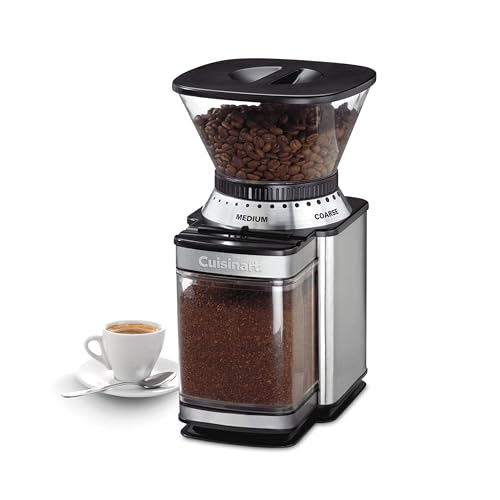
6. Cuisinart DBM-8P1 Coffee Grinder — Best for High-Volume Brewing
The Cuisinart DBM-8P1 is the practical choice for households that brew a full pot — or several — every day. The removable grind chamber holds enough grounds for up to 18 cups in a single dose, eliminating the need to run multiple grind cycles for large-batch brewing. The 8 oz. bean hopper and cup-size selector make it an efficient, set-it-and-forget-it machine for high-volume daily use.
The 18-position slide-dial grind selector covers ultra-fine through extra-coarse, providing a solid range for drip brewing, batch pour-over, and French press. Grind uniformity at the medium and medium-coarse settings — the range most drip users operate in — is consistent and reliable. The flat burr set is workmanlike rather than exceptional, and the machine does not pretend to be an espresso grinder. That's not a weakness — it's appropriate product positioning.
Both the bean hopper and grind chamber are fully removable, making cleaning straightforward. The black stainless aesthetic is clean and fits most kitchen styles without calling attention to itself. For families who run through significant coffee volume weekly and want a dependable, low-fuss grinding solution, the Cuisinart DBM-8P1 delivers consistent results at a competitive price point without unnecessary complexity.
Pros:
- Grind chamber holds enough for 4–18 cups in a single grind cycle
- 18-position grind selector with broad drip and filter method coverage
- Fully removable hopper and chamber for easy cleaning
- One-touch operation — minimal learning curve
- Reliable flat burr set for consistent medium-grind output
Cons:
- Not suitable for espresso grinding — insufficient fine-end resolution
- Grind quality at extreme settings (very fine or very coarse) is uneven
7. 1Zpresso J Manual Coffee Grinder — Best Manual Grinder
The 1Zpresso J is the best manual burr grinder we've tested under $200 — and it outperforms several electric models on grind quality. The 48mm stainless steel burrs are genuinely oversized for a hand grinder at this price, producing fast, efficient grinding with particle distribution that rivals grinders costing two to three times more. The 30-click-per-rotation internal adjustment system gives precise, repeatable settings across pour-over, Aeropress, and French press with zero ambiguity between steps.
The compact foldable handle design is a deliberate engineering decision — push, twist, and it locks flush to the body, preventing accidental rotation during storage or travel. For travelers, office users, or anyone working in a small kitchen, the 1Zpresso J delivers serious grinding capability in a form factor that fits in a bag pocket. A 35g bean capacity handles a standard two-cup pour-over without requiring a refill.
The internal adjustment mechanism deserves special mention. Most hand grinders use external ring adjustments that can shift during use — the 1Zpresso J's internal system locks positionally and stays dialed through the entire grind. Grind time for a 20g dose is approximately 60–90 seconds with a moderate pace, which is a reasonable trade-off for the quality delivered. Manual grinding isn't for everyone, but for the right buyer, the 1Zpresso J is genuinely the best grinder in this entire roundup for pour-over and Aeropress precision.
Pros:
- 48mm stainless steel burrs — oversized for this price, genuinely fast grinding
- 30-click internal adjustment per rotation with precise, stable settings
- Compact foldable handle ideal for travel and small kitchens
- Exceptional grind uniformity for pour-over and Aeropress
- No electricity required — fully portable
Cons:
- Manual effort required — 60–90 seconds per dose, which fatigues some users
- 35g capacity limits it for batch brewing larger volumes
Key Features to Consider When Choosing a Burr Coffee Grinder Under $200
Burr Type: Conical vs. Flat
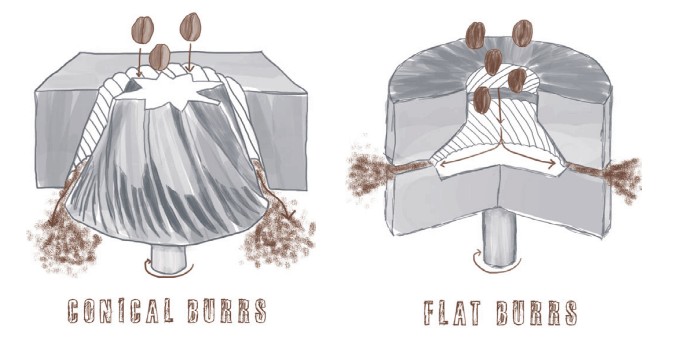
Every grinder in this roundup uses conical burrs except the Cuisinart DBM-8P1, which uses flat burrs. The difference matters in practice:
- Conical burrs — one cone-shaped burr sits inside a ring burr. Beans feed by gravity, grinding is slower, heat generation is lower, and particle distribution tends to be bimodal (two size peaks). Bimodal distribution produces a rich, full-bodied extraction — preferred by most espresso and filter coffee enthusiasts.
- Flat burrs — two parallel ring-shaped burrs face each other. Faster grinding, slightly more uniform unimodal distribution. Common in commercial grinders. In the sub-$200 range, flat burr quality varies more than conical.
For most home users in 2026, conical burr grinders offer a better quality-to-cost ratio at this price point. The slow motor and lower heat generation that come with quality conical designs protect delicate volatile aromatics that give specialty coffee its character.
Grind Range and Step Precision
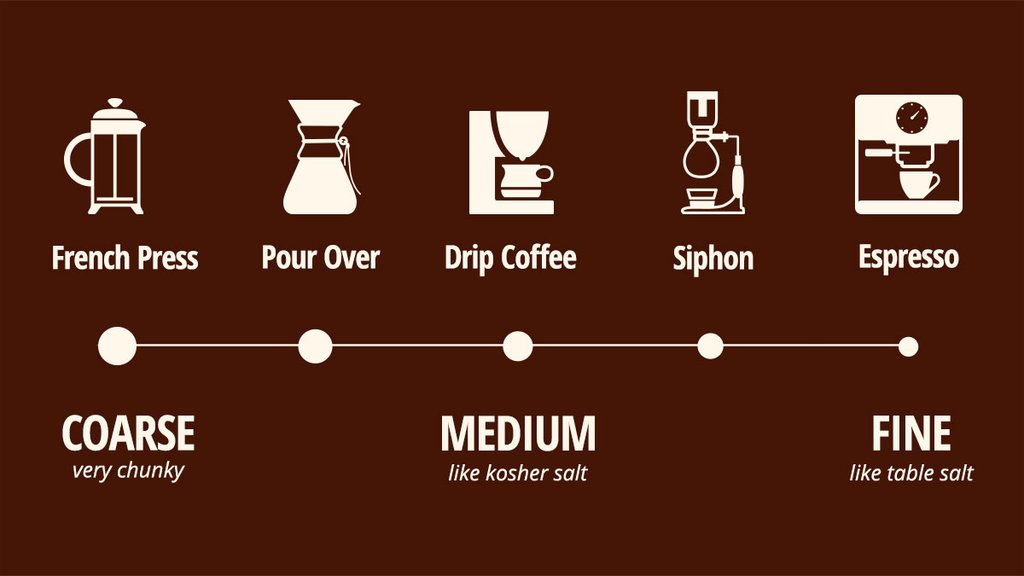
Grind step count is one spec that's frequently misunderstood. Raw step count means nothing without knowing how large each step is. Forty settings across a narrow range can deliver worse espresso dialing than twenty well-spaced settings across a full range. The questions that actually matter:
- Does the finest setting reach true espresso grind (18–25 microns target)?
- Are the steps near the fine end small enough to make a meaningful extraction difference between adjacent settings?
- Does the coarsest setting reach true French press / cold brew coarse (700–1000 microns)?
Of our picks, the Baratza Encore ESP leads on espresso precision with its dedicated micro-step system. The Breville Smart Grinder Pro leads on overall versatility with 60 settings plus 0.2-second timer increments. The Capresso Infinity Plus is the only budget model that reaches true Turkish-fine grind reliably.
Dosing Method and Workflow Fit
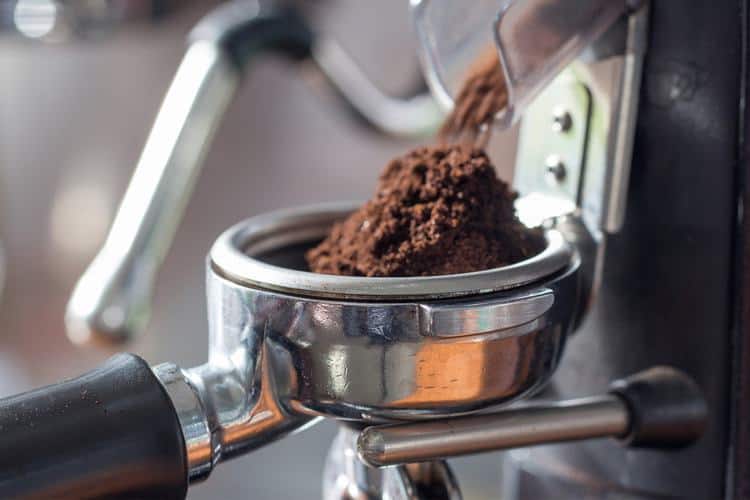
The right grinder depends heavily on how and where it will be used. The three most common use profiles we see:
- Daily home espresso — needs micro-step precision near the fine end, portafilter dosing compatibility, and dose consistency shot-to-shot. The Baratza Encore ESP and Breville Smart Grinder Pro are the correct choices here.
- Filter brewing (drip, pour-over, French press, cold brew) — needs a solid medium-to-coarse range, consistency across large doses, and easy cleanup. The OXO Brew, Bodum Bistro, Cuisinart DBM-8P1, and Capresso Infinity Plus all perform well in this role.
- Travel and portability — needs no power source, compact form factor, and a lockable adjustment system. The 1Zpresso J is the only grinder in this roundup that meets all three criteria without compromise.
Budget Reality: What $200 Gets in 2026
The sub-$200 bracket in 2026 offers genuinely excellent hardware. The ceiling has risen year-over-year — commercial-grade steel burrs, programmable digital timing, and multi-method range are no longer reserved for $300+ machines. A reasonable framework for matching budget to use case:
- Under $60 — Capresso Infinity Plus is the strongest choice. Best-in-class burr quality for the price, gear-reduction motor, and full grind range including Turkish.
- $60–$120 — OXO Brew and Bodum Bistro both perform well for filter brewing. The Cuisinart DBM-8P1 suits high-volume households.
- $120–$200 — Baratza Encore ESP and Breville Smart Grinder Pro. Either machine earns its price through precision, durability, and method versatility that cheaper models don't match.
- Manual grinders — The 1Zpresso J competes with electric grinders at 2–3x its price on grind quality alone. The trade-off is effort and time.
The single biggest mistake we see home buyers make is spending on an expensive espresso machine while leaving the grinder as an afterthought. A $100 burr grinder paired with a mid-range espresso machine will outperform a $50 blade grinder paired with a premium machine. Every time.
FAQs
What is the main advantage of a burr grinder over a blade grinder?
Burr grinders crush beans between two abrasive surfaces set at a precise distance, producing uniform particle sizes that extract evenly. Blade grinders chop beans randomly, creating a mix of fine dust and coarse chunks in the same batch — this forces simultaneous over-extraction and under-extraction in the same cup. Blade grinders also generate frictional heat that damages volatile aromatics. A burr grinder at any price point eliminates both problems and produces measurably better coffee.
Are conical burr grinders better than flat burr grinders for home use?
For most home users, yes. Conical burrs run slower, generate less heat, and deliver a bimodal particle distribution that suits espresso and filter brewing. Flat burrs grind faster and produce a more unimodal distribution — advantages that matter more in commercial, high-volume environments. In the sub-$200 range specifically, conical burr quality is more consistently excellent than flat burr quality, making conical the safer choice for home buyers.
Can a burr grinder under $200 handle espresso grinding well enough?
Yes — with specific model selection. The Baratza Encore ESP and Breville Smart Grinder Pro both deliver genuine espresso-grade grind precision under $200. Most other grinders in this roundup are optimized for filter methods and do not offer the micro-step precision required for reliable espresso dialing. For any buyer whose primary use case is espresso, we recommend staying with the Baratza Encore ESP or Breville Smart Grinder Pro specifically.
How often should a burr grinder be cleaned?
For daily home use, a brush cleaning every one to two weeks and a deep burr cleaning once every one to three months is our standard recommendation. Coffee oils accumulate on burr surfaces and in grounds pathways over time, turning rancid and introducing off-flavors into subsequent brews. Most grinders in this roundup feature removable burr sets and grounds chambers specifically to make this cleaning routine practical. Grinder cleaning tablets are an effective quick-clean option between deep cleanings.
What grind settings do different brewing methods require?
Grind size maps directly to brew method contact time. Espresso requires extremely fine grounds (high pressure, short contact time — approximately 25–30 seconds). Pour-over and Aeropress use medium-fine to medium. Drip machines use medium. French press requires coarse grounds to prevent over-extraction during a 4-minute steep — our complete guide to making French press coffee covers grind-to-steep ratio in detail. Cold brew uses the coarsest setting available, steeping for 12–24 hours in cold water. Every grinder in this roundup covers at least the medium through coarse range reliably.
Is a manual burr grinder worth considering over an electric model?
For the right buyer — absolutely. The 1Zpresso J delivers grind quality that surpasses several electric grinders at two to three times its price. Manual grinders are the right choice for travelers, anyone with limited kitchen space, office users without power access, and any home brewer who prioritizes grind quality over convenience. The realistic trade-off is 60–90 seconds of active grinding per dose. For households that prioritize speed and volume over portability, an electric model is the more practical daily driver.
Buy on Walmart
- Baratza Encore ESP Coffee Grinder ZCG495BLK, Black — Walmart Link
- Breville BCG820DBL Smart Grinder Pro for Coffee and Espresso — Walmart Link
- OXO Brew Conical Burr Coffee Grinder - Silver, Stainless Ste — Walmart Link
- Capresso Infinity Plus Conical Burr Grinder, Black — Walmart Link
- Bodum Bistro Electric Conical Burr Coffee Grinder, Preset Ti — Walmart Link
- Cuisinart Coffee Grinder, Electric One-Touch Automatic Burr — Walmart Link
- 1Zpresso J Manual Coffee Grinder Silver Capacity 35g with As — Walmart Link
Buy on eBay
- Baratza Encore ESP Coffee Grinder ZCG495BLK, Black — eBay Link
- Breville BCG820DBL Smart Grinder Pro for Coffee and Espresso — eBay Link
- OXO Brew Conical Burr Coffee Grinder - Silver, Stainless Ste — eBay Link
- Capresso Infinity Plus Conical Burr Grinder, Black — eBay Link
- Bodum Bistro Electric Conical Burr Coffee Grinder, Preset Ti — eBay Link
- Cuisinart Coffee Grinder, Electric One-Touch Automatic Burr — eBay Link
- 1Zpresso J Manual Coffee Grinder Silver Capacity 35g with As — eBay Link
The grinder is the most important piece of equipment in any coffee setup — spend accordingly, and every brew method improves immediately.


About Selmir Omic
Selmir Omic is a coffee enthusiast and writer based in San Francisco with a particular interest in specialty coffee culture, single-origin beans, and the relationship between roast level and brewing method. He approaches coffee evaluation from a flavor and origin perspective, covering tasting notes, roast profiles, and the farm-to-cup story behind the beans that serious coffee drinkers seek out. At KnowYourGrinder, he covers coffee bean and roast reviews, taste tests, and guides to specialty coffee for readers building their palate and expanding their brewing knowledge.
Get FREE Coffee Gifts now. Or latest free grinders from our best collections.
Disable Ad block to get all the secrets. Once done, hit any button below