Best Coffee Grinder for Espresso: Reviews, Buying Guide and FAQs 2026
Which espresso grinder should you actually buy in 2026? That question has a clear answer if you know what to look for — and the Baratza Sette 270Wi leads the pack with its grind-by-weight precision, Specialty Coffee Association award, and unmatched consistency for home espresso. But the right grinder depends on your workflow, budget, and how obsessive you want to get about dialing in your shot.
Espresso is the most demanding brewing method for grind quality. A variance of just a few microns in particle size can mean the difference between a clean, balanced 25-second shot and a channeling, bitter disaster. Your grinder is the most important variable in that equation — more important than your machine, your tamper, or your technique. If you're still running a blade grinder, you already know something is off. Blade grinders produce a wildly inconsistent mix of fine powder and coarse chunks, which makes it nearly impossible to pull a repeatable shot. For a full breakdown of why that matters, check out our guide on blade grinders vs burr grinders. For all our picks across every price tier, visit our coffee equipment hub.
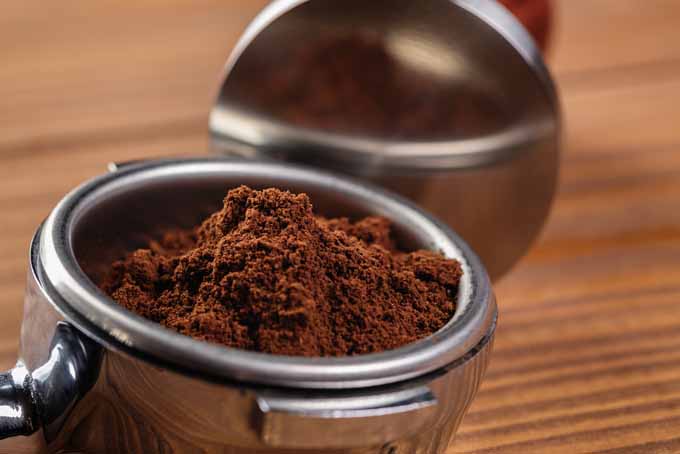
In this 2026 guide, we've put together hands-on reviews of seven top-performing espresso grinders — from the budget-friendly Eureka Mignon Notte to the enthusiast-grade MiiCoffee DF64 II. Each one has been evaluated on burr quality, grind consistency, dosing accuracy, build quality, and real-world usability. We've also included a detailed buying guide covering every spec that matters, plus a FAQ section to answer the most common questions we hear. Read straight through or jump to the section you need.

Contents
- Standout Models in 2026
- Our Hands-On Reviews
- Baratza Sette 270Wi — Best for Grind-by-Weight Precision
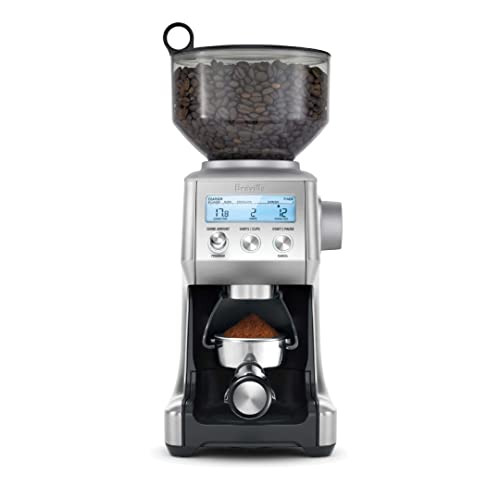
- Breville Smart Grinder Pro — Best Mid-Range Value
- Eureka Mignon Specialita — Best for Quiet Performance
- Eureka Mignon Notte — Best Entry-Level Eureka
- Eureka Mignon Silenzio — Best Silent 55mm Grinder
- Baratza Vario+ — Best Flat Ceramic Burr Grinder
- MiiCoffee DF64 II — Best for Single Dosing
- Key Features to Consider When Choosing
- Common Questions
- Key Takeaways
Standout Models in 2026
- #PreviewProductRating
- Bestseller No. 1
 Rating:

- Bestseller No. 2
 Rating:
 - Bestseller No. 3
 Rating:
 - Bestseller No. 4
 Rating:
 - Bestseller No. 5
 Rating:
 - Bestseller No. 6
 Rating:
 - Bestseller No. 7
 Rating:
Our Hands-On Reviews
1. Baratza Sette 270Wi-Grind by Weight Conical Burr Grinder — Best for Grind-by-Weight Precision
The Baratza Sette 270Wi earned a Best New Product award from the Specialty Coffee Association back in 2016, and it has remained one of the most respected home espresso grinders ever since. The core innovation here is the grind-by-weight system, which uses Acaia weighing technology and Bluetooth connectivity to dose your grounds to within a tenth of a gram. You get three programmable dosing buttons, so you can dial in your single, double, and alternate dose and never think about it again. That level of repeatability is rare at this price point.
The Sette's grind path is unusually short and direct — grounds fall straight down into the portafilter with minimal retention. This isn't just a convenience feature; it means you're grinding fresh every time with almost no stale grounds carried over from a previous session. The conical burr design handles espresso exceptionally well and also does a solid job at finer manual brewing methods like AeroPress and Hario V60. Build quality is sturdy without being flashy, and Baratza's customer support and parts availability are widely regarded as the best in the consumer grinder space.
If you want a grinder you can set once, program your doses, and pull consistent shots every morning without fiddling, the Sette 270Wi is the most efficient path to get there. It's not the quietest grinder on this list, and it's not the cheapest — but for the combination of weighing precision, espresso performance, and repeatable dosing, nothing else at this tier comes close.
Pros:
- Grind-by-weight with Acaia technology — accurate to 0.1g
- Three programmable dosing presets for flexible workflow
- Very low grind retention — grinds straight into the portafilter
- SCA award-winning performance
- Outstanding Baratza after-sales support and parts availability
Cons:
- Noticeably louder than sound-insulated competitors
- Premium price point may not suit entry-level budgets
2. Breville BCG820BSS Smart Grinder Pro — Best Mid-Range Value
The Breville Smart Grinder Pro is one of the most versatile grinders in the mid-range segment. With 60 unique grind settings and a precision digital timer adjustable in 0.2-second increments, you have granular control over your dose without spending hours recalibrating. The conical burr design delivers clean, consistent particle distribution across the entire espresso range, and the dosing IQ system makes it easy to dial in and repeat your preferred extraction.
One of the standout practical features is the flexibility in how you dose. You can grind directly into your portafilter, into an airtight container, into a gold tone filter basket, or into a paper filter. That makes this grinder genuinely versatile — you're not locked into one brewing method. The stainless steel housing looks sharp on a countertop and feels solid. The timer-based dosing is repeatable enough for most home users, though it doesn't match the precision of a scale-integrated grinder like the Sette 270Wi.
For the price, the Smart Grinder Pro delivers outstanding performance. It won't satisfy a seasoned home barista who is chasing shot-to-shot perfection by the gram, but for most people making espresso or filter coffee daily, this is a dependable, well-built machine that removes most of the guesswork. It's a particularly smart choice if you brew multiple methods and want one grinder to cover all of them.
Pros:
- 60 grind settings covering espresso through coarse filter
- Precise 0.2-second timer increments for consistent dosing
- Grinds directly into portafilter, airtight container, or filter basket
- Solid stainless steel build quality
- Strong value proposition at the mid-range price tier
Cons:
- Timer-based dosing is less precise than weight-based systems
- Grind adjustment stepping can feel coarse for fine espresso dialing
3. Eureka Mignon Specialita Espresso Grinder — Best for Quiet Performance
The Eureka Mignon Specialita is the flagship of the Mignon family and it earns that position. It packs 55mm hardened steel flat burrs — the largest available in the Mignon line — into a sound-insulated housing that runs noticeably quieter than most grinders in this class. If you grind before anyone else in the house wakes up, or you simply value a quieter kitchen environment, the Specialita is the clear choice among the Mignon range.
The touchscreen interface is clean and responsive, allowing you to program grind time for single shots, double shots, and continuous mode. Stepless burr adjustment gives you near-infinite grind settings, which is critical for espresso — you don't want to be locked between steps when you need to move just a hair finer or coarser to dial in a new bag of beans. The 55mm flat burrs generate excellent particle distribution with good clarity in the cup. Flat burrs in this size range typically produce a brighter, more defined flavor profile compared to conical alternatives.
The Specialita also looks the part. The Italian design aesthetic is clean and premium, available in multiple color options including the distinctive white finish. It's a grinder that earns its place on a visible countertop. At its price point, it's one of the most complete packages you can buy — quiet operation, touchscreen control, large flat burrs, and stepless adjustment all in one compact footprint.
Pros:
- Sound-insulated case — among the quietest in its class
- 55mm hardened steel flat burrs for excellent particle distribution
- Touchscreen with programmable single, double, and continuous modes
- Stepless adjustment for precise espresso dialing
- Premium Italian design and build quality
Cons:
- Higher price point within the Mignon family
- Flat burrs retain a small amount more than conical designs
4. Eureka Mignon Notte Espresso Grinder — Best Entry-Level Eureka
The Eureka Mignon Notte is the entry point into the Mignon family, and it's a strong one. It uses 50mm espresso-focused steel burrs with a high-sensitivity stepless adjustment mechanism that gives you precise control over grind size without the complexity of digital controls or programmable timers. It's a manual-dosing grinder in the most practical sense — press your portafilter against the switch and the motor runs. Release the pressure and it stops. That simplicity is a feature, not a limitation.
The stepless adjustment on the Notte is excellent. The free-moving knob lets you make very small, incremental changes to grind size, which is exactly what espresso dialing requires. No stepped settings to jump between — you move the knob until the shot tells you to stop. The 150g hopper capacity is adequate for daily home use, and the compact footprint fits neatly on a crowded countertop without dominating the space.
Where the Notte gives ground to its Mignon siblings is in the burr size and the lack of timed dosing. If you want programmable shots or the quieter operation of a sound-insulated case, you'll want to step up to the Silenzio or Specialita. But if you want proven Eureka burr quality, stepless adjustment, and a reliable espresso-focused grinder at the lowest price in the family, the Notte delivers without compromise on what matters most.
Pros:
- Stepless adjustment for near-infinite grind size control
- Manual portafilter-activated dosing — simple and reliable
- Compact and well-built for its price
- Entry point into the respected Mignon lineup
Cons:
- No timed or programmable dosing
- Smaller 50mm burrs vs. the Specialita's 55mm
- No sound insulation — louder than upper Mignon models
5. Eureka Mignon Silenzio Espresso Grinder — Best Silent 55mm Grinder
The Eureka Mignon Silenzio sits between the Notte and the Specialita in both price and capability. The defining feature is the name: it is exceptionally quiet. A thick metal case filled with rubber mounts, gaskets, and vibration-dampening covers combines to produce one of the lowest-resonance grind profiles you'll find at this price point. If noise is a genuine concern for your living situation, the Silenzio is the most cost-effective solution in this lineup.
The upgraded 55mm hardened steel flat burrs match what the Specialita uses, which means you're getting the same burr quality and particle distribution in a quieter, more affordable package. The key difference is the control interface — the Silenzio uses timed dosing (programmable single and double shots) rather than the Specialita's touchscreen, which is a reasonable trade-off for the price reduction. Stepless adjustment is present, giving you the same fine-tuning capability you'd expect from any serious espresso grinder.
One genuinely useful engineering decision on the Silenzio is the bottom-burr adjustment design. By adjusting below the motor mount rather than above it, you can remove the top burr for cleaning without losing your grind setting. That's a practical advantage in daily use — cleaning your burrs regularly is important for espresso quality, and not having to re-dial after every clean saves real time.
Pros:
- Exceptional noise reduction via thick metal case and rubber damping
- 55mm upgraded flat burrs — same spec as the Specialita
- Bottom-burr adjustment preserves grind setting during cleaning
- Stepless adjustment for precise dialing
- Strong value vs. the Specialita for noise-focused buyers
Cons:
- Timed dosing rather than touchscreen — less intuitive interface
- No programmable continuous mode
6. Baratza Vario+ Flat Ceramic Burr Grinder — Best Flat Ceramic Burr Grinder
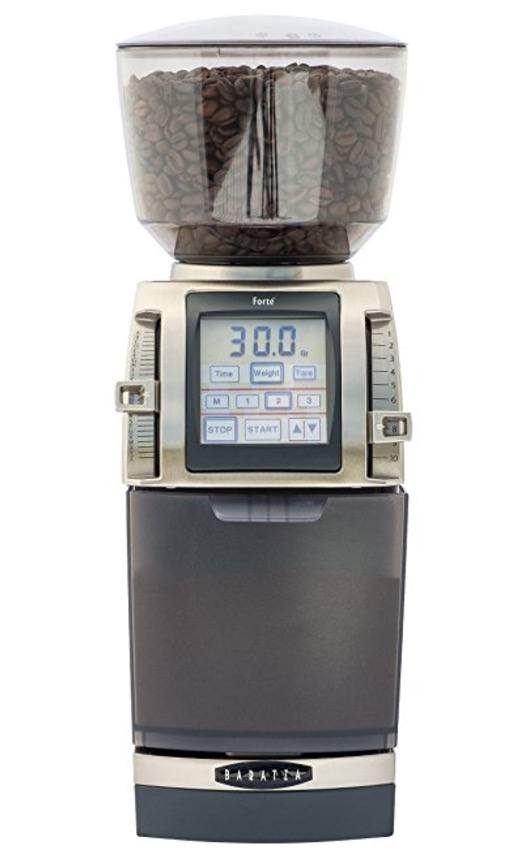
The Baratza Vario+ is the most technically sophisticated grinder on this list for the espresso purist who also brews filter coffee. At its core are 54mm commercial-grade ceramic flat burrs from Ditting, encased in an upgraded metal grind chamber that improves shot-to-shot consistency. The Vario+ offers 220 steps of macro and micro adjustment — a combination that gives you coarse-range selection via macro and fine espresso calibration via micro. This two-axis system is one of the best interfaces available for dialing in espresso precisely while still being able to jump to a coarse grind for pour-over without losing your espresso setting.
The front-mounted LED control panel allows you to save up to three time-based presets. That's not quite the elegance of the Sette 270Wi's weight-based dosing, but it's efficient for a household with multiple brewing methods. The metal grind chamber is a meaningful upgrade from the original Vario — it reduces static and improves grind channeling behavior, which translates to a cleaner, more consistent bed of grounds in your portafilter.
Ceramic burrs run cooler than steel — an advantage for lighter roasts and longer grinding sessions where heat buildup can mute volatile aromatics. The trade-off is that ceramic burrs are more brittle and can chip if a small stone enters the hopper. For everyday specialty coffee use, this is rarely a practical concern. If you want a single grinder that can produce competition-level espresso shots and then dial back for weekend pour-over, the Vario+ is the most complete performer on this list.
Pros:
- 54mm Ditting commercial ceramic flat burrs
- 220 steps of macro + micro adjustment for espresso precision
- Metal grind chamber improves consistency vs. original Vario
- Three programmable time presets
- Versatile — handles espresso through coarse filter brewing
Cons:
- Timer-based dosing, not weight-based
- Ceramic burrs can chip if debris enters the hopper
- Larger footprint than Mignon grinders
7. MiiCoffee DF64 II Single Dosing Coffee Grinder — Best for Single Dosing
The MiiCoffee DF64 II is built from the ground up for single-dose workflow — and it executes that mission better than anything else on this list. True zero retention under 0.1 gram means you're grinding exactly what you weighed out, with no stale grounds from the previous session contaminating your dose. The Version 2.5 inner chute redesign wraps the plasma generator probes around the chute rather than inside it, which reduces static-driven clumping and improves the cleanliness of the grind exit. Even without the blow-out funnel, retention is effectively zero.
The 64mm custom stainless steel flat burrs are the same diameter you'd find in commercial single-dose grinders costing significantly more. They produce excellent particle uniformity at espresso fineness with a flavor profile that skews bright and defined — well-suited for single-origin coffees where you want to taste clarity in the cup. If you want to push performance further, the DF64 II is upgradeable to SSP burrs, which opens up the flavor profiles available — sweet and heavy, clarity-focused, or juicy depending on which SSP variant you choose.
The trade-off for all this single-dose performance is workflow. You're weighing every dose before grinding, using the blow-out funnel to clear the chute, and loading beans by hand rather than topping off a hopper. For specialty coffee enthusiasts chasing the best possible shot from a different bag every day, that's the right workflow. For someone who wants to fill a hopper on Monday and pull shots all week without thinking, the Baratza Sette 270Wi is a better match. But if you're serious about single-origin espresso in 2026, the DF64 II is the most capable grinder at this price.
Pros:
- True zero retention (<0.1g) — no stale grounds between doses
- 64mm flat burrs — commercial-diameter performance at home price
- SSP burr upgrade path for flavor profile customization
- Plasma anti-static system in Version 2.5 reduces clumping
- Ideal for single-origin espresso and daily bean switching
Cons:
- Single-dose workflow requires more hands-on prep per shot
- No hopper for bulk-grinding convenience
- Not ideal for high-volume households
Key Features to Consider When Choosing a Coffee Grinder for Espresso
Before you spend your money, understand what separates an espresso grinder from a general-purpose coffee grinder. Espresso requires a very fine, very consistent grind — and the margin for error is narrow. Here are the specifications that actually matter.
Burr Type: Conical vs. Flat
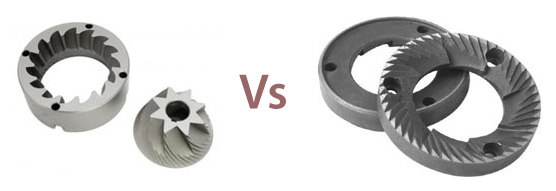
This is the most debated spec in home espresso, and the short answer is: both work well at this level. The practical differences are more about flavor profile and workflow than absolute quality.
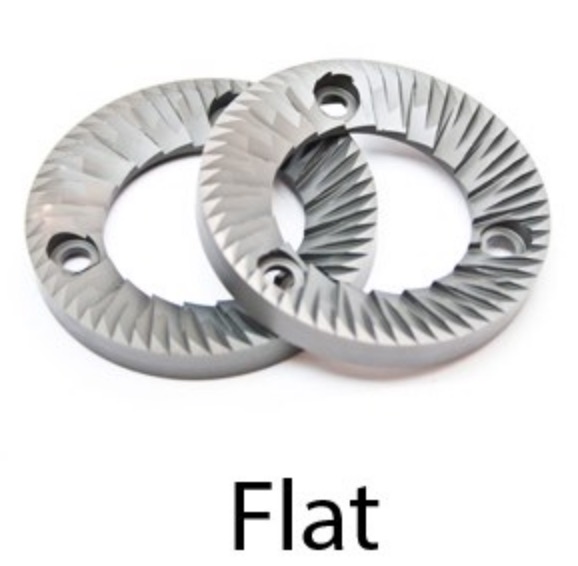
- Flat burrs produce a more even particle size distribution and tend to deliver a brighter, more defined flavor with better clarity. They generate more fines, which can increase extraction efficiency. Most commercial single-dose grinders use flat burrs.
- Conical burrs produce a bimodal distribution — a mix of coarser particles and fines — which creates a rounder, sweeter cup with more body. They also retain less coffee between doses, run quieter, and are generally easier to clean.
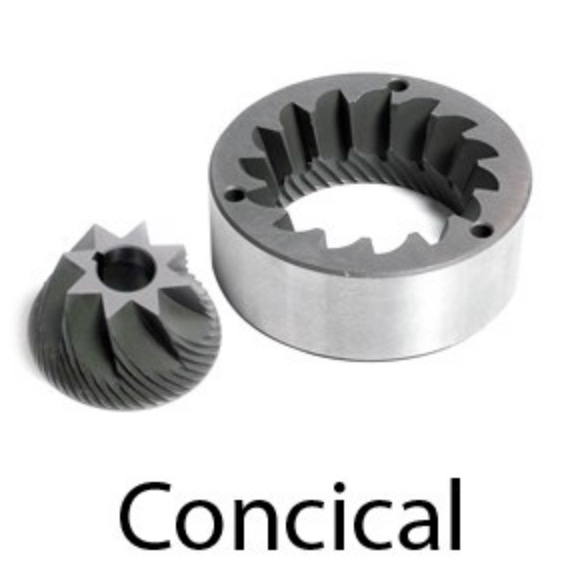
For most home baristas, conical burrs are more practical. For the single-origin enthusiast chasing maximum clarity, flat burrs win. Neither is objectively superior — it's a preference decision.
Steel Burrs vs. Ceramic Burrs
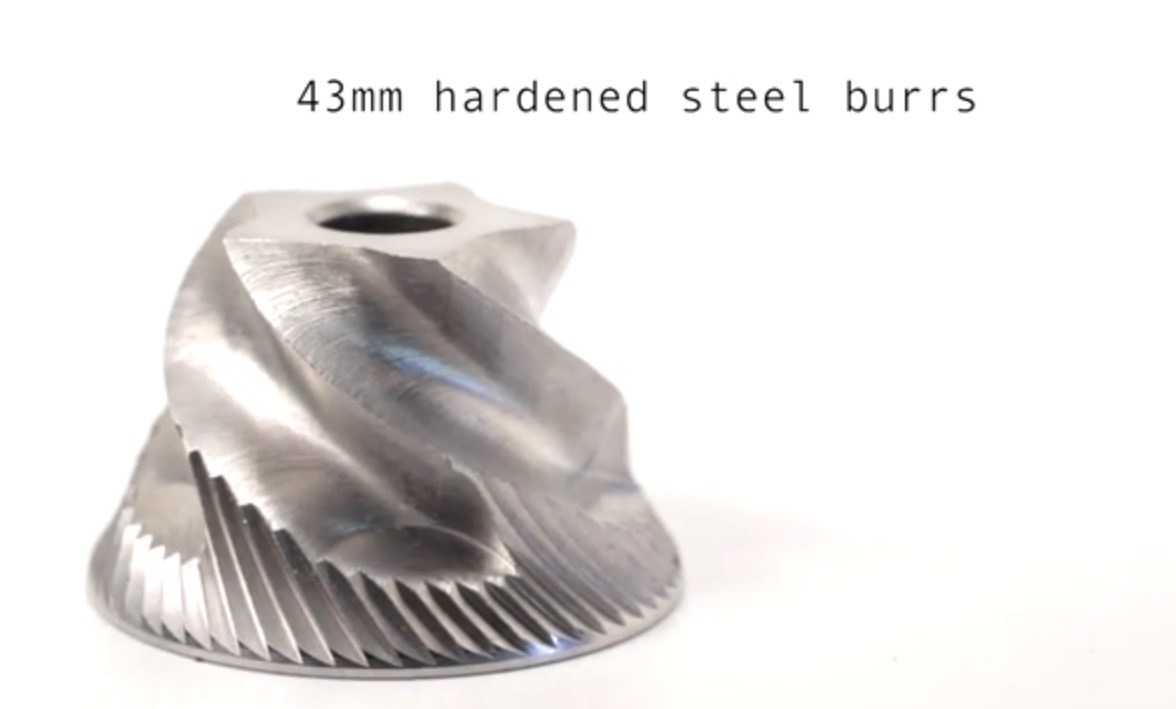
The burr material affects heat generation, durability, and flavor. Here's what you actually need to know:
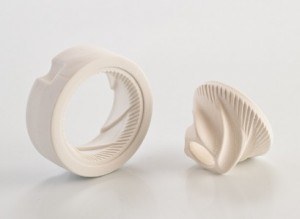
- Steel burrs heat up faster but are extremely durable and impact-resistant. They're the standard choice for most home and commercial grinders. Easy to replace and widely available in upgrade variants (SSP, for example).
- Ceramic burrs run significantly cooler, which protects heat-sensitive aromatic compounds during grinding — an advantage for light roasts. They're harder but more brittle, meaning a small stone in the hopper can chip the burr. Ditting ceramic burrs, as used in the Baratza Vario+, represent the commercial-grade end of this material.
For most users pulling espresso from medium or dark roast beans, steel burrs are the practical choice. If you exclusively use light roasts or high-altitude specialty beans, ceramic burrs offer a measurable flavor advantage.
Grind Adjustment: Stepped vs. Stepless
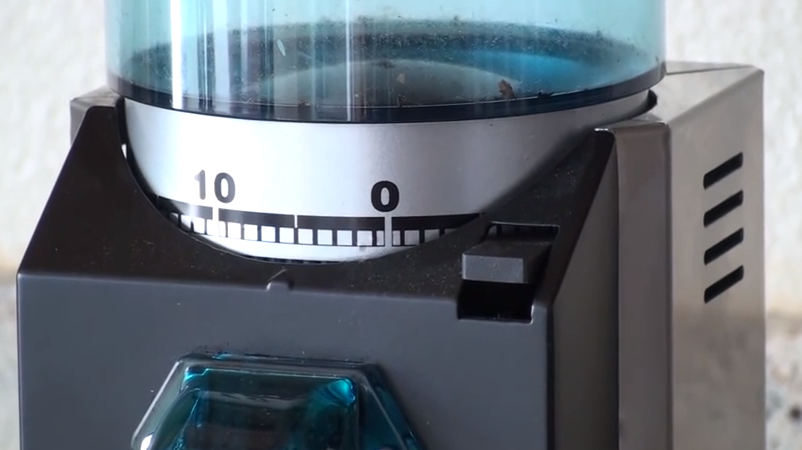
Every time you change a bag of beans, you'll need to adjust your grind. This is where stepped vs. stepless adjustment becomes critical for espresso.
- Stepped adjustment (like the Breville Smart Grinder Pro's 60 settings or the Baratza Vario+'s 220-step macro/micro system) locks you into fixed increments. More steps means finer control, but you're still constrained to defined positions.
- Stepless adjustment (all three Eureka Mignon models) gives you infinite adjustment within the range. You can make micro-adjustments of any size, which is the most precise way to dial in espresso. The trade-off is that it's harder to return to a previous setting with precision after a large adjustment.
For espresso, stepless adjustment is generally preferred among enthusiasts. But a well-designed stepped system with enough steps — like the Baratza Vario+'s 220-step range — can get you close enough for most home setups.
Dosing Method and Hopper Capacity

How you load and dose beans shapes your entire workflow. There are three main approaches used across this list:
- Grind-by-weight (Baratza Sette 270Wi): The most accurate method. A built-in scale stops the motor when the target weight is reached. Ideal for high-repetition home setups where consistency is the priority.
- Timed dosing (Breville Smart Grinder Pro, Eureka Silenzio, Baratza Vario+): Programs grind duration in small increments. Less precise than weight-based dosing — grind speed can vary with bean freshness — but accurate enough for most home use.
- Manual dosing (Eureka Notte): No timer, no scale integration. You control start and stop manually. Simple, reliable, and puts the workflow entirely in your hands.
- Single dosing (MiiCoffee DF64 II): You weigh beans before grinding and load exactly what you need. Zero waste, maximum freshness, ideal for variety-focused brewing.
Hopper capacity matters less than dosing method for espresso. Most home espresso drinkers pull one or two shots at a time, so a 150–300g hopper is more than adequate. The exception is the DF64 II, which bypasses the hopper concept entirely. Also, the bean quality you're buying matters enormously — if you haven't already explored the best Arabica coffee beans, that's worth reading before you commit to a grinder.
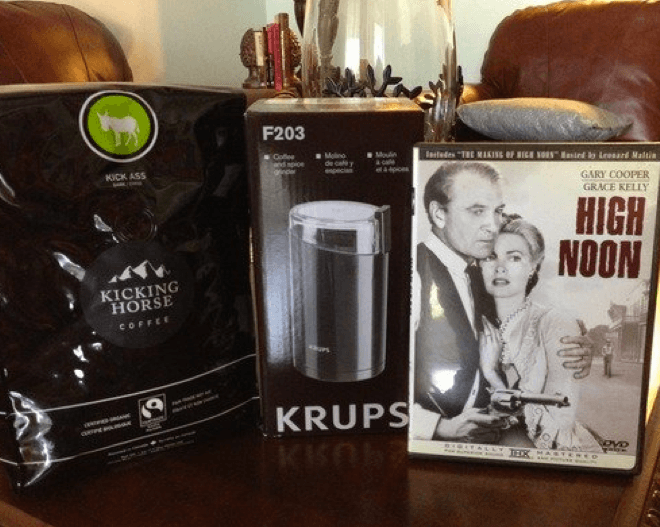
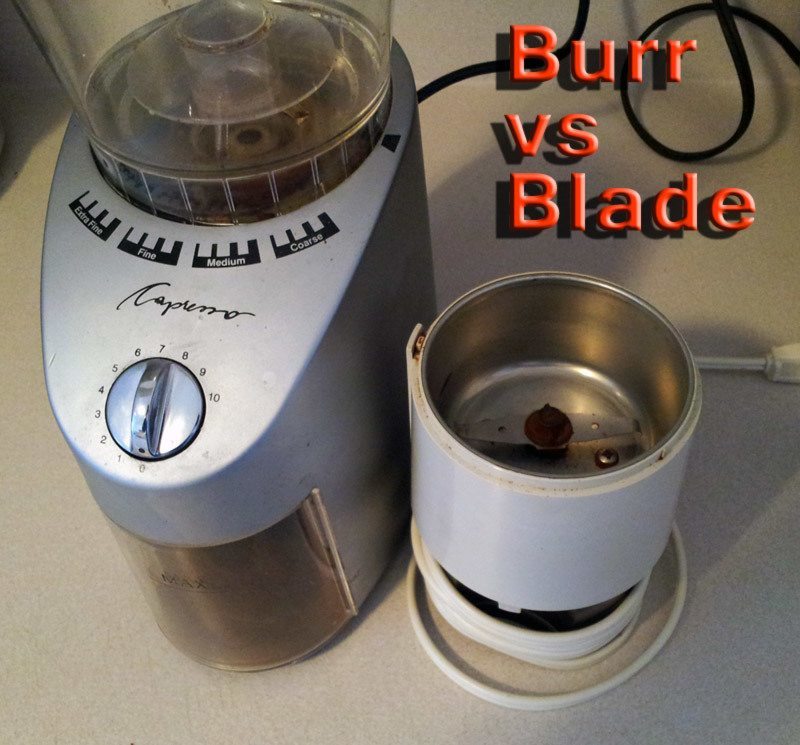
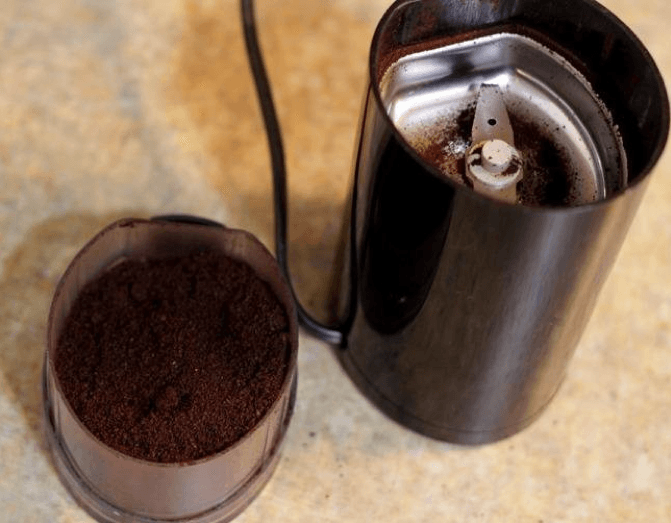
One final note: avoid blade grinders entirely for espresso. A blade grinder like the Krups F203 cannot produce a consistent espresso grind. It chops beans randomly rather than milling them, resulting in a mix of powder and chunks that will never pull a balanced shot — regardless of how much you spend on your espresso machine. If you want to understand exactly why, our blade vs. burr grinder comparison walks through the full argument.
You also need to consider how espresso machine pressure interacts with grind size. If you're unsure how bar pressure affects extraction, our guide on espresso machine bar pressure explains exactly what those numbers mean for your grind decisions. For the definitive academic definition of espresso, the Wikipedia article on espresso is a reliable starting reference.
For those on a tighter budget who still want a quality burr grinder, our roundup of the best burr coffee grinders under $200 covers the top picks at every sub-$200 price point — several of which perform admirably for espresso.
Common Questions
What makes a grinder suitable for espresso specifically?
Espresso requires a very fine, very consistent grind — typically between 200 and 400 microns depending on your machine and roast. A suitable espresso grinder needs burrs large enough and sharp enough to produce that fineness without generating excessive heat or uneven particle distribution. It also needs fine-tuned adjustment capability (stepless or high-step-count stepped) so you can dial in precisely. Generic multi-purpose grinders — especially blade grinders — cannot meet these requirements reliably.
Is single dosing worth it for home espresso in 2026?
Single dosing is worth it if you frequently switch between bean varieties or prioritize freshness above all else. By weighing each dose before grinding, you eliminate stale grounds entirely and waste nothing. The downside is workflow — it adds 30–60 seconds to your preparation compared to a hopper-based grinder. For specialty coffee enthusiasts who buy multiple bags at once, the MiiCoffee DF64 II's zero-retention design makes single dosing practical and rewarding.
How often should you clean your espresso grinder?
For daily home use, a light brush-out of the grind chute every week is good practice. A full disassembly and burr cleaning should happen every 1–3 months depending on usage volume. Rancid coffee oils accumulate on burrs over time and introduce a bitter, stale flavor into fresh grinds. The Eureka Mignon Silenzio's bottom-burr adjustment design is particularly convenient here — you can remove and clean the top burr without losing your dialed-in grind setting.
Can you use an espresso grinder for other brewing methods?
Yes — most espresso grinders on this list can handle filter brewing methods as well, though some are more versatile than others. The Baratza Vario+ and Breville Smart Grinder Pro are explicitly designed for multiple brewing methods and can grind from espresso-fine through coarse French press. The Eureka Mignon range is optimized for espresso but can handle AeroPress and V60 at their upper adjustment range. Single-dose grinders like the DF64 II are primarily espresso-focused.
What is grind retention and why does it matter?
Grind retention is the amount of ground coffee that remains inside the grinder's burr chamber and chute after you stop grinding. High retention means stale grounds from a previous session contaminate your fresh grind. For espresso, where dose precision to 0.1 gram matters, high retention makes consistent dosing nearly impossible without purging waste grinds first. The MiiCoffee DF64 II achieves under 0.1g retention. The Baratza Sette 270Wi is also known for very low retention due to its direct-path grind design.
Are flat burrs better than conical burrs for espresso?
Neither is universally better — they produce different results that suit different preferences. Flat burrs generate a more uniform particle size distribution, which produces a brighter, more defined espresso with higher extraction clarity. Conical burrs produce a bimodal distribution — a mix of sizes — that results in a rounder, sweeter, more body-forward shot. Most home baristas find conical burrs easier to dial in and more forgiving with a variety of roast levels. Serious single-origin enthusiasts often prefer the clarity that flat burrs produce.
Buy on Walmart
- Baratza Sette 270Wi-Grind by Weight Conical Burr Grinder — Walmart Link
- Breville BCG820BSS Smart Grinder Pro for Coffee and Espresso — Walmart Link
- Eureka Mignon Specialita Espresso Grinder | Sound-Insulated — Walmart Link
- Eureka Mignon Notte Espresso Grinder | 150g | 50mm Steel Bur — Walmart Link
- Eureka Mignon Silenzio Espresso Grinder | Silent Technology — Walmart Link
- Baratza Vario+ Flat Ceramic Burr Grinder (Black) — Walmart Link
- MiiCoffee DF64 II Single Dosing Coffee Grinder (Black) — Walmart Link
Buy on eBay
- Baratza Sette 270Wi-Grind by Weight Conical Burr Grinder — eBay Link
- Breville BCG820BSS Smart Grinder Pro for Coffee and Espresso — eBay Link
- Eureka Mignon Specialita Espresso Grinder | Sound-Insulated — eBay Link
- Eureka Mignon Notte Espresso Grinder | 150g | 50mm Steel Bur — eBay Link
- Eureka Mignon Silenzio Espresso Grinder | Silent Technology — eBay Link
- Baratza Vario+ Flat Ceramic Burr Grinder (Black) — eBay Link
- MiiCoffee DF64 II Single Dosing Coffee Grinder (Black) — eBay Link
Key Takeaways
- The Baratza Sette 270Wi is the top overall pick for home espresso in 2026 — its grind-by-weight precision, low retention, and SCA award-winning performance make it the benchmark at its price tier.
- The MiiCoffee DF64 II is the best choice for single-origin enthusiasts who prioritize freshness and zero retention over workflow convenience.
- The Eureka Mignon Silenzio delivers 55mm flat burr performance in the quietest package on this list — the smart buy if noise is your primary concern.
- The Breville Smart Grinder Pro remains the strongest value pick for home baristas who want 60 grind settings, reliable timed dosing, and multi-method versatility without a premium price.


About Bryan Albuquerque
Bryan Albuquerque has been passionate about coffee for over a decade, developing hands-on experience with a wide range of home brewing equipment and grinding methods through years of daily practice and systematic testing. His focus is on the grinder side of coffee — burr geometry, grind consistency, retention, and how equipment choices affect extraction across different brewing methods. At KnowYourGrinder, he covers coffee grinder reviews, grind settings guides, and brewing advice for home baristas looking to improve their cup quality.
Get FREE Coffee Gifts now. Or latest free grinders from our best collections.
Disable Ad block to get all the secrets. Once done, hit any button below