Best Coffee Grinder for French Press: Reviews, Buying Guide and FAQs 2026
by Selmir Omic
Roughly one in five specialty coffee drinkers brews with a French press at home, yet industry research consistently shows that fewer than 30 percent of them use a dedicated burr grinder — meaning the majority are leaving serious flavor on the table before hot water ever touches their beans. The French press is one of the most forgiving brewers ever designed, but it punishes uneven grind sizes mercilessly: fine particles over-extract into bitterness, coarse chunks under-extract into sourness, and the plunger filter simply cannot separate mixed-size grounds the way a paper filter can. If you want the deep, chocolaty, full-bodied cup that a properly brewed French press is capable of producing, a quality grinder is the single most impactful upgrade you can make in 2026.
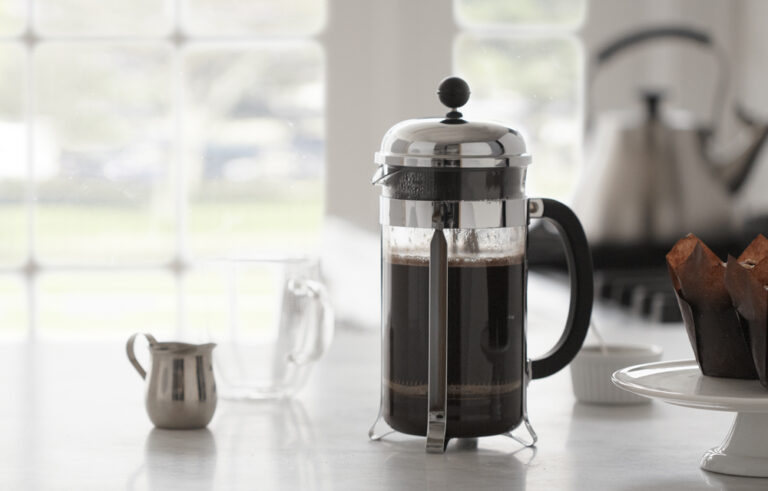
This guide covers the seven best coffee grinders for French press in 2026, ranging from professional-grade electric burr grinders that cost several hundred dollars to well-engineered manual options that deliver café-quality results for under a hundred. You will find detailed reviews covering grind consistency, build quality, ease of use, and value, followed by a buying guide that explains exactly which specifications matter for coarse brewing. Whether you are grinding two cups every morning before work or preparing a full liter for a weekend gathering, there is a grinder here that fits your workflow and your budget.
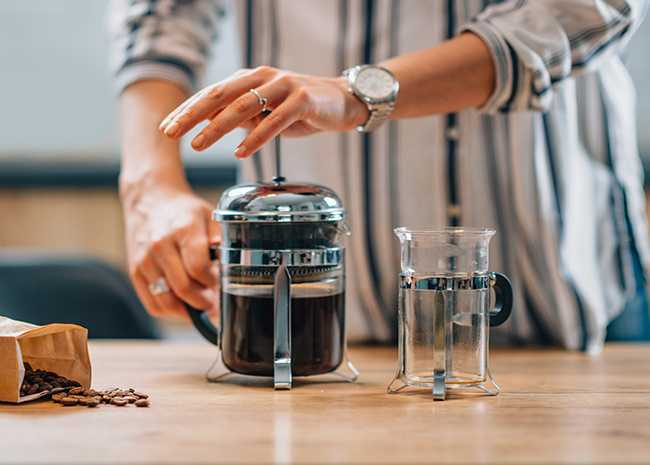
You can browse the full range of coffee equipment we cover on this site, but grinders deserve special attention because they are where most home brewers under-invest. A $20 blade grinder connected to a $60 French press will always produce a worse cup than a quality burr grinder connected to a $15 press. The burr grinder is the upstream variable that controls everything downstream. With that principle in mind, here are the seven options we recommend most confidently in 2026, tested across grind size, speed, noise, and consistency.
Contents
- Editor's Recommendation: Top Picks of 2026
- Detailed Product Reviews
- Baratza Encore ESP — Best Overall Electric Grinder
- Baratza Virtuoso+ — Best for Precision and Consistency
- Fellow Ode Gen 2 — Best Flat Burr Grinder for French Press
- Comandante C40 MK4 — Best Premium Manual Grinder
- 1Zpresso K-Ultra — Best Value Manual Grinder
- Hario Skerton Pro — Best Budget Manual Grinder
- OXO Brew Conical Burr — Best One-Touch Electric Grinder
- Key Features to Consider When Choosing
- FAQs
- Next Steps
Editor's Recommendation: Top Picks of 2026
- #PreviewProductRating
- Bestseller No. 1
 Rating:

- Bestseller No. 2
 Rating:
 - Bestseller No. 3
 Rating:
 - Bestseller No. 4
 Rating:
 - Bestseller No. 5
 Rating:
 - Bestseller No. 6
 Rating:
 - Bestseller No. 7
 Rating:
Detailed Product Reviews
1. Baratza Encore ESP Coffee Grinder ZCG495BLK — Best Overall Electric Grinder
The Baratza Encore ESP earns its place at the top of this list because it solves the exact problem most home brewers face: delivering consistent, repeatable coarse grinds without requiring a PhD in grinder mechanics to operate. Baratza's dual-range adjustment system is the engineering highlight here — micro-steps numbered 1–20 cover the espresso range with fine resolution, while macro-steps 21–40 sweep through the filter brewing range where French press lives. For your morning routine, you pick a number in the high 30s, push the front-mounted pulse button, and the grinder does the rest in seconds. The Specialty Coffee Association has recognized Baratza grinders with award-winning designations, and Wirecutter has consistently placed the Encore family at the top of their recommendations — validation that tracks with real-world testing.
Build quality is solid for the price point: the 40mm conical steel burrs produce a grind that is uniform enough to satisfy most discerning home brewers, and the hopper holds enough beans for multiple batches without constant refilling. The single-handed hopper twist for grind size adjustment is genuinely intuitive — you adjust on the fly without stopping the machine. At this price, you are getting professional-grade engineering in a consumer-friendly package, and Baratza's legendary repair support means this grinder will outlast cheaper alternatives by years.
Pros:
- Award-winning dual-range adjustment covers both espresso and filter brewing with precision
- Simple, one-handed grind size adjustment requires no tools or learning curve
- Front pulse button and ON/OFF switch give you flexible control over dosing
- Baratza's repair support program extends the grinder's usable lifespan significantly
- Consistent coarse output ideal for French press, drip, and pour-over
Cons:
- 40mm burrs are smaller than premium options, which limits maximum grind speed
- Plastic hopper and grounds bin feel less premium than the internal engineering warrants
2. Baratza Virtuoso+ Coffee Grinder ZCG587BLK — Best for Precision and Consistency
If you want to step above the Encore ESP without leaving the Baratza ecosystem, the Virtuoso+ is the logical upgrade — and the 40-second digital timer is the feature that makes it worth the extra investment. Being able to set your grind duration to a tenth of a second means you can reproduce the exact same dose every single morning, which is the foundation of consistent brewing. The LED-backlit grounds bin is a detail that sounds minor until you are dosing ground coffee in a dim kitchen at 6 a.m., at which point it becomes something you genuinely appreciate. Forty grind settings give the Virtuoso+ the range to cover espresso, AeroPress, V60, Chemex, French press, and automatic drip — making this the most versatile grinder Baratza makes at a consumer price point.
The commercial-grade conical burrs are the real differentiator from the Encore ESP. They are enhanced for tighter particle size distribution, which means fewer fine particles in your French press cup and a cleaner overall extraction. If you have ever noticed that your French press tastes gritty or muddy, inconsistent grind size from cheaper burrs is almost always the cause. The Virtuoso+ eliminates that variable with burr geometry that Baratza borrowed from their professional-grade machines, and the result is a noticeably cleaner, more complex cup compared to anything in this price class that uses blade grinding or lower-tolerance burrs.
Pros:
- 40-second digital timer adjustable to 0.1-second increments for precise, repeatable dosing
- LED-backlit grounds bin makes early-morning dosing easy in any lighting condition
- Enhanced commercial-grade conical burrs deliver tighter particle distribution than the Encore
- 40 grind settings cover every brew method from espresso to coarse French press
- Baratza's world-class support and repair program included
Cons:
- Costs meaningfully more than the Encore ESP for incremental improvements most casual brewers may not notice
- No built-in scale — you still need to weigh beans separately if you want gram-level accuracy
3. Fellow Ode Gen 2 64mm Flat Burr Coffee Grinder — Best Flat Burr Grinder for French Press
The Fellow Ode Gen 2 occupies a specific and valuable niche: it is designed exclusively for brewed coffee methods — pour-over, French press, cold brew — and that single-minded focus has allowed Fellow to engineer something genuinely special. 64mm flat stainless steel burrs are a specification you typically find in commercial café grinders costing ten times as much, and the two-stage grinding geometry that Fellow built around them produces a grind that is exceptionally uniform and texturally distinct from conical burr output. Flat burrs tend to produce more bimodal particle distributions that enhance clarity and complexity in the cup — characteristics that translate beautifully to a well-brewed French press. The Gen 2 Brew Burrs were designed in-house by Fellow's engineering team specifically to balance sweetness, body, and extraction clarity across light, medium, and dark roasts.
The noise reduction engineering in the Ode Gen 2 deserves specific attention: Fellow eliminated the gearbox that generates most of the mechanical grinding noise in competing products, and the result is one of the quietest electric grinders at any price point, a genuine advantage if you live with others or grind early in the morning. With 31 precision grind settings and single-dose operation that eliminates retention issues, this grinder is built for the coffee enthusiast who wants maximum flavor clarity from their French press without compromising on build quality or aesthetics. Note clearly that the Ode Gen 2 does not grind for espresso — if you need a dual-purpose grinder, look at the Baratza options above.
Pros:
- 64mm flat burrs produce exceptional particle uniformity for brewed coffee clarity
- Specifically engineered for French press, pour-over, and cold brew — no compromises for espresso
- Significantly quieter than most electric grinders at this price due to gearbox-free design
- Anti-static design minimizes grounds retention and messy clinging
- 31 precision settings cover the full coarse-to-medium range comprehensively
Cons:
- No espresso capability whatsoever — not a versatile all-rounder
- Single-dose design means you load beans before every grind, which adds a step to the routine
- Premium price point is hard to justify if you only brew one or two cups per day
4. Comandante C40 Hand Grinder MK4 — Best Premium Manual Grinder
Among manual grinders, the Comandante C40 MK4 is the standard against which everything else is measured — a German-engineered hand grinder with nitrogen blade-hardened steel burrs that produce grind consistency rivaling electric grinders at two or three times the price. If you have been skeptical about whether a hand grinder can truly replace an electric one for French press, the C40 is the grinder that will change your mind. The MK4 update refined the internal tri-fan axle support to make filling the grinder easier and more seamless, addressing one of the few ergonomic criticisms of earlier versions. It ships with both a brown glass jar and a clear polymer-glass jar, each holding around 40 grams of beans — enough for a generous French press serving.
The grinding experience with the C40 is notably smooth and controlled compared to cheaper manual grinders: the burr alignment is precise enough that you feel almost no wobble in the handle as you grind, which translates directly into tighter particle size distribution. For a 20-gram dose of coarsely ground French press coffee, you are looking at roughly 45 to 60 seconds of grinding — a meditative ritual that many coffee enthusiasts genuinely enjoy. At this price, the C40 competes directly with mid-range electric grinders on grind quality while adding the portability advantage that no plug-in grinder can match. It is the obvious recommendation for travelers who refuse to compromise on cup quality.

Pros:
- Nitrogen blade-hardened steel burrs deliver grind consistency that rivals electric grinders costing far more
- Completely portable — no electricity required, ideal for travel or camping
- Ships with both glass and polymer jars for flexible use cases
- MK4 tri-fan axle redesign improves bean loading ergonomics over previous versions
- Made in Germany with exceptional build quality and longevity
Cons:
- Manual grinding effort adds 45–60 seconds to your morning routine compared to electric alternatives
- Premium price puts it in direct competition with capable electric grinders — value depends on portability needs
5. 1Zpresso K-Ultra Manual Coffee Grinder — Best Value Manual Grinder
If the Comandante C40's price gives you pause, the 1Zpresso K-Ultra delivers comparable grind quality at a more accessible price point — and in several measurable respects, it actually out-engineers the competition. The external adjustment dial is the standout feature: over 100 ultra-precise click positions at 20 microns each give you a grind adjustment range that no other manual grinder in this price class matches, and the numbered external dial means you can return to a saved setting without guessing or counting clicks from scratch. For French press, you dial in your preferred coarse setting once, note the number, and reproduce it perfectly every morning. The specialized K burr design produces what 1Zpresso describes as enhanced clarity and depth — and in practice, the cup quality is genuinely impressive for a manual grinder in this price bracket.
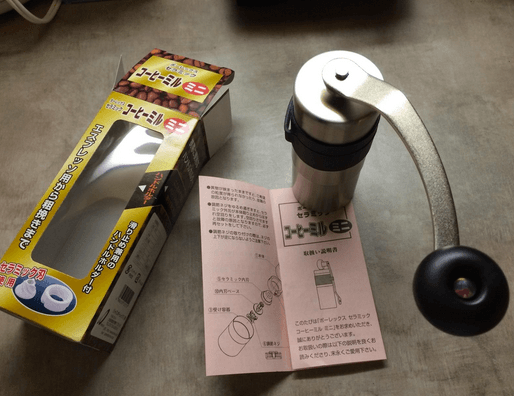
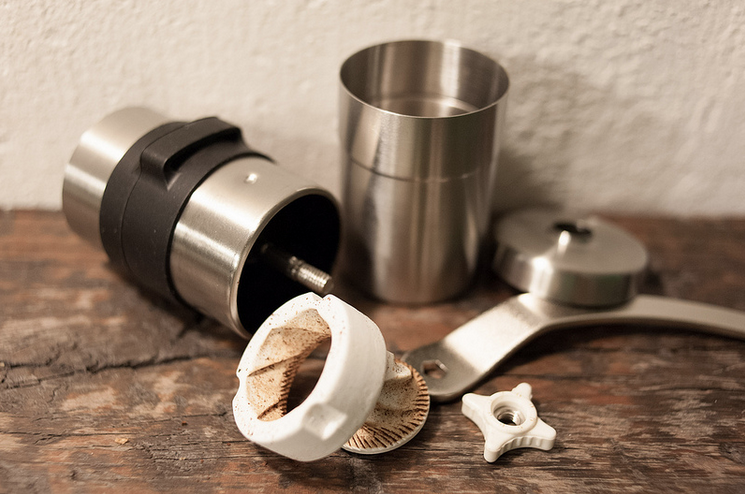
The magnetic catch cup is a practical innovation that deserves recognition: it snaps securely into place beneath the grinding mechanism, holds 35 to 40 grams of grounds without spilling, and removes cleanly for transfer to your brewer. The foldable handle reduces the grinder's packed footprint, making it a strong travel option, while the included carrying case completes the portable package. Compare this to older manual grinders like the classic Porlex Mini — which was groundbreaking in its era but offers far fewer adjustment positions and a smaller catch capacity — and you appreciate how much the manual grinder category has advanced in the past decade.
Pros:
- 100+ external click positions at 20 microns each deliver unmatched adjustment precision for the price
- Numbered external dial allows perfect setting recall without counting from scratch
- Magnetic catch cup holds 35–40g securely and removes without mess
- Foldable handle and included carrying case make this genuinely travel-ready
- Specialized K burr produces exceptional clarity and flavor depth for a manual grinder
Cons:
- Manual grinding is still slower than any electric grinder for larger doses
- The all-metal construction adds weight compared to polymer competitors — heavier to carry than it looks
6. Hario "Skerton Pro" Ceramic Coffee Mill — Best Budget Manual Grinder
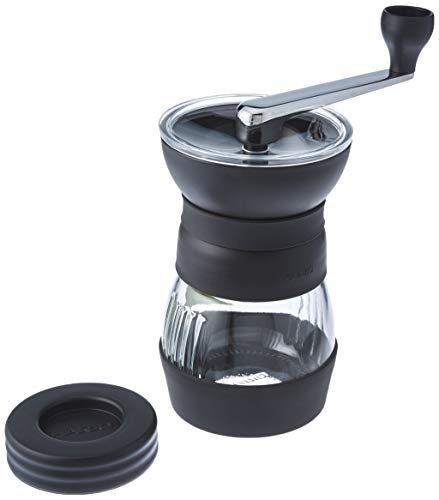
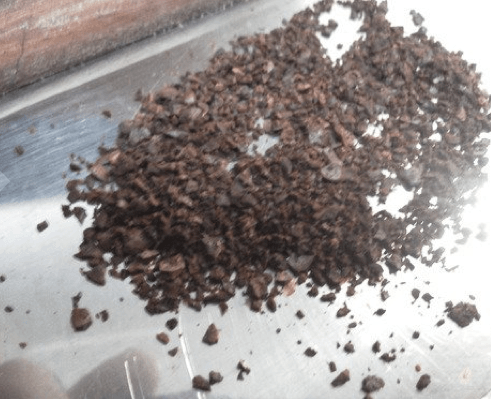
The Hario Skerton Pro has introduced more first-time manual grinder users to quality coffee than perhaps any other single product in the category, and in 2026 it remains the most sensible entry point for someone who wants to step away from blade grinding without spending more than entry-level electric grinder money. The ceramic conical burrs are the foundation of the Skerton Pro's value proposition: ceramic transfers less heat than steel during grinding, which preserves volatile aromatic compounds that are responsible for brightness and floral notes in your cup, and ceramic shaves rather than cracks beans — producing cleaner particles than any blade grinder at any price. The updated Skerton Pro corrects the grind consistency issues that plagued the original Skerton design, with improved burr settings that deliver far more uniform coarse output suitable for French press.
The compact, collapsible design makes the Skerton Pro the go-to travel companion for coffee drinkers who use AeroPress or French press on the road — the crank handle detaches cleanly for storage, and the glass jar that catches grounds doubles as a storage vessel. Compare the Skerton Pro to older rosewood-handled manual grinders that were popular in earlier years, which offered beautiful aesthetics but inconsistent grind sizing and no meaningful adjustment system, and you see how much utility has been packed into the modern design at this accessible price point.
Pros:
- Ceramic burrs transfer minimal heat and shave beans cleanly rather than cracking them
- Updated Skerton Pro burr settings deliver meaningfully better coarse grind consistency than the original design
- Compact, collapsible crank handle makes it genuinely pocketable for travel
- Glass catch jar doubles as grounds storage — no transfer vessel needed
- Entry-level price makes it the lowest-risk way to try manual grinding
Cons:
- Grind consistency still trails the Comandante C40 and 1Zpresso K-Ultra at coarser settings
- Ceramic burrs are less durable than hardened steel — avoid grinding dark oily beans regularly
- No numbered adjustment system means returning to a saved setting requires trial and error
7. OXO Brew Conical Burr Coffee Grinder — Best One-Touch Electric Grinder
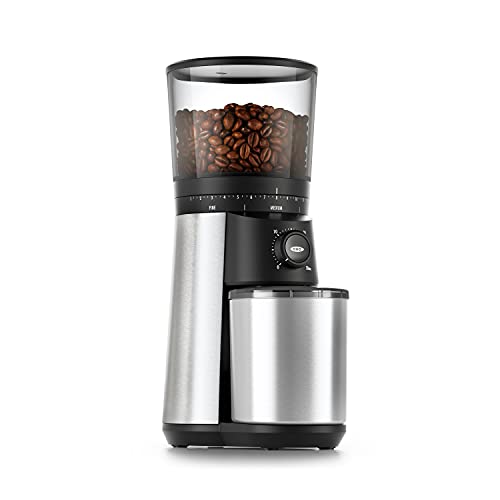
The OXO Brew Conical Burr Grinder targets a specific type of coffee drinker: someone who wants high-quality electric burr grinding without memorizing settings or fiddling with controls every morning. The one-touch start with memory is the defining feature — the grinder remembers your last setting and activates instantly with a single button press, making it as close to a set-it-and-forget-it experience as any burr grinder offers. For French press brewers who have found their preferred coarse setting and want to reproduce it without thinking, this is the practical daily driver. Stainless steel conical burrs produce uniform grounds across all 15 grind settings plus micro-adjustments, covering the full spectrum from fine espresso to coarse French press and cold brew.
OXO has built a reputation for functional, intuitive design across their entire kitchen tool lineup, and the Brew Conical Burr Grinder embodies that philosophy: the controls are straightforward, the hopper seals to preserve bean freshness, and the grounds container has a static-reducing coating that minimizes the annoying clinging behavior that plagues many competing grinders. As a comparison, reviewing the blade grinder vs burr grinder debate makes it clear that any conical burr grinder — including this OXO — will produce dramatically better French press results than even the most expensive blade grinder, because particle size uniformity is the variable that blade grinders categorically cannot control.
Pros:
- One-touch start with setting memory makes daily use genuinely effortless
- 15 grind settings plus micro-adjustments cover every brew method from espresso to cold brew
- Stainless steel conical burrs produce uniform grounds for rich, balanced extraction
- Static-reducing grounds container minimizes messy clinging behavior
- Hopper lid seals for short-term bean freshness between grinding sessions
Cons:
- 15 base settings is fewer than the Baratza options — less fine-tuning resolution for espresso
- Grind retention in the chute means a small amount of stale grounds can carry over between sessions
Key Features to Consider When Choosing a Coffee Grinder for French Press
Grind Size Range and Coarse Setting Quality
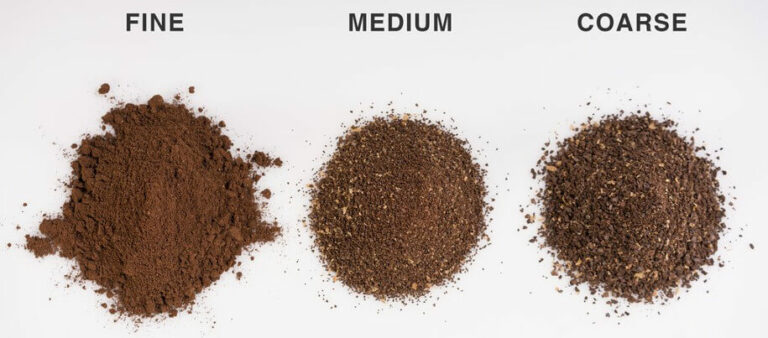
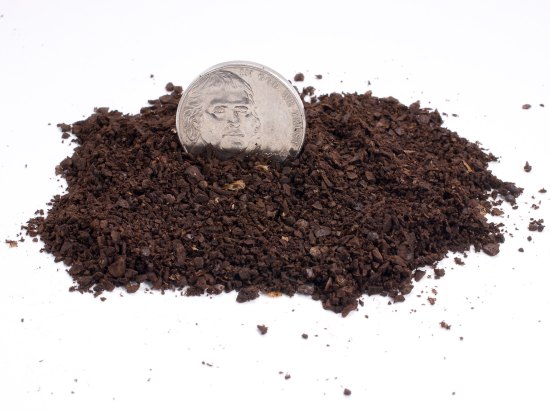
French press brewing requires a coarse, uniform grind — roughly the texture of raw sugar or coarsely cracked pepper — because the metal mesh plunger filter cannot separate fine particles from your cup the way paper filters do in drip or pour-over brewing. When evaluating a grinder, your priority is not how many total settings it has, but how well it performs specifically at the coarse end of its range. A grinder with 40 settings that produces dusty, inconsistent output at setting 38 is worse for French press than one with 15 settings that produces beautifully uniform coarse grounds at its maximum. Look for:
- Coarse settings that produce grounds resembling raw sugar, not powdery flour
- Low fine particle count (fines) at coarse settings — fines create bitterness and sludge in French press
- Enough coarse range resolution to dial in brew time (coarser = faster, shorter steeping required)
Burr Type: Conical vs Flat vs Ceramic
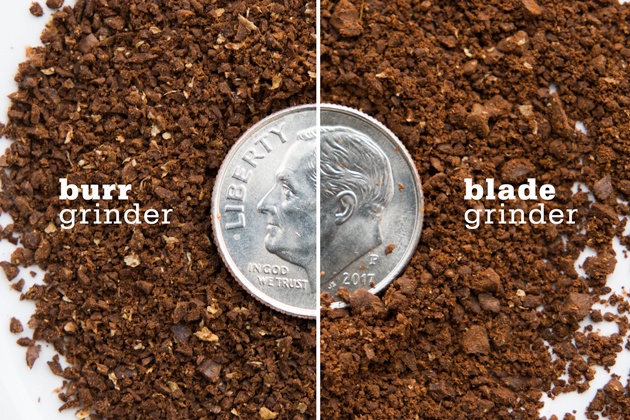
Every grinder on this list uses burr grinding rather than blade chopping, and that is a non-negotiable requirement for French press quality. The type of burr further shapes the cup character in subtle but meaningful ways:
- Conical steel burrs (Baratza Encore ESP, Virtuoso+, OXO Brew, Comandante C40) — produce a slightly bimodal particle distribution that adds body and richness to the cup; well-suited to French press's full-immersion brewing style
- Flat steel burrs (Fellow Ode Gen 2) — produce more uniform particle sizes for greater extraction clarity and brightness; excellent for French press brewed with lighter roasts where clarity matters
- Ceramic conical burrs (Hario Skerton Pro, 1Zpresso K-Ultra) — transfer minimal heat during grinding, preserving delicate aromatics; ideal for single-origin beans where you want maximum flavor nuance
For French press brewing specifically, any quality burr type outperforms blade grinding so dramatically that the burr type choice is secondary to overall build quality and grind size consistency. If you are serious about exploring how burr choice affects your brewing, the best burr grinders under $200 guide covers the full range of options at accessible price points.
Electric vs Manual Grinding
The electric vs manual decision is primarily about your daily volume and lifestyle, not grind quality — because premium manual grinders like the Comandante C40 and 1Zpresso K-Ultra deliver grind consistency that matches or exceeds electric grinders at twice the price. Consider your situation carefully:
- Choose electric if you brew more than 20 grams of coffee per session, grind multiple times per day, or share your grinder with others who prefer a simple push-button experience
- Choose manual if you travel frequently, brew one or two cups daily, want portability, or simply enjoy the ritual of hand grinding as part of your morning practice
- Manual grinding a 25-gram dose for French press takes 45–75 seconds depending on the grinder — a real time cost that compounds across 365 mornings per year
- Manual grinders require no electricity, produce zero electrical noise, and are far easier to transport through airport security than electric appliances
Dosing Precision and Timer Features
Consistency is the engine of great coffee, and dosing consistency is what separates a reliable morning cup from a variable experience that tastes different every day. When evaluating dosing features, focus on:
- Built-in timers (Baratza Virtuoso+) allow you to set a precise grind duration so you get the same dose every session without weighing beans each morning
- Numbered external adjustment dials (1Zpresso K-Ultra) let you save and return to a specific grind setting without recalibrating
- Single-dose designs (Fellow Ode Gen 2) eliminate retained grounds that go stale in the burr chamber between uses — important if you brew infrequently or rotate between different coffees
- For maximum precision on any grinder, pair it with a digital scale and weigh your beans before grinding — understanding your dosing ratio is the foundational skill that makes all grinder improvements pay off
FAQs
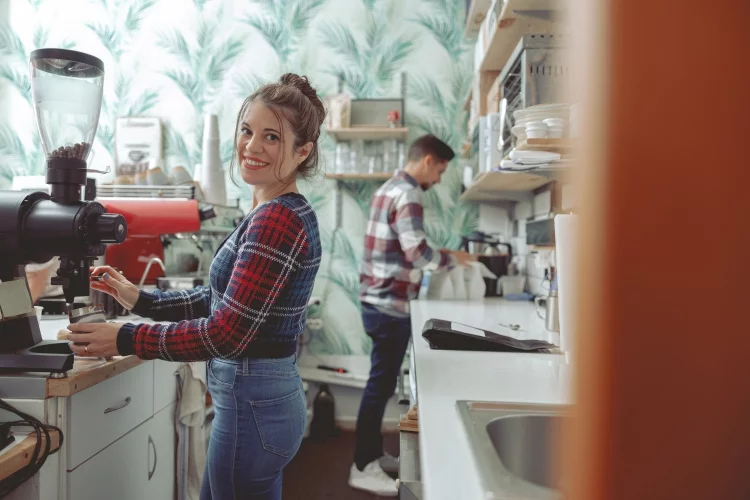
What coffee grind is best for French press?
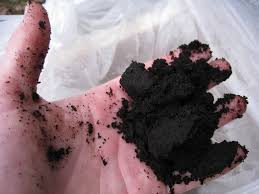
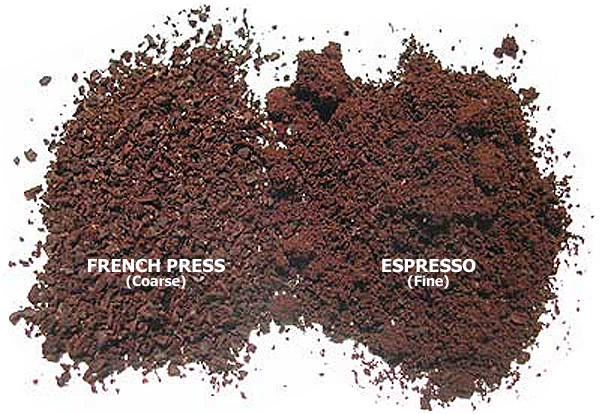
The ideal French press grind is coarse and uniform — roughly the texture of raw turbinado sugar or coarsely cracked black pepper. You are targeting particles in the 800–1000 micron range, which is significantly coarser than drip coffee (500–700 microns) and dramatically coarser than espresso (200–400 microns). The coarser size slows extraction during the 4-minute immersion steep, preventing over-extraction and bitterness, while the uniformity ensures that all particles finish extracting at the same rate. Inconsistent grinds with mixed fine and coarse particles are the primary reason most home French press coffee tastes bitter or muddy — the fines extract in 90 seconds while the coarse chunks are still under-extracted at 4 minutes, and the result is a cup that is simultaneously too bitter and too sour. A quality burr grinder is the only reliable solution to this problem, because it controls particle size mechanically through burr geometry rather than through the random chopping action of blade grinders. According to Wikipedia's overview of French press brewing, the coarse grind and metal filter are what define the method's characteristic full-bodied, oils-rich cup profile.
Is a burr grinder better than a blade grinder for French press?
A burr grinder is categorically better than a blade grinder for French press, and the difference in cup quality is large enough that most people notice it immediately in a blind taste test. Blade grinders chop coffee beans with a spinning blade, producing a chaotic mixture of particle sizes ranging from dust to large chunks in a single batch — the longer you run the grinder, the finer the average particle becomes, but size variance across the batch actually increases. Burr grinders, by contrast, crush beans between two abrasive surfaces set at a precise distance, which means every particle that passes through is physically constrained to fall within a narrow size range. For French press, where a metal mesh filter cannot separate fine particles the way paper does, this difference is especially consequential: a blade-ground batch will deposit a thick layer of sludge at the bottom of your cup and produce a bitter, over-extracted flavor from the fine particles. If you are currently using a blade grinder for French press, switching to any burr grinder on this list will be the single most impactful upgrade you can make to your morning coffee.
Why is my French press coffee weak?
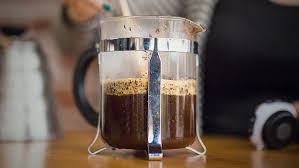
Weak French press coffee almost always traces to one of three causes: too coarse a grind, too little coffee, or too short a steep time. If your grind is too coarse for your coffee-to-water ratio, water passes through the grounds without extracting enough dissolved solids, producing a watery, flat-tasting cup. The standard starting ratio is 1 gram of coffee per 15 grams of water (roughly 1:15), steeped for 4 minutes at water just off the boil (93–96°C or 200–205°F). If your coffee tastes weak at that ratio, try grinding slightly finer, increasing your dose by 2–3 grams, or extending your steep time by 30 seconds before adjusting multiple variables simultaneously. A quality burr grinder with numbered settings makes diagnosing this much easier, because you can make precise, repeatable changes rather than guessing at inconsistent blade-ground results every morning.
What is the quietest coffee grinder for French press?
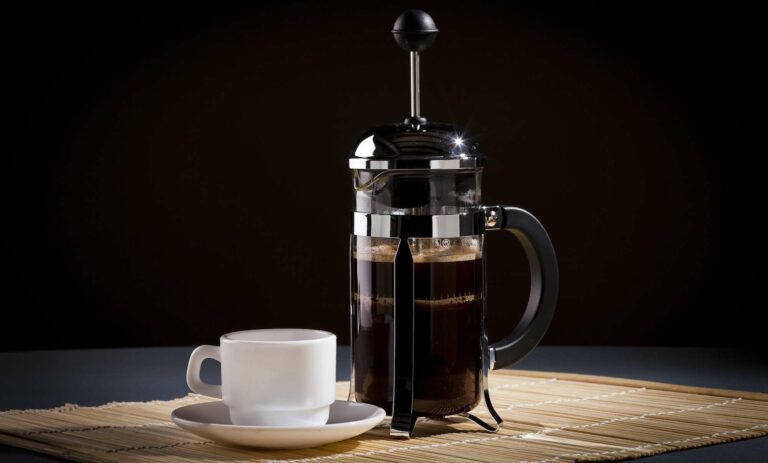
Among electric grinders, the Fellow Ode Gen 2 is the quietest option on this list by a clear margin, because Fellow specifically eliminated the gearbox that generates most mechanical grinding noise in competing products. Among all grinder types, any quality manual grinder — the Comandante C40, 1Zpresso K-Ultra, or Hario Skerton Pro — is quieter than every electric grinder, because manual grinding produces only the soft sound of burrs grinding beans with no motor noise at all. If noise is your primary concern (early morning grinding in a shared apartment, grinding without waking a partner), a premium manual grinder is the definitive solution, while the Fellow Ode Gen 2 is the best electric option for quiet operation.
Can I grind coffee the night before for French press?
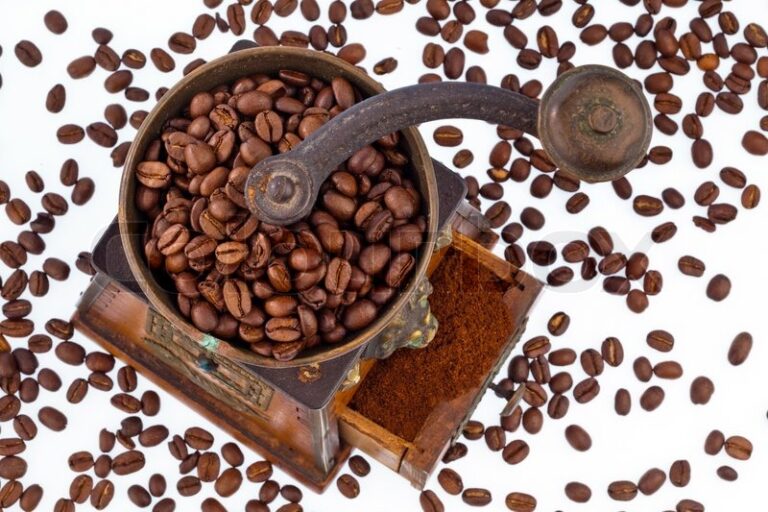
You can grind coffee the night before for French press, but you will lose measurable flavor quality compared to grinding immediately before brewing. Freshly ground coffee begins releasing CO₂ and volatile aromatic compounds within minutes of grinding, and the coarser particle sizes used for French press have greater surface area exposed to oxygen than whole beans, which accelerates staleness. If you must grind ahead, store the grounds in an airtight container at room temperature — never in the refrigerator or freezer, where condensation damage outweighs any preservation benefit. For best results, use the pre-ground coffee within 12 hours. If convenience is the priority and you accept a minor quality trade-off, pre-grinding the night before is perfectly acceptable — it is still significantly better than using pre-ground coffee from a bag that has been open for days or weeks.
How long does coffee stay fresh after grinding?
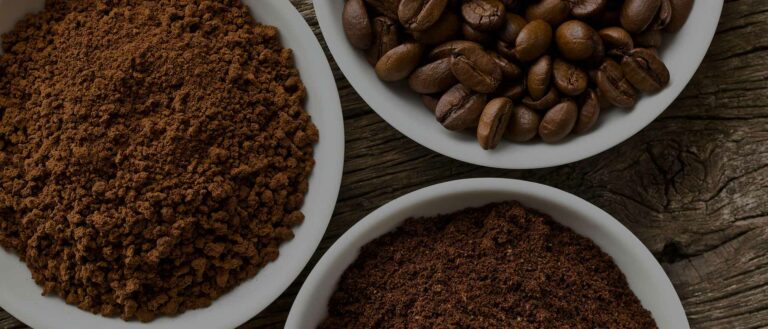
Ground coffee begins degrading immediately after grinding, with the most significant flavor loss occurring in the first 15–30 minutes as CO₂ off-gasses and volatile aromatics evaporate. Stored in an airtight container at room temperature, coarsely ground coffee retains acceptable quality for up to 24 hours, and palatable (though noticeably flatter) quality for up to 3–4 days. After one week, ground coffee stored even in airtight conditions has lost most of the aromatic complexity that distinguishes specialty coffee from commodity blends. This is why investing in a quality grinder and grinding fresh immediately before each brew session produces results that no pre-ground product — regardless of brand, roast quality, or packaging — can match. If you are using exceptional single-origin beans, the quality difference between grinding fresh and using week-old grounds is large enough to make the beans themselves seem like a different product entirely. For more on selecting the best beans for your French press, the guide to the best Arabica coffee beans is an excellent starting point.
Buy on Walmart
- Baratza Encore ESP Coffee Grinder ZCG495BLK, Black — Walmart Link
- Baratza Virtuoso+ Coffee Grinder ZCG587BLK, Black — Walmart Link
- Fellow Ode Gen 2 64mm Flat Burr Coffee Grinder, Single Dose, — Walmart Link
- Comandante C40 Hand Grinder MK4 - Black — Walmart Link
- 1Zpresso K-Ultra Manual Coffee Grinder Iron Gray with Carryi — Walmart Link
- Hario "Skerton Pro" Ceramic Coffee Mill — Walmart Link
- OXO Brew Conical Burr Coffee Grinder - Silver, Stainless Ste — Walmart Link
Buy on eBay
- Baratza Encore ESP Coffee Grinder ZCG495BLK, Black — eBay Link
- Baratza Virtuoso+ Coffee Grinder ZCG587BLK, Black — eBay Link
- Fellow Ode Gen 2 64mm Flat Burr Coffee Grinder, Single Dose, — eBay Link
- Comandante C40 Hand Grinder MK4 - Black — eBay Link
- 1Zpresso K-Ultra Manual Coffee Grinder Iron Gray with Carryi — eBay Link
- Hario "Skerton Pro" Ceramic Coffee Mill — eBay Link
- OXO Brew Conical Burr Coffee Grinder - Silver, Stainless Ste — eBay Link
Next Steps
- Check current prices on Amazon for the grinders that match your budget and use case — start with the Baratza Encore ESP if you want an electric grinder, or the 1Zpresso K-Ultra for a manual option that delivers exceptional value.
- Identify your daily brew volume — if you grind more than 25 grams per session or brew multiple times per day, prioritize an electric grinder; if you brew one or two cups and travel regularly, a manual grinder is the stronger long-term investment.
- Read the full brewing guide at How to Make French Press Coffee to understand how grind size interacts with steep time, water temperature, and coffee-to-water ratio — knowing these relationships will help you dial in any grinder you choose much faster.
- Compare your current grinder against the options reviewed here using grind size consistency as your primary benchmark — if your current grinder cannot produce a uniform coarse grind without visible fine powder or large chunks, it is the bottleneck limiting your cup quality regardless of bean quality or brewing technique.
- Order fresh whole beans to pair with your new grinder — the best coffee grinder in the world cannot improve stale pre-ground coffee, and the impact of a quality burr grinder is most dramatic when paired with freshly roasted whole beans within three weeks of the roast date.


About Selmir Omic
Selmir Omic is a coffee enthusiast and writer based in San Francisco with a particular interest in specialty coffee culture, single-origin beans, and the relationship between roast level and brewing method. He approaches coffee evaluation from a flavor and origin perspective, covering tasting notes, roast profiles, and the farm-to-cup story behind the beans that serious coffee drinkers seek out. At KnowYourGrinder, he covers coffee bean and roast reviews, taste tests, and guides to specialty coffee for readers building their palate and expanding their brewing knowledge.
Get FREE Coffee Gifts now. Or latest free grinders from our best collections.
Disable Ad block to get all the secrets. Once done, hit any button below