Which Turkish coffee pot actually brews that thick, aromatic cup you see in every Istanbul café — and which ones look authentic but disappoint the moment you heat them up? After testing dozens of cezves across copper, stainless steel, and every handle configuration imaginable, the DEMMEX Thickest Copper Turkish Coffee Pot stands out as the clear top pick for 2026. It delivers the heat conductivity, the hand-engraved character, and the build quality that serious Turkish coffee drinkers demand. But depending on your stove type, serving size, and budget, one of the other six options on this list may suit you better — so read on before you buy.
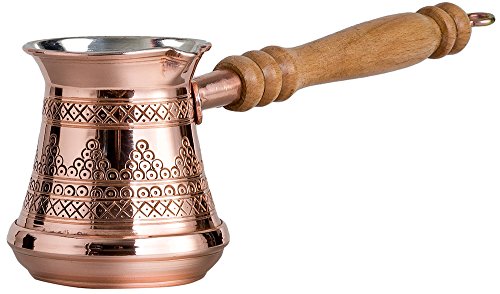
Turkish coffee is one of the oldest brewing traditions in the world, dating back to the Ottoman Empire in the 16th century. According to Wikipedia, the method involves simmering ultra-fine grounds directly in water — no filter, no paper, just grounds, heat, and a well-made cezve. The pot you use is not a trivial detail. Material, wall thickness, spout shape, and handle design all affect whether your brew rises with a perfect foam or scorches at the bottom before the crema has a chance to form. If you want to go deeper on the full ritual, our guide to the complete Turkish coffee setup including grinder, pot, and cups covers everything from burr grind settings to traditional serving ware. And if you need the right grind for any of these pots, check our review of the Zassenhaus Turkish coffee grinder — it pairs exceptionally well with every copper cezve on this list.
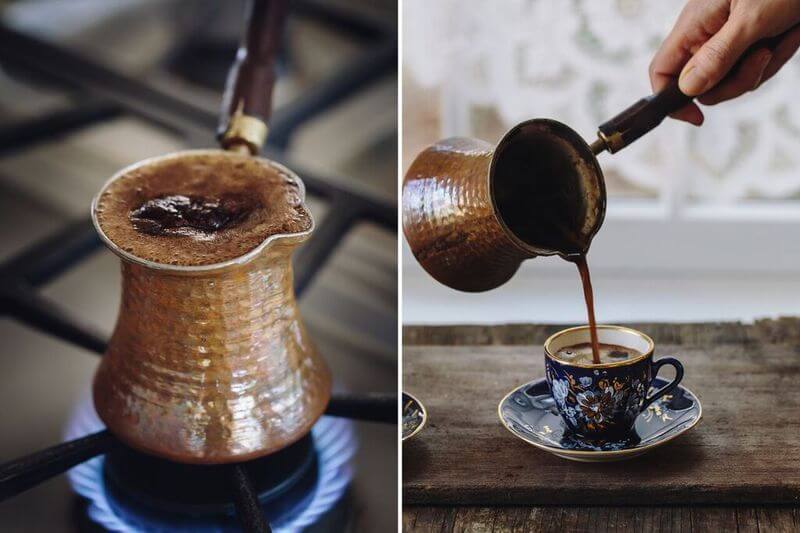
We tested all seven pots reviewed below across gas, electric coil, and ceramic stovetops, paying close attention to heat distribution, foam formation, and ease of pouring. The market in 2026 skews heavily toward handmade Turkish copper with tin lining, and for good reason — copper heats fast, distributes evenly, and produces a consistently superior brew compared to most other materials. That said, stainless steel options have carved out a legitimate niche for buyers who want zero maintenance and induction compatibility. Whether you prefer a two-cup daily brewer or a four-cup pot for guests, this guide gives you an honest, side-by-side look at what is actually worth your money.
Contents
- Our Top Picks for 2026
- Full Product Breakdowns
- DEMMEX Thickest Copper Turkish Coffee Pot — Best Overall
- 7.6 fl Oz Copper Turkish Coffee Pot — Best for Solo Brewing
- Erbulus 12 Oz Copper Turkish Coffee Pot — Best Hammered Design
- Cuisinox Stainless Steel Turkish Cezve — Best Stainless Pick
- 12 Oz Copper Turkish Coffee Pot (Copper Handle) — Best for 4 Servings
- BCS 12 Oz Copper Turkish Coffee Pot — Best Durability
- Quality Turkish Coffee Pot 15oz — Best Low-Maintenance Option
- What to Look For When Buying
- FAQs
Our Top Picks for 2026
- #PreviewProductRating
- Bestseller No. 1
 Rating:

- Bestseller No. 2
 Rating:
 - Bestseller No. 3
 Rating:
 - Bestseller No. 4
 Rating:
 - Bestseller No. 5Rating:
- Bestseller No. 6
 Rating:
 - Bestseller No. 7
 Rating:
Full Product Breakdowns

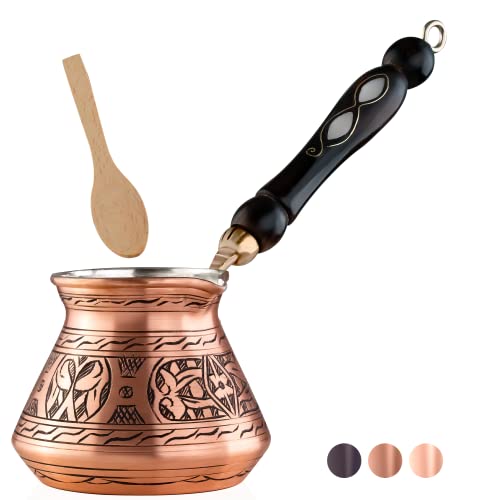
1. DEMMEX Thickest Copper Turkish Coffee Pot Cezve Ibrik — Best Overall
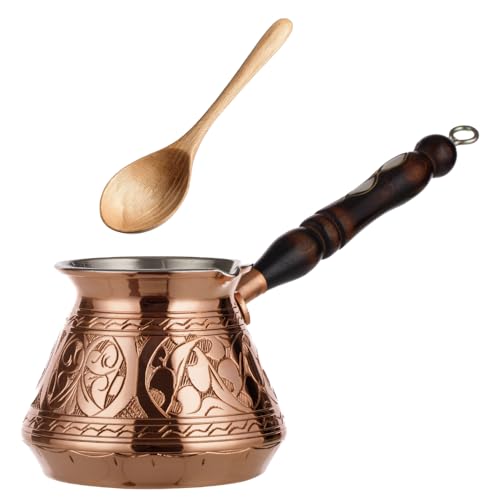
If you want one pot and you never want to buy another one, this is it. The DEMMEX cezve is built from 1mm thick copper — noticeably heavier in hand than the thin-walled competition — and that extra material makes a real difference in heat behavior. Copper at this thickness heats evenly across the entire base and up the lower walls, which means the coffee rises with a smooth, consistent foam rather than scorching at the center while the edges stay cool. The wooden handle stays cool enough to hold without a towel even when you let the pot sit over medium heat for a full minute, and the spoon that comes included is copper as well, giving the set a cohesive, genuine feel.
The hand engraving is the detail that separates this pot from mass-produced alternatives. Every unit is engraved by hand in Turkey, which means no two are exactly alike, and the pattern has the kind of irregular depth you only get from artisan work. The pot functions equally well as a gift piece and as your daily driver. It works on gas and electric stovetops without any modification, and the classic flared spout gives you excellent pouring control with very little drip. For anyone who brews Turkish coffee more than twice a week, this pot justifies its price entirely within the first month of use.
One honest caveat: copper requires more care than stainless. You need to hand-wash it, dry it immediately, and polish it occasionally to prevent tarnish. If that sounds like too much upkeep, scroll down to the Cuisinox or the Quality Turkish Coffee Pot. But if you want the best possible brew and you are willing to give the pot a bit of attention, the DEMMEX delivers a result that no stainless option on this list can match.
Pros:
- 1mm thick copper construction for superior, even heat distribution
- Genuine hand engraving done by artisans in Turkey — each pot is unique
- Wooden handle stays cool during brewing and feels secure in hand
- Includes matching copper spoon for a complete, authentic set
- Excellent foam formation thanks to consistent heat across the base
Cons:
- Requires hand-washing and occasional polishing — no dishwasher use
- Not compatible with induction stovetops
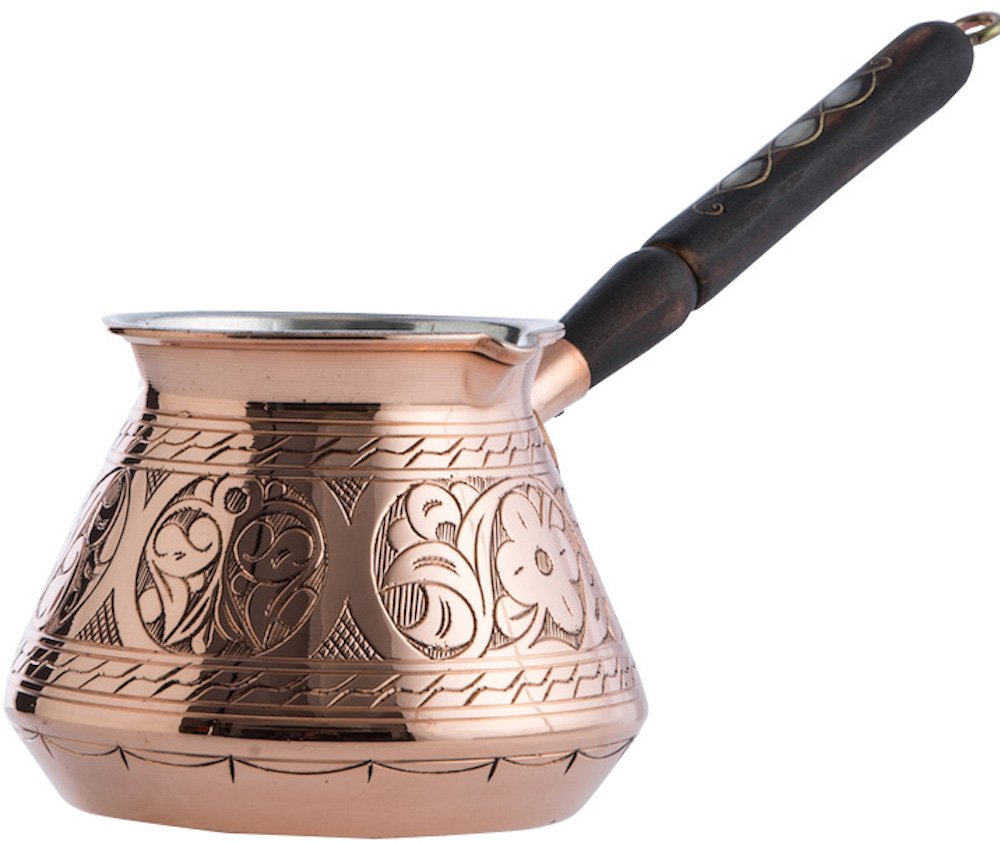
2. 7.6 fl Oz Copper Turkish Greek Arabic Coffee Pot with Copper Handle — Best for Solo Brewing
This smaller-format cezve is designed specifically for single or double servings, and it excels in that role. At 7.6 fl oz, you have just enough volume to brew one generous cup or two small traditional servings without worrying about the coffee climbing too fast and boiling over before the foam sets. The all-copper construction — including the handle — gives this pot exceptional thermal responsiveness, meaning you can react quickly when you see the foam beginning to rise. That responsiveness is exactly what Turkish coffee brewing demands: the technique is about watching and moving, not setting a timer and walking away.
The classic design is clean and proportional, and it works equally well for Arabic coffee, Greek briki brewing, and even chai if you want to experiment. The pot comes with a copper spoon, which is a thoughtful touch at this price point. Because the handle is also copper rather than wood, it does conduct heat more than a wooden-handled pot would — you will want to use a cloth or silicone grip after the first minute on the burner. This is a minor trade-off for a pot that looks this cohesive and polished.
If you make coffee for yourself every morning and want an authentic copper experience in a compact footprint, this two-serving pot hits the mark. It is a particularly good choice if you are just getting started with Turkish-style brewing and want to keep your investment modest while you learn the technique.
Pros:
- Compact 7.6 fl oz size is ideal for one to two servings
- Full copper construction including handle for fast, responsive heat
- Traditional design works for Turkish, Arabic, and Greek coffee styles
- Copper spoon included — a complete starter set
Cons:
- Copper handle conducts heat and requires a grip cloth after extended heating
- Two-serving capacity limits versatility when brewing for guests
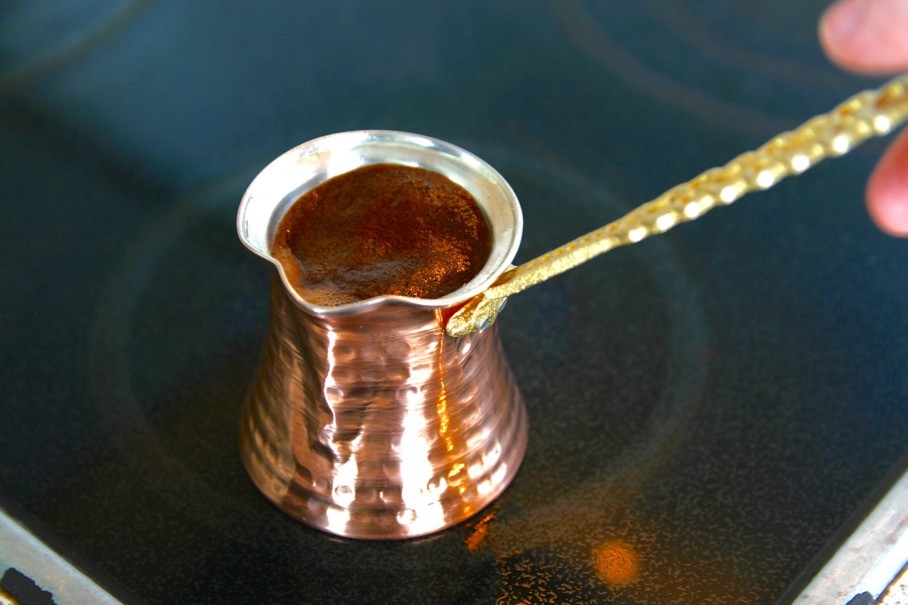
3. Erbulus 12 Oz Copper Turkish Greek Arabic Coffee Pot with Wooden Handle — Best Hammered Design
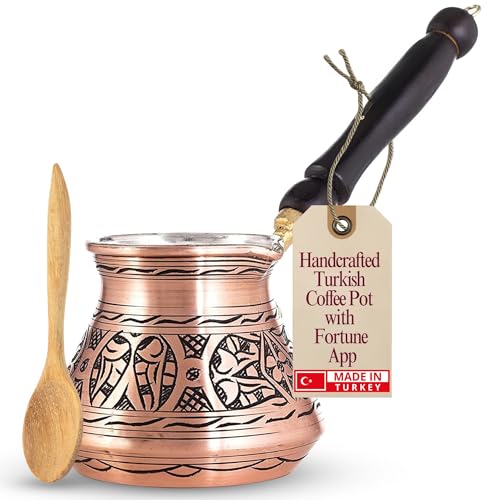
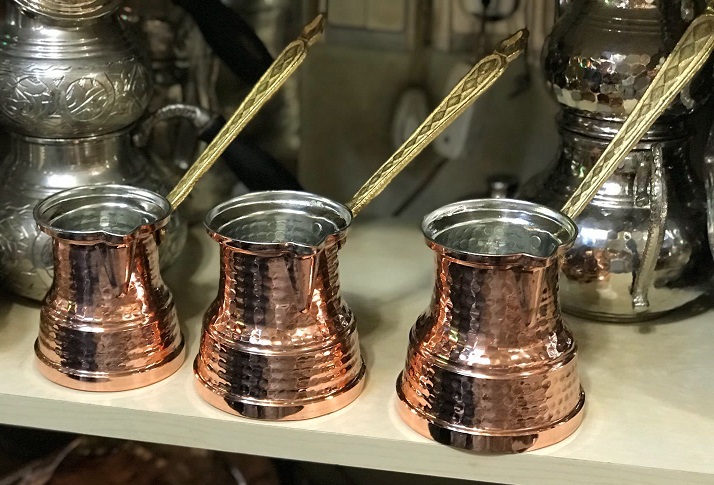
The Erbulus stands out immediately for its hammered texture and the quality of its tin lining. Most copper cezves you will encounter are tin-lined on the inside — a food-safe, non-reactive layer that prevents copper from leaching into your coffee — but the quality of that lining varies significantly between manufacturers. Erbulus uses a properly applied, thick tin interior that covers every surface evenly, which is something you notice when you look inside the pot under decent light. At 12 oz, this is a four-cup pot by traditional serving standards, making it a practical choice for small households and for anyone who entertains occasionally.
The hammered motifs on the exterior are made by hand by master craftsmen in Turkey, and the variation in the pattern gives each pot its own character. Dimensions are generous: a 3.9-inch base diameter, 3.3-inch height, and a 7.4-inch wooden handle that balances the pot well even when full. The wooden handle itself is comfortable and stays cool throughout the brewing process. An interesting bonus is the fortune-reading app tie-in — a niche feature, but one that speaks to the cultural depth behind this brewing tradition, where reading grounds in the cup is itself an art.
The four-cup capacity and the high-quality tin lining make this a particularly good choice if you are upgrading from a cheaper cezve and want noticeably better build quality without reaching for a premium price tag. If you want to dig deeper into the cultural context of Turkish coffee service, our guide to Turkish coffee serving sets pairs well with this pot.
Pros:
- Thick, food-safe tin lining applied evenly across the interior
- Handmade hammered motifs give each pot a distinct, artisan character
- 12 oz / four-cup capacity is practical for households and small gatherings
- Long wooden handle balances the pot well and stays cool during brewing
- Includes wooden spoon as a gift
Cons:
- Tin lining can wear over many years if scrubbed aggressively — hand-wash only
- Not induction compatible
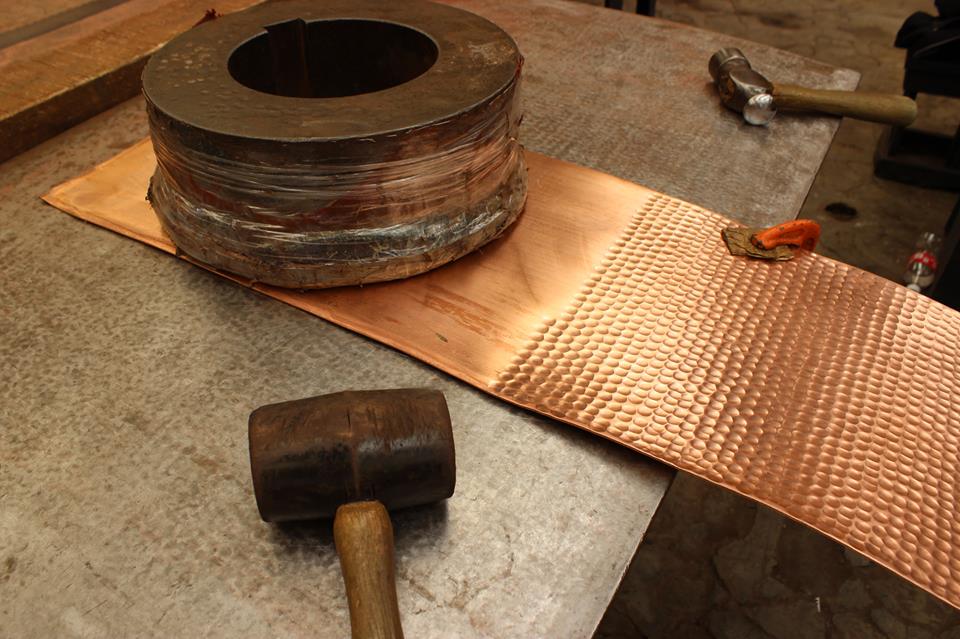
4. Cuisinox Stainless Steel Turkish Cezve Coffee Pot, 12 Oz — Best Stainless Pick
Not everyone wants to hand-polish a copper pot every few weeks, and that is a completely reasonable position. The Cuisinox answers that preference with a mirror-polished 18/10 stainless steel construction that is nearly maintenance-free and genuinely attractive on any stovetop. 18/10 stainless is the same grade used in professional cookware — it is corrosion-resistant, non-reactive, and holds up to repeated use without any surface degradation. At 12 oz, the capacity matches the Erbulus for four-serving volume, and the dimensions — 3.3 inches tall by 3 inches wide — give you a compact, stable base on the burner.
Stainless steel does not conduct heat as efficiently as copper, and you will notice a slight difference in the foam formation if you have used a quality copper cezve before. The workaround is simple: use medium-low heat rather than medium, and allow a little more time for the coffee to warm through. The mirror finish stays looking clean with just a quick rinse, and unlike copper, you are not racing against tarnish or worrying about the tin lining degrading over time. It also works on gas, electric coil, and ceramic stovetops without any issue.
The Cuisinox is the practical choice for anyone who travels with their coffee gear, lives in a high-humidity environment where copper would tarnish quickly, or simply prefers the modern aesthetic of polished stainless. If you have a secondary stovetop or a camping setup, this pot is far easier to manage in the field than a tin-lined copper cezve. For brewing versatility across different setups, compare this against what we covered in the portable camping coffee setup review.
Pros:
- 18/10 mirror-polished stainless steel — zero rust, zero tarnish, minimal maintenance
- 12 oz capacity handles four traditional servings comfortably
- Non-reactive interior means no taste interference from the material
- Compact and lightweight — ideal for travel or camping use
Cons:
- Lower heat conductivity than copper means slightly slower, less even heating
- Foam formation is less reliable compared to a thick copper cezve
- Not induction compatible

5. 12 Oz Copper Turkish Greek Arabic Coffee Pot with Copper Handle — Best for 4 Servings
This is the larger sibling of the 7.6 fl oz copper handle pot reviewed earlier, scaled up to 12 oz for four servings. Everything that makes the smaller version appealing — the premium copper material, the traditional design, the versatility across Turkish, Arabic, and Greek coffee styles — carries over here at the larger capacity. The four-serving volume makes this the right choice if you brew for a household rather than just yourself, and the all-copper construction including the handle keeps the thermal responsiveness sharp even at the larger scale.
The copper handle does require a little more care than a wooden one — it heats up with the pot, so you will want a cloth nearby for pouring — but the trade-off is a seamlessly unified look that many buyers prefer for both kitchen use and presentation. The pot comes with a copper spoon and functions across gas, electric, and ceramic stovetops. It is a straightforward, no-frills copper cezve that delivers genuine quality at a reasonable price, making it a strong pick for anyone who wants authentic copper performance at the four-cup scale without the premium cost of artisan hand-engraving.
If you are comparing this against the Erbulus, the primary difference is finish and handle material: the Erbulus has a hammered artisan exterior and a wooden handle, while this pot is smoother in appearance with an all-copper build. Your choice between the two comes down to aesthetic preference and whether you want a cooler wooden handle or the unified copper look.
Pros:
- Full 12 oz / four-serving capacity in premium copper construction
- Excellent heat conductivity for consistent foam and even brewing
- Works for Turkish, Arabic, Greek, and chai brewing styles
- Copper spoon included for a complete set
Cons:
- Copper handle heats up during use — requires a cloth or grip for safe pouring
- Hand-wash only; copper requires more care than stainless

6. BCS 12 Oz Copper Turkish Greek Arabic Coffee Pot with Wooden Handle — Best Durability
The BCS is built to outlast every other pot on this list in pure structural terms. At 2mm wall thickness — double the industry standard — this is the most heavily constructed copper cezve in our roundup, and you feel the difference the moment you pick it up. The weight is substantial, the walls are rigid, and the 100% hand-hammered real copper develops a patina over time that only improves its character. The food-safe tin lining covers the interior thoroughly, and the engraved floral pattern on the exterior is detailed and consistent across the surface.
The wooden handle adds comfort and practical safety for daily use, and the pot is compatible with gas, electric, and ceramic cooktops. At 12 oz, the four-serving capacity is ideal for households that brew Turkish coffee regularly. One practical note: because the walls are so thick, this pot takes slightly longer to heat up from cold compared to a standard 1mm copper cezve — but once it reaches temperature, it holds heat exceptionally well and gives you more control over the final few seconds before the foam rises. That extra thermal mass is genuinely useful once you have the technique dialed in.
The BCS is the pot for a buyer who wants something built to generational standards — not a kitchen accessory, but a piece of copper craftsmanship that brews coffee the same way a great cezve did fifty years ago and will continue to do so fifty years from now.
Pros:
- 2mm wall thickness — the most durable copper construction in this roundup
- 100% hand-hammered real copper with food-safe tin interior lining
- Engraved floral pattern adds decorative appeal without sacrificing function
- Wooden handle provides cool, comfortable grip during pouring
- Compatible with gas, electric, and ceramic stovetops
Cons:
- Heavier and slower to heat from cold compared to thinner copper pots
- Not induction compatible
7. Quality Turkish Coffee Pot 15oz Stainless Steel — Best Low-Maintenance Option
At 15 oz, this is the largest-capacity pot in the roundup, and it pairs that volume with a stainless steel build that requires essentially zero ongoing maintenance. The handle is specifically engineered to stay cool to the touch, which is a notable advantage over both copper-handle designs and standard stainless pots where the handle can sometimes warm up with extended heat exposure. The cool-touch handle design makes this the safest daily option for households with children or for anyone who tends to leave the pot on the burner a moment too long.
The design is intended to serve dual purpose — functional brewing tool and decorative kitchen piece — and the proportions hold up to that claim. It is visually appealing in a modern, minimalist way that fits contemporary kitchens more naturally than traditional hammered copper. Stainless steel means no rust, no tarnish, and no reactive interior lining to worry about. It works on gas, electric coil, and ceramic stovetops, though like the Cuisinox, it is not rated for induction use.
The 15 oz capacity is the defining selling point here. If you regularly brew for four or more people, or if you want a single pot that handles both a personal morning cup and an afternoon gathering without a second batch, this is the option that fits that need. The stainless material does not deliver the same nuanced brew character as thick copper, but for a high-volume, low-maintenance cezve that performs consistently without any fuss, this pot earns its place on the list. Note that if you prefer filtered or drip-style coffee, our breakdown of the best pour-over and drip coffee options covers that end of the spectrum.
Pros:
- 15 oz capacity — the largest on this list, ideal for four or more servings
- Cool-touch handle design for safe pouring without a cloth or mitt
- Solid stainless steel — rust-free, tarnish-free, zero maintenance
- Doubles as a decorative piece with a clean, modern silhouette
- Works across gas, electric coil, and ceramic stovetops
Cons:
- Not compatible with induction cooktops
- Stainless steel heats less evenly than copper, affecting foam consistency
What to Look For When Buying a Turkish Coffee Pot

Material: Copper vs. Stainless Steel
The material debate for Turkish coffee pots is genuinely meaningful, not just aesthetic. Copper is the traditional choice for good technical reasons: it conducts heat faster and more evenly than stainless steel, responds more quickly to temperature changes, and produces a more consistent foam when you are monitoring the pot during those critical final seconds of brewing. A good copper cezve with 1mm or thicker walls is simply better at Turkish coffee than any stainless steel alternative — this is not brand loyalty, it is physics.
That said, copper requires ongoing care. You need to hand-wash it, dry it promptly, and polish the exterior periodically to prevent patina buildup. The tin lining on the interior will last many years if you use a soft cloth for cleaning, but aggressive scrubbing will wear it down over time. Stainless steel removes all of those concerns. It is dishwasher-safe in most cases, never tarnishes, and is genuinely indestructible under normal use. If you brew Turkish coffee occasionally and want a pot that you can rinse and forget, stainless is the pragmatic choice. If you brew daily and want the best possible result in the cup, invest in copper.
Size and Capacity
Turkish coffee is served in small demitasse cups, typically around 2 to 2.5 fl oz per serving. A 7.6 fl oz pot brews two servings comfortably. A 12 oz pot handles four. A 15 oz pot can push five to six servings depending on how generous you pour. The cardinal rule is to match your pot capacity to your typical serving load — brewing a small amount in a large pot leads to uneven heating and weak foam, while overfilling a small pot means coffee climbing over the rim before the foam sets.
If you brew exclusively for yourself, the 7.6 fl oz two-serving pot is the right fit. If you regularly brew for two to three people, the 12 oz four-serving pots give you comfortable headroom. For households of four or more, or for anyone who hosts guests with any regularity, the 15 oz stainless pot offers the most flexibility. Keep in mind that the shape of the cezve matters too — a wider base relative to the neck allows the coffee to heat more evenly, while a more cylindrical shape concentrates heat at the bottom and can cause scorching on high heat settings.
Handle Design and Stovetop Compatibility
Wooden handles stay cool throughout the brewing process and give you a secure grip when you need to move the pot quickly — which you will, because Turkish coffee requires you to remove the cezve from heat the moment the foam begins to rise. Copper handles are aesthetically unified with the pot body but do conduct heat, meaning you need a cloth for safe handling after the first minute on the burner. Neither design is wrong, but if you are new to Turkish coffee, a wooden handle reduces the risk of a burn during your learning curve.

On stovetop compatibility: every copper and stainless pot in this roundup works on gas, electric coil, and ceramic stovetops. None of the seven pots reviewed here are induction compatible — induction requires a magnetic base material, and standard copper and most stainless alloys used for cezves are not magnetic. If you have an induction cooktop, you will need to use a stainless steel induction adapter disc, or look specifically for a pot marketed as induction-ready. This is a meaningful limitation to know before you buy.
Cleaning, Maintenance, and Value
Copper pots require hand-washing with mild dish soap and a soft cloth — no abrasives, no dishwasher. After washing, dry the pot immediately to prevent water spots and surface oxidation. For the exterior, an occasional polish with a copper cleaner or a paste of lemon juice and salt brings back the warm glow if it has darkened over time. The tin interior lining is durable under normal use but will eventually need re-tinning after many years of daily brewing — a service that any traditional coppersmith can perform.

Stainless steel pots are far more forgiving. Most are technically dishwasher-safe, though hand-washing with a soft sponge will preserve the mirror finish longer. No polishing is ever required, and there is no interior lining to worry about. From a pure cost-of-ownership perspective, a well-made stainless pot will likely outlast a copper one in terms of maintenance-free service — though a well-maintained copper pot will brew better coffee for the same period of time.


FAQs
What is the difference between a cezve, ibrik, and briki?
All three terms refer to the same small, long-handled pot used for brewing finely ground coffee directly in water. "Cezve" is the Turkish name, "ibrik" is an Arabic term that is widely used in Western coffee culture (though technically an ibrik is a different vessel with a lid), and "briki" is the Greek name. In practice, all three words describe the same basic brewing tool, and the design varies only slightly between regional traditions. The brewing method is identical across all three cultures: ultra-fine grounds are simmered in cold water until a foam rises, at which point the pot is removed from heat immediately.
Can I use a Turkish coffee pot on an induction stovetop?
No, not directly. Standard copper and most non-magnetic stainless steel cezves are not compatible with induction cooktops because induction requires a ferromagnetic base to generate heat. If you have an induction hob and want to brew Turkish coffee, your options are to use a cast-iron or induction-compatible stainless steel adapter disc placed on the hob, or to look specifically for a cezve marketed as induction-ready. None of the seven pots reviewed in this guide work on induction without an adapter.
Does a copper Turkish coffee pot affect the taste of the coffee?
A properly tin-lined copper cezve does not affect the flavor of your coffee at all. The tin interior creates a non-reactive barrier between the copper and your brew, which is why reputable manufacturers coat the inside of every food-grade copper pot. What copper does affect positively is heat distribution — it conducts heat faster and more evenly than stainless steel, which produces a more consistent foam and a slightly richer extraction in the final cup. An unlined copper pot, by contrast, can impart a metallic taste and should never be used for food or beverage preparation.
How do I prevent Turkish coffee from boiling over?
The key is to use medium-low heat and to never leave the pot unattended. Turkish coffee requires constant attention — you are watching for the foam to rise, not waiting for a timer. Start with cold water and coffee together in the pot, heat slowly, and as soon as you see the foam beginning to climb toward the rim, remove the pot from the heat immediately and allow the foam to settle before returning it for a second rise if your recipe calls for one. A pot with a proper spout and a good ratio of base width to volume also helps by giving the foam more surface area to form without pushing over the edge.
How fine should the grind be for a Turkish coffee pot?
Turkish coffee requires the finest grind of any brewing method — finer than espresso, almost powder-like in texture. Standard blade grinders cannot achieve this consistency, and most burr grinders require a dedicated Turkish coffee setting at their finest end. If you are serious about brewing authentic Turkish coffee at home, a dedicated hand grinder or a high-quality burr grinder with a Turkish setting is the right investment. Our review of the Zassenhaus Turkish coffee grinder is a strong starting point if you are shopping for the right mill to pair with any cezve on this list.
How do I clean and maintain a copper Turkish coffee pot?
Always hand-wash your copper cezve with warm water and mild dish soap using a soft cloth or sponge — never use steel wool, abrasive pads, or put it in a dishwasher. After washing, dry the pot immediately and thoroughly to prevent water spots and surface oxidation. For the exterior, if it develops a dark patina over time, polish it with a commercial copper cleaner or a natural paste made from equal parts salt and lemon juice. The tin interior lining should be cleaned gently and will last many years under normal use. If the lining ever becomes visibly scratched through or the copper shows through in spots, have the pot re-tinned by a coppersmith before continuing to use it for brewing.
Buy on Walmart
- DEMMEX Thickest Copper Turkish Coffee Pot Cezve Ibrik Stovet — Walmart Link
- 7.6fl Oz Copper Turkish Greek Arabic Coffee Pot with Copper — Walmart Link
- Erbulus 12 Oz Copper Turkish Greek Arabic Coffee Pot with Wo — Walmart Link
- Cuisinox Stainless Steel Turkish Cezve Coffee Pot, 12 Oz — Walmart Link
- 12 Oz Copper Turkish Greek Arabic Coffee Pot with Copper Han — Walmart Link
- BCS 12 Oz Copper Turkish Greek Arabic Coffee Pot with Wooden — Walmart Link
- Quality Turkish Coffee Pot - Turkish Coffee Maker, Chai Pot, — Walmart Link
Buy on eBay
- DEMMEX Thickest Copper Turkish Coffee Pot Cezve Ibrik Stovet — eBay Link
- 7.6fl Oz Copper Turkish Greek Arabic Coffee Pot with Copper — eBay Link
- Erbulus 12 Oz Copper Turkish Greek Arabic Coffee Pot with Wo — eBay Link
- Cuisinox Stainless Steel Turkish Cezve Coffee Pot, 12 Oz — eBay Link
- 12 Oz Copper Turkish Greek Arabic Coffee Pot with Copper Han — eBay Link
- BCS 12 Oz Copper Turkish Greek Arabic Coffee Pot with Wooden — eBay Link
- Quality Turkish Coffee Pot - Turkish Coffee Maker, Chai Pot, — eBay Link

Buy the thickest copper cezve you can afford, learn to watch the foam instead of the clock, and you will never go back to any other morning ritual.


About Selmir Omic
Selmir Omic is a coffee enthusiast and writer based in San Francisco with a particular interest in specialty coffee culture, single-origin beans, and the relationship between roast level and brewing method. He approaches coffee evaluation from a flavor and origin perspective, covering tasting notes, roast profiles, and the farm-to-cup story behind the beans that serious coffee drinkers seek out. At KnowYourGrinder, he covers coffee bean and roast reviews, taste tests, and guides to specialty coffee for readers building their palate and expanding their brewing knowledge.
Get FREE Coffee Gifts now. Or latest free grinders from our best collections.
Disable Ad block to get all the secrets. Once done, hit any button below