Here's a number that should shake up your morning routine: commercially roasted coffee loses up to 70% of its key aromatic compounds within 48 hours of leaving the roaster. That bag of "freshly roasted" beans you grabbed at the grocery store? By the time it reached the shelf, the best of it was already gone. Home roasting is the only way to guarantee cup quality that no café or retailer can match — and in 2026, the machines available to do it have never been more capable or accessible.
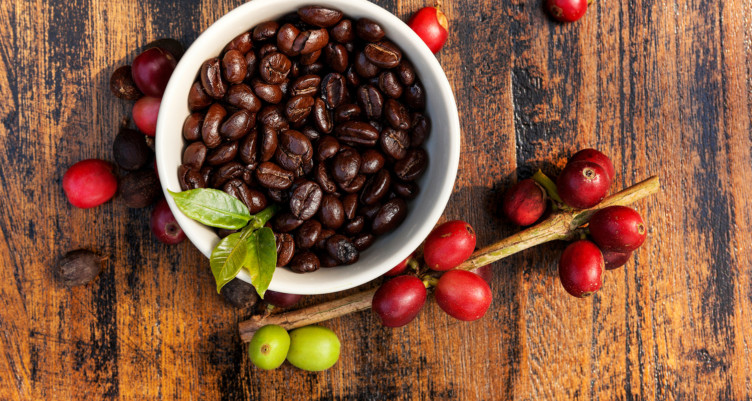
Home coffee roasting has grown from a niche hobby into a genuine movement among serious coffee drinkers. Green beans — raw and unroasted — are significantly cheaper than pre-roasted equivalents, often running $5–$9 per pound versus $18–$30 for specialty roasted coffee. They stay fresh for up to two years in proper storage. Roast a small batch, grind it the next day, and you'll experience a complexity of flavor that most people don't even know coffee is capable of. You can explore Ethiopian Yirgacheffe, Colombian Huila, or Panama Geisha on your own terms and on your own timeline. The coffee roasting process transforms those dense, grassy-smelling seeds into the aromatic beans we brew — and doing it yourself puts you in complete control of that transformation.
This guide covers 7 of the best home coffee roasters in 2026 across every major roaster category — fluid bed air roasters, drum roasters, electric pan machines, and manual ceramic hand roasters. We've reviewed each one based on capacity, temperature control, ease of use, roast consistency, and value. Whether you're a first-time roaster looking for something plug-and-play, or an experienced home roaster ready to upgrade your setup, you'll find the right pick here.
Keep in mind: once you're roasting at home, you'll want a quality grinder to match. Fresh beans deserve a proper grind — see our guide to the best burr grinders for recommendations at every price point. And for storing your green beans between roasting sessions, our best coffee storage containers guide has everything you need to keep them at peak quality for the long haul.
Why Roast Coffee at Home?

The pitch for home roasting is simple once you understand what you're getting:
- Peak freshness guaranteed — roast on demand, brew within days, not weeks
- Major cost savings — green beans cost 40–60% less than equivalent specialty roasted coffee
- Full roast control — you decide light, medium, or dark; no one else's preferences involved
- Access to rare varieties — source microlot and single-origin beans not available pre-roasted at retail
- Deeper coffee knowledge — roasting teaches you more about how origin, process, and roast level interact than any coffee class
Types of Home Coffee Roasters

Before buying, know which style of roaster suits your workflow.
Fluid Bed (Air) Roasters
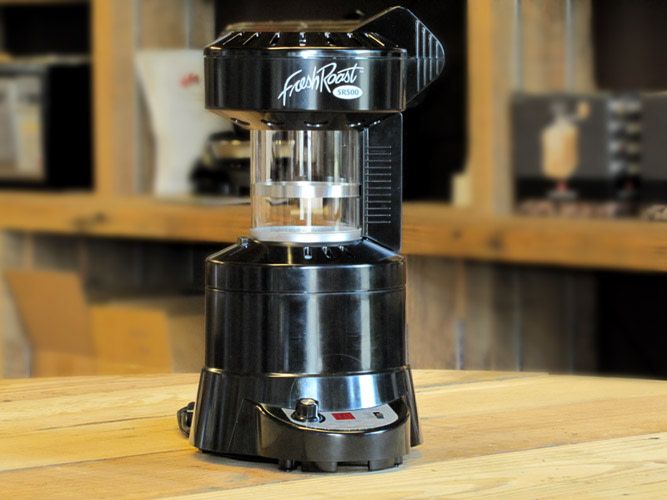
Hot air suspends and spins the beans during roasting. Roasts are fast (8–14 minutes), chaff is blown away automatically, and the machines are compact and easy to clean. Best for highlighting bright, fruity, and floral notes in light-to-medium roasts. The Fresh Roast SR540 and SR800 are the benchmark fluid bed roasters for home use.
Drum Roasters
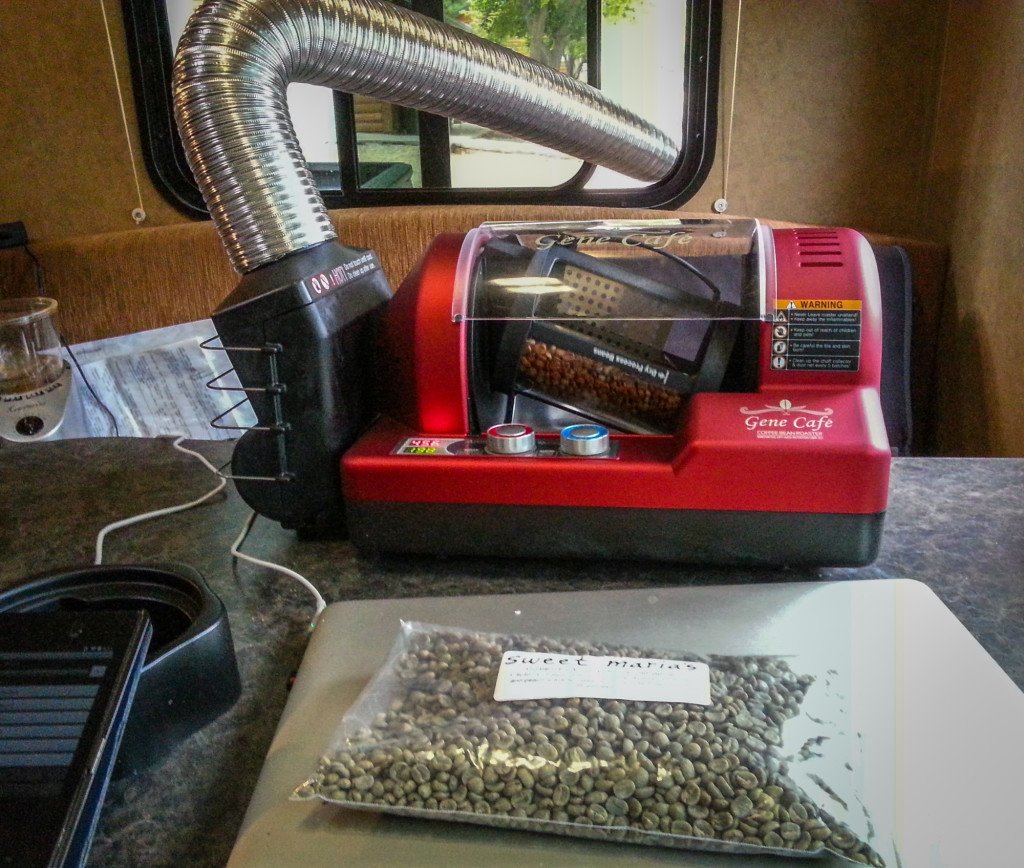
Beans tumble in a rotating drum, mimicking commercial roasting equipment. Slower roasts (15–20 minutes) allow more flavor development, especially for medium-dark and dark profiles. Better suited for dense, hard beans and larger batches. The KALDI FORTIS PLUS in this guide is a premium gas drum roaster.
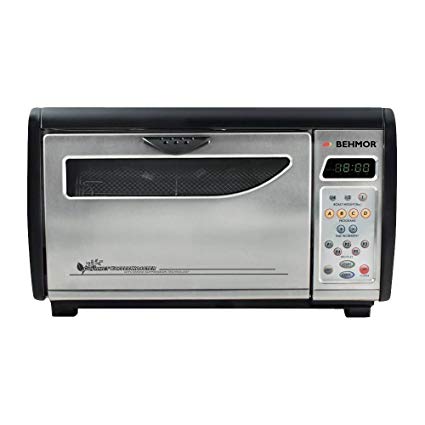
Manual / Stovetop Roasters
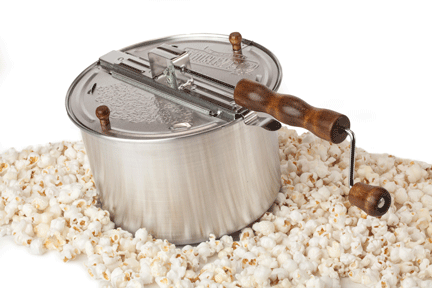
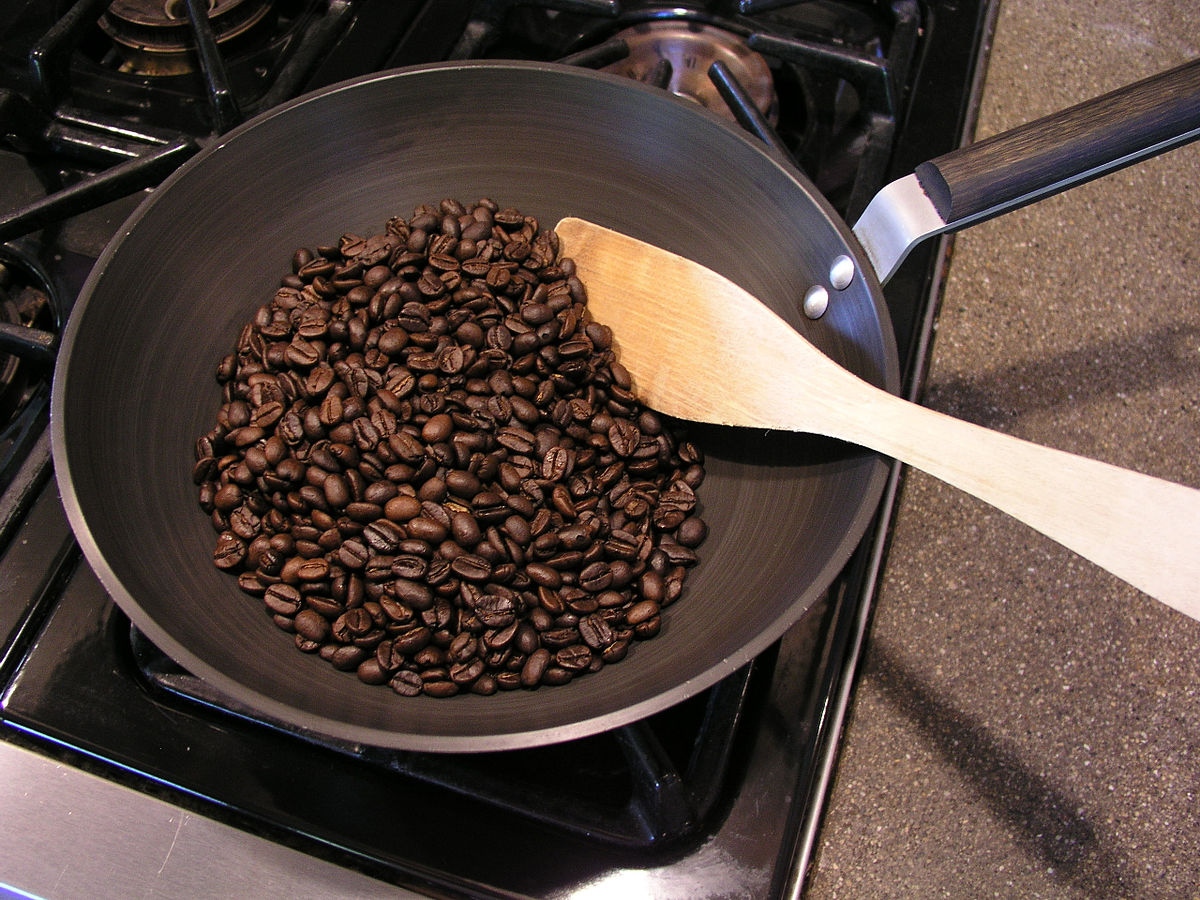
The most affordable way to roast. Ceramic hand roasters like the Nuvo Eco and stovetop poppers like the Whirley Pop use manual agitation over a flame. No electricity, no automation — just you, a burner, and your senses. Great for learning the fundamentals of roasting before investing in a machine.
Electric Pan / Stirrer Roasters
A flat heated pan with a motorized stirring arm. Machines like the JIAWANSHUN and BOCABOCA 250 offer larger batch capacity and a transparent glass lid so you can watch the roast progress. They're more affordable than air roasters but sacrifice some roast evenness. A solid middle-ground option for casual home roasters who want more capacity than a fluid bed can offer.
Contents
Editor's Recommendation: Top Picks of 2026
- #PreviewProductRating
- Bestseller No. 1
 Rating:

- Bestseller No. 2
 Rating:
 - Bestseller No. 3
 Rating:
 - Bestseller No. 4
 Rating:
 - Bestseller No. 5
 Rating:
 - Bestseller No. 6
 Rating:
 - Bestseller No. 7
 Rating:
Our Hands-On Reviews
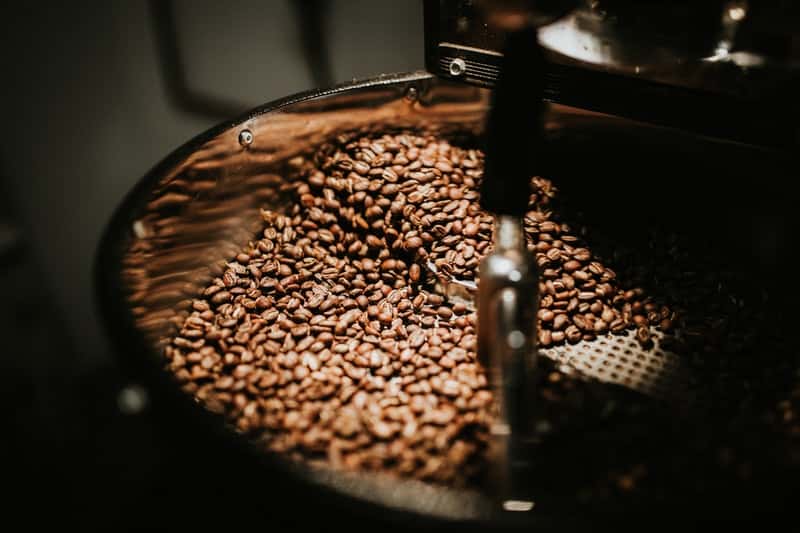
We put each roaster through multiple sessions using a variety of green beans — washed Ethiopians, natural-processed Brazilians, and dense Colombian lots — and evaluated them on roast evenness, temperature accuracy, ease of use, build quality, and repeatability. Here's the full breakdown.
1. Fresh Roast SR540 — Best for Beginners
The Fresh Roast SR540 is the go-to entry point for home roasting in 2026, and it earns that reputation without compromise. It uses a fluid bed system — a column of hot air that lifts and tumbles beans continuously — to roast up to 120 grams (about 4 oz) in under 10 minutes. Nine adjustable heat levels and variable fan speed give you genuine control over the roast profile without overwhelming you with complexity. The real-time temperature display keeps you informed at a glance.
What makes the SR540 stand out among beginner roasters is how quickly it produces excellent results. Load your green beans, set your heat level and fan speed, and watch through the glass roasting chamber as the beans transform from green to yellow to brown. You'll hear the first crack — a sound like popcorn popping — that signals a light-to-medium roast is complete. Stop there or push to second crack for a darker, bolder profile. The speed roasting system ensures even heat distribution throughout the batch, which is the most common failure point on budget fluid bed roasters.
This machine roasts 7–14 cups' worth of coffee in a single session — enough for one to two days of brewing for a typical household. The SR540 is the smartest first roaster you can buy if you want to learn the craft without a steep learning curve or a large upfront investment. It handles everything from delicate Ethiopian naturals to full-city Colombian roasts with consistency that surprises most first-time users.
Pros:
- Nine heat levels and variable fan speed for genuine roast control
- Real-time temperature display — no guesswork
- Roasts a full batch in under 10 minutes
- Compatible with decaf, organic, and fair-trade green beans
- Compact footprint, easy to store
- Glass chamber lets you visually monitor roast progress
Cons:
- 120g batch size is limiting if you brew for multiple people daily
- Chaff collector fills up quickly with heavily silvered beans
- Noisy — fluid bed roasters are inherently loud
2. Fresh Roast SR800 Bundle — Best Complete Kit
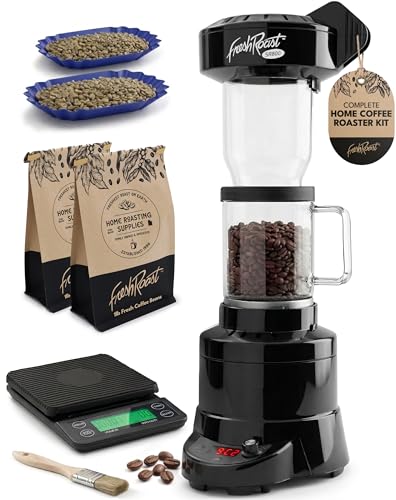
The Fresh Roast SR800 Bundle is the everything-you-need package for anyone who wants to skip the piecemeal approach and start roasting at a serious level from day one. At its core is the SR800, the bigger sibling of the SR540 — it roasts 6–8 oz (170–225g) per batch, roughly 50% more capacity than the SR540. The included glass extension tube improves bean agitation and heat distribution by giving the beans more vertical movement during the roast, which translates to more even color development batch to batch.
What elevates this bundle above just buying the SR800 alone is the digital pour-over scale. You weigh beans before and after roasting to calculate exact percentage weight loss — a key metric for understanding and repeating roast profiles. Lose 12% weight and you're in light roast territory; push to 18–20% and you're hitting full city or beyond. The scale doubles as a brewing timer for pour-over, making it genuinely useful beyond just the roasting workflow. The included 2-lb green bean sample pack lets you start roasting the day the box arrives.
The SR800 Bundle is the top pick for serious beginners and intermediate roasters who want a complete, professional-grade setup without sourcing each component separately. The glass extension alone is worth adding even if you already own the base SR800 — it noticeably improves roast consistency on harder, denser beans.
Pros:
- SR800 roasts 6–8 oz per batch — significantly more than the SR540
- Glass extension tube improves bean agitation and heat distribution
- Digital scale allows precise pre/post-roast weight measurement
- Built-in scale timer is ideal for pour-over brewing
- Includes green bean samples to start roasting immediately
- Comprehensive kit eliminates the need for multiple separate purchases
Cons:
- Higher price point than buying the roaster alone
- Bundle components vary — confirm what's in the specific listing before ordering
- Still loud, like all fluid bed roasters
3. Nuvo Eco Ceramic Handy Coffee Bean Roaster — Best Manual Roaster
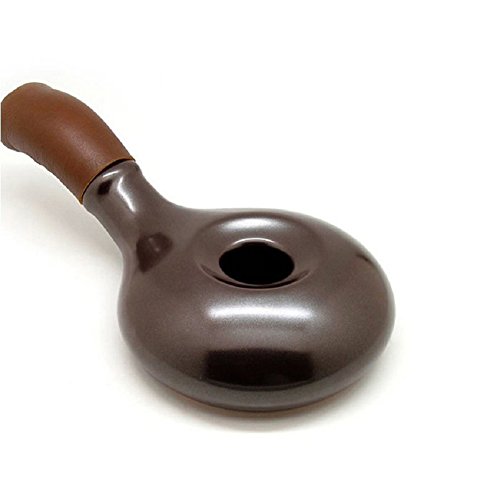
The Nuvo Eco is in a completely different category from every other roaster in this guide. It's a 100% ceramic hand roaster — no electricity, no automation, no digital displays. You hold it by the genuine cowhide grip handle, place it over a gas burner, and rotate it manually throughout the roast. The waffle-shaped internal ceramic structure ensures beans tumble and roll evenly as you work, which is critical for consistent color development without hot spots.
Roasting with the Nuvo takes 10–15 minutes of active, attentive work. You'll shake and rotate the roaster constantly, listening for first crack and watching the color change through the open spout. It's intimate and sensory in a way no electric machine can replicate. The ceramic body retains and radiates heat beautifully and has no plastic or metal parts that can impart off-flavors. The Nuvo Eco is the purest, most tactile home roasting experience available in 2026 — and at its price, it's also the lowest-risk way to find out if home roasting is for you before investing in a machine.
Batch size is small — roughly 50–75g at a time — so it won't replace a fluid bed roaster for daily brewing. But as a travel companion, a camping setup, or a meditative weekend ritual, it's hard to beat.
Pros:
- 100% ceramic — no plastic, no electronics, no failure points
- Waffle interior ensures even bean agitation and roast
- Genuine cowhide grip stays cool and comfortable during roasting
- Ultra-affordable entry into home roasting
- Works over any gas flame — stove, camping burner, outdoor grill
- Durable and essentially maintenance-free
Cons:
- Requires continuous manual agitation — fully hands-on for 10–15 minutes
- Small batch size — not practical for daily household use
- No temperature control or monitoring — relies entirely on your judgment
- Requires a gas burner; doesn't work on electric or induction cooktops
4. KALDI FORTIS PLUS Home Coffee Gas Roaster — Best Drum Roaster
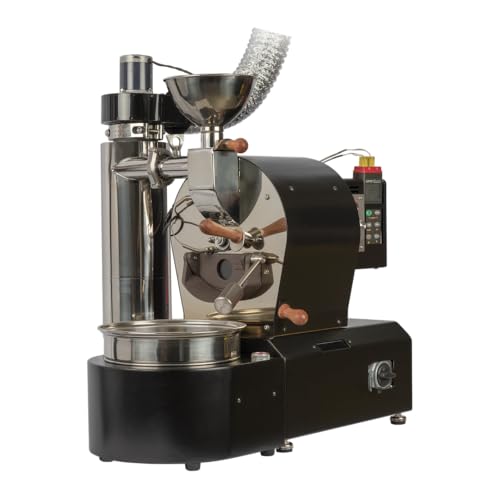
The KALDI FORTIS PLUS is a serious piece of equipment for roasters who have outgrown the limitations of fluid bed machines and want commercial-style results at home. It's a gas-powered drum roaster with a 600g (about 1.3 lb) capacity — five times the batch size of the Fresh Roast SR540. The "Fortis Plus" represents an upgrade over the standard Fortis model with the addition of a cyclone exhaust system integrated alongside the natural exhaust pathway. The result is improved chaff removal and more consistent airflow through the drum, which directly affects roast evenness.
The KALDI supports direct connection to the Artisan roasting software via its direct flame type drum, making it a legitimate tool for roasters who want to log and profile their roasts with precision. You control heat via your gas burner, and the motor-driven drum rotates your beans continuously throughout the roast. The FORTIS PLUS delivers the closest thing to a commercial café roasting experience in a home-scale machine. It requires more skill than electric options — you're managing gas heat manually, reading the beans by sight, sound, and smell — but the reward is complete control over every roast variable.
Note: you'll need a separate gas burner to use this machine. It's not a plug-in appliance. That's a feature, not a bug — the gas heat source is what gives it commercial-grade responsiveness.
Pros:
- 600g capacity — the largest batch in this guide
- Upgraded cyclone + natural exhaust system for superior airflow
- Compatible with Artisan roasting software (direct flame type drum)
- Gas-powered for true heat responsiveness and control
- Commercial drum design produces complex, well-developed roast profiles
- Built for long-term, repeated use at a serious level
Cons:
- Requires a separate gas burner — not included
- Steeper learning curve than electric or air roasters
- Significantly higher price point
- Outdoor or well-ventilated use strongly recommended due to smoke
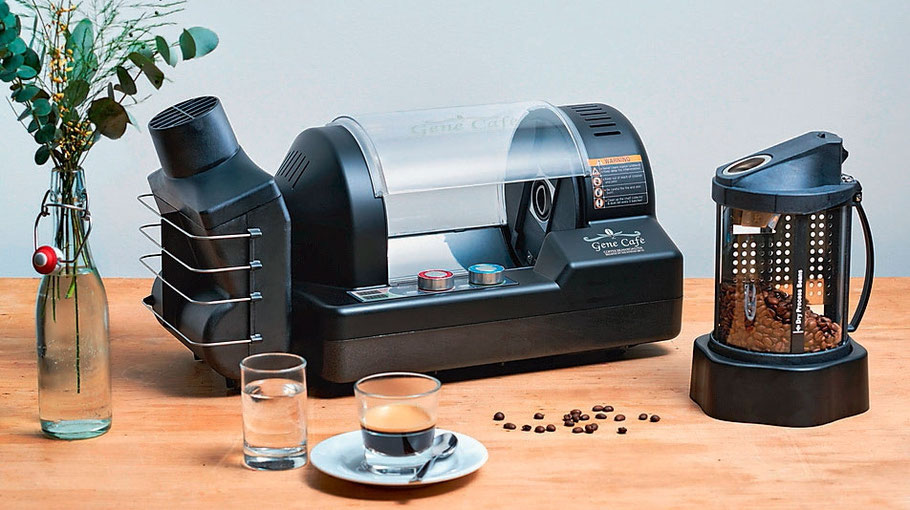
5. JIAWANSHUN Upgraded Electric Coffee Bean Roaster — Best Budget Electric
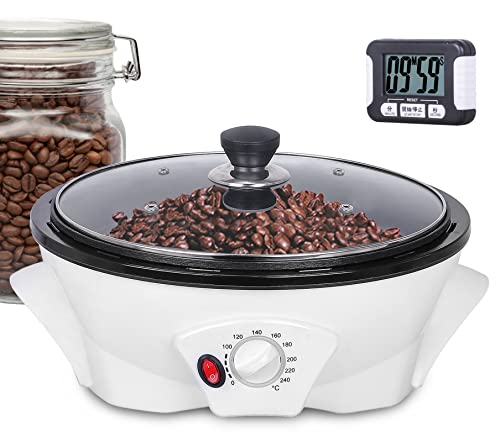
The JIAWANSHUN Electric Coffee Bean Roaster takes a different mechanical approach than the fluid bed machines: it uses a flat heated pan with an automatic mixing rod that rotates beans continuously at a uniform speed. The key spec here is the adjustable temperature range — 0 to 240°C — paired with a built-in timer. That combination gives you genuine roast control at a price point that undercuts the Fresh Roast machines significantly.
The transparent glass cover with four ventilation holes is a major usability win. You can observe the color and progression of your roast in real time and smell the aromatics at each stage — early caramel sweetness, developing nuttiness, and the smoky richness that signals a dark roast. The honeycomb non-stick pan bottom wipes clean with a damp cloth. Best roast results come from batches of 300–500g; below 300g, bean agitation becomes uneven. The mixing rod does the tumbling work automatically, so this machine requires significantly less hands-on attention than a manual roaster. For roasters on a tight budget who still want temperature and timer control, the JIAWANSHUN punches well above its price.
As a bonus, it handles nuts, peanuts, seeds, and popcorn — making it genuinely multi-purpose in the kitchen.
Pros:
- 0–240°C adjustable temperature with timer — genuine roast control
- Up to 800g capacity (best at 300–500g)
- Transparent glass cover for real-time visual monitoring
- Automatic mixing rod handles agitation — no manual rotation needed
- Honeycomb non-stick base cleans easily
- Multi-use: nuts, seeds, popcorn in addition to coffee
Cons:
- Roast evenness less consistent than fluid bed or drum roasters
- Under 300g batches produce uneven results
- No chaff collection — chaff must be managed externally
- Less precise heat delivery than dedicated coffee roasters
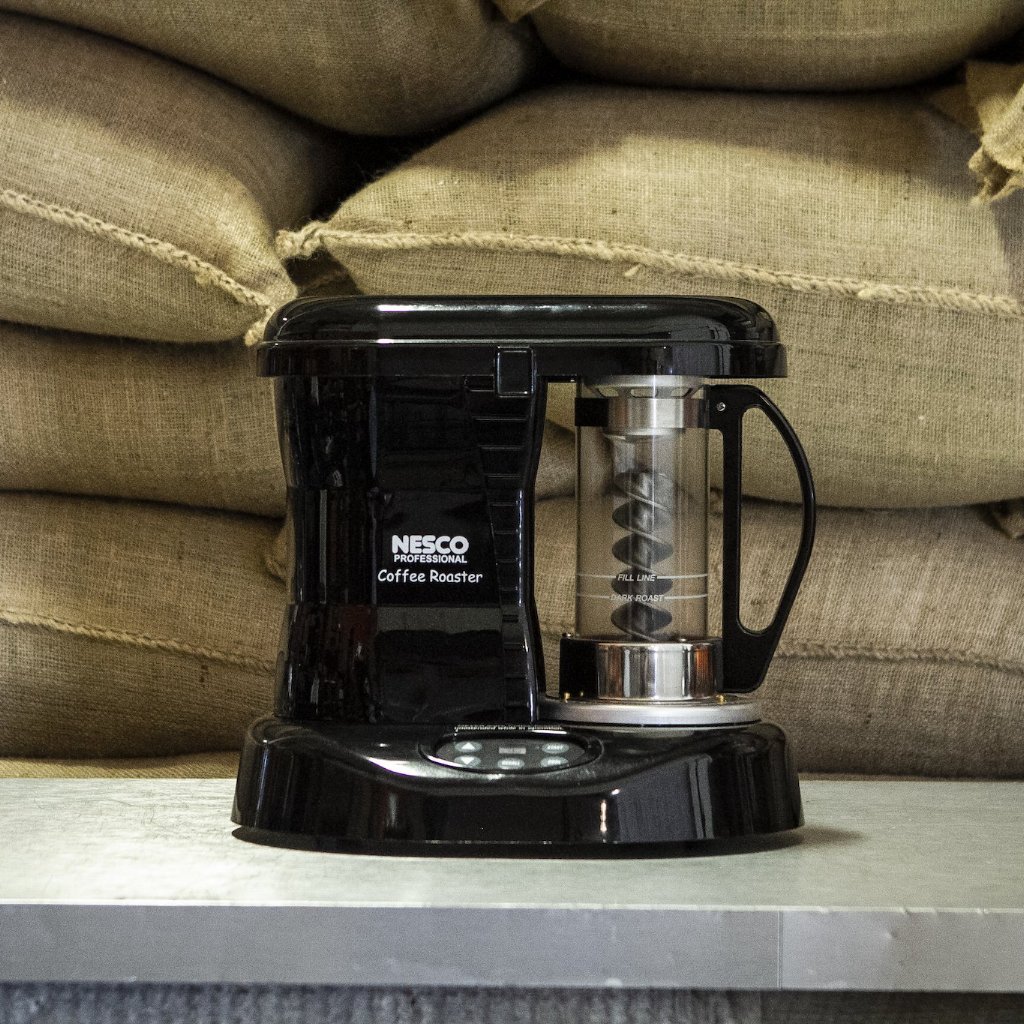
6. Sandbox Smart R2 Home Coffee Roaster — Best Smart Roaster
The Sandbox Smart R2 is the most technologically sophisticated roaster in this guide. It connects to a companion app, allows you to program and save custom roast profiles, and uses a quartz heating tube for fast, even heat distribution. The 550g (19.5 oz) max capacity makes it suitable for families or anyone who brews more than a couple of cups daily. The patented bean loading and release design is a genuine standout — loading green beans and ejecting roasted ones is cleaner and more intuitive than any competing machine we've tested.
The quartz heating element is a meaningful upgrade over ceramic or coil heaters. It reaches target temperatures faster, maintains them more consistently, and responds to adjustments with less lag. That responsiveness matters when you're trying to hit a specific temperature window at first or second crack. The app integration allows you to log roasts, track batch data, and share profiles with other R2 users — a feature that appeals strongly to the analytically-minded coffee enthusiast who wants to improve systematically.
The R2 isn't cheap, but it occupies a unique niche: the features of a professional-grade machine in a form factor designed for everyday home use. If you want the data-driven roasting experience without moving to a commercial drum roaster setup, this is your machine.
Pros:
- App connectivity for programmable and repeatable roast profiles
- Quartz heating tube — faster, more even heat than conventional elements
- 550g capacity — one of the larger fluid bed-style offerings
- Patented bean loading/release design for clean, easy operation
- Profile logging and sharing through the companion app
- Compact and well-built for a smart appliance
Cons:
- Higher price than most home roasters in this guide
- App dependency means functionality is tied to software support longevity
- Overkill for casual or occasional roasters

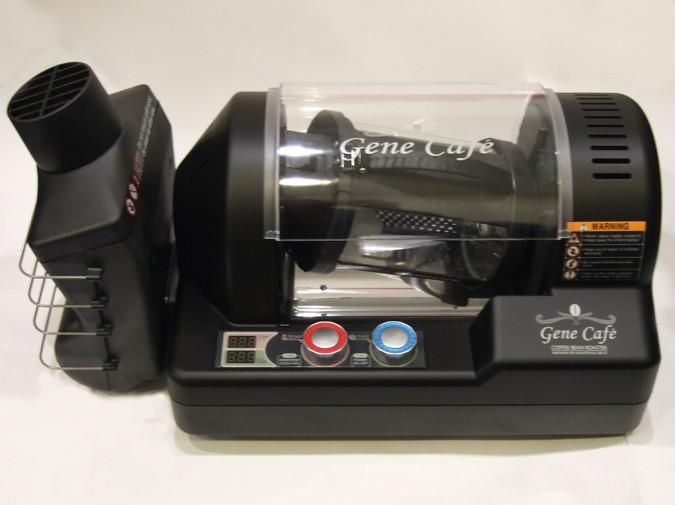
7. BOCABOCA Coffee Bean Roaster 250 — Best for Dedicated Home Roasters
The BOCABOCA 250 is a purpose-built home roasting machine with an integrated cooling system — a feature that's rare at this price level and genuinely important for roast quality. After roasting, beans need to be cooled quickly to lock in flavor development and stop the roast from continuing via residual heat. Many machines leave this step to you (spreading beans on a colander and fanning them). The BOCABOCA handles it automatically, which means more consistent results and less active effort after the roast cycle ends.
The machine is designed for barista-level home use and comes with an English-language guide, making it accessible for first-time roasters. The 110V power compatibility works natively on US outlets without any converter. It's a robust, straightforward machine that prioritizes practical roasting workflow over app integration or digital complexity. The built-in cooler is the BOCABOCA's defining feature and the reason serious home roasters choose it over simpler alternatives that leave the cooling step to chance.
If you're the type of person who brews with intention — someone who invests in quality beans and cares about repeatability — the BOCABOCA 250 fits naturally into a workflow that includes a quality grinder and careful storage. Check out our roundup of the best Arabica coffee beans to pair with this machine for outstanding results.
Pros:
- Integrated cooling system — automatic post-roast cooling for better flavor stability
- Designed for serious home and café-adjacent use
- English guide included — accessible for beginners despite professional-grade design
- Native 110V compatibility for the US market
- Durable construction built for repeated daily use
Cons:
- Limited Amazon reviews compared to more established brands
- Higher upfront cost than basic electric pan roasters
- Fewer advanced profiling features compared to the Sandbox R2
How to Pick the Best Home Coffee Roaster
With roasters ranging from $30 ceramic hand tools to $500+ smart machines, it's easy to buy the wrong one. Here are the key factors that actually matter when choosing a home coffee roaster in 2026.
Roaster Type: Match the Machine to Your Lifestyle
Your honest answer to this question determines everything:
- You want easy, fast results with minimal learning curve → Fluid bed roaster (SR540 or SR800). Load, start, done in 10 minutes.
- You want hands-on control over every roast variable → Drum roaster (KALDI FORTIS PLUS). Rewarding but demands time and skill.
- You want to try roasting without financial commitment → Manual ceramic (Nuvo Eco). Lowest risk, most tactile experience.
- You want large batches and don't need to babysit the roast → Electric pan roaster (JIAWANSHUN). Set temperature and timer, walk away.
- You want data, profiles, and app control → Smart roaster (Sandbox R2). Built for analytical roasters who track everything.
- You want professional results with automatic cooling → Dedicated home roaster (BOCABOCA 250). Best for daily serious use.
Capacity: How Much Coffee Do You Actually Drink?
Match roast batch size to your weekly consumption, not your aspirations. Home roasters lose 15–20% of bean weight during the roast, so a 120g green bean charge yields roughly 95–100g of roasted coffee. Here's a practical guide:
- Solo drinker or occasional brewer → 100–150g per batch (SR540, Nuvo Eco) — one batch per 3–5 days
- 2-person household, daily brewing → 170–250g per batch (SR800) — every 2–3 days
- Family or frequent entertaining → 400–600g per batch (KALDI FORTIS PLUS, JIAWANSHUN) — twice a week
Don't over-roast in bulk. Roasted beans peak in flavor 12–48 hours after roasting and begin degrading noticeably after 7–10 days. Roast smaller batches more frequently for the best results.
Temperature Control and Roast Precision
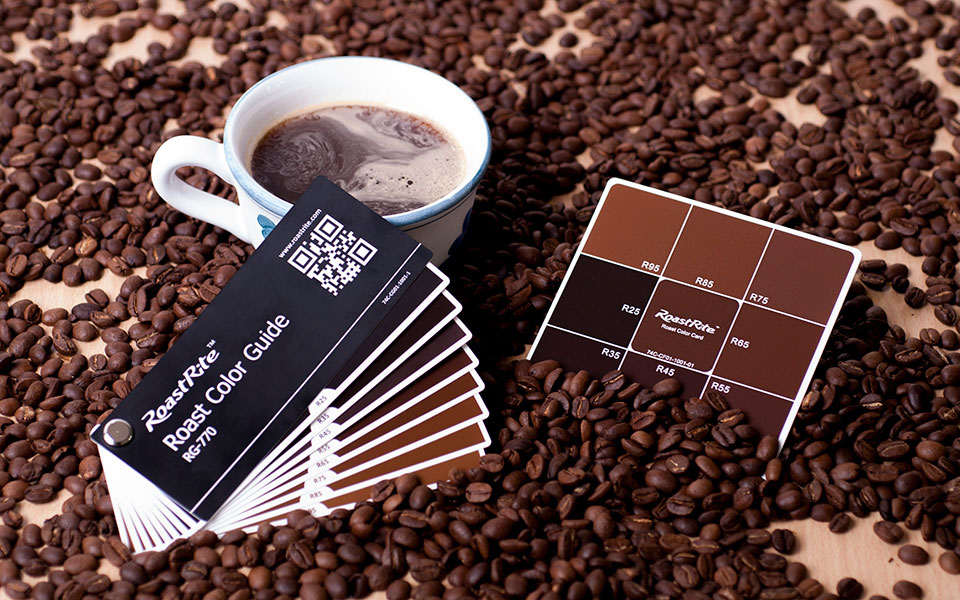
Understanding roast levels helps you choose a machine with the right amount of control:
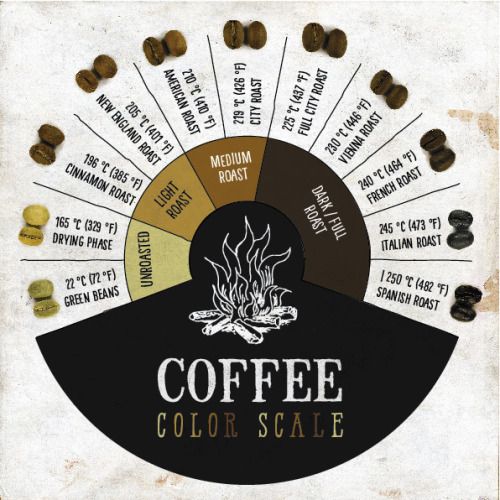
- Light roast — 195–205°C, just past first crack. Bright, acidic, complex origin flavors preserved.
- Medium roast — 210–220°C, between first and second crack. Balanced sweetness and body, some origin character.
- Dark roast — 225–240°C, into second crack. Bold, smoky, lower acidity. Origin character largely replaced by roast character.
Fluid bed roasters with digital temperature displays (SR540, SR800) make hitting these targets repeatable. Manual roasters require you to read color and listen to cracks. Drum and gas roasters give you the most granular control but require the most skill.
Budget: What You Actually Get at Each Price Tier

- Under $50 — Manual ceramic (Nuvo Eco). No automation, best for testing your interest in home roasting.
- $50–$150 — Electric pan roasters (JIAWANSHUN). Timer and temperature control, larger capacity, but lower precision.
- $150–$300 — Entry-level fluid bed machines (SR540). The sweet spot for most home roasters. Excellent results, reliable design.
- $300–$500 — Mid-range fluid bed bundles (SR800 Bundle), smart roasters (Sandbox R2), dedicated machines (BOCABOCA 250). Professional results, advanced features.
- $500+ — Gas drum roasters (KALDI FORTIS PLUS). Enthusiast and semi-professional territory. Not for casual use.
Don't forget to factor in the cost of green beans and a quality grinder. A home roasting setup that includes a roaster, a green bean supply, and a good burr grinder will still cost less per year than buying pre-roasted specialty coffee at retail prices — often substantially less. Explore coffee accessories to round out your home coffee station with everything you need for the complete setup.
Going Deeper: Airflow, Cooling, and Smoke Management
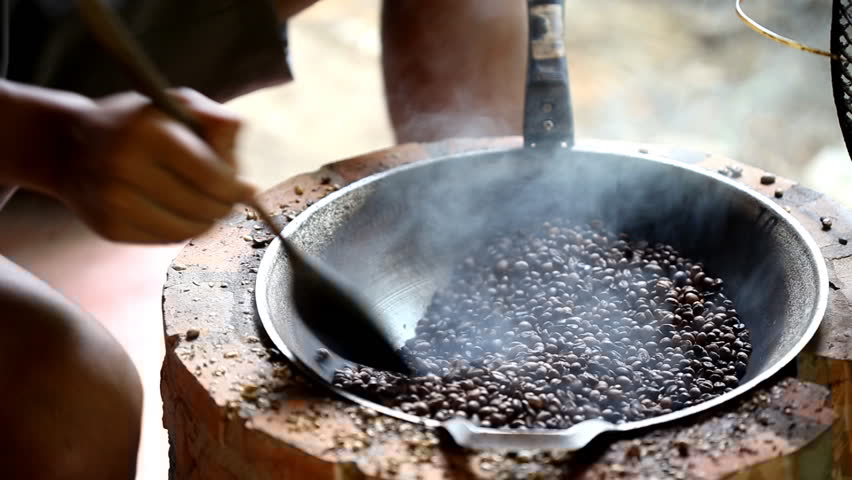
Three things first-time buyers overlook until they've already bought the wrong machine:
- Smoke: All roasters produce smoke, especially at medium-dark and dark roast levels. Fluid bed roasters produce less than drum roasters. If you're roasting indoors, ensure strong ventilation — range hood extraction or an open window with a fan. Drum roasters should be used outdoors or in a garage.
- Cooling: After roasting, beans must cool quickly. Fluid bed machines handle cooling automatically. Pan roasters and drum roasters typically require you to spread beans on a colander and fan them manually, or invest in a separate bean cooler. The BOCABOCA 250's built-in cooler solves this neatly.
- Chaff: Roasting produces chaff — the silver skin that peels off green beans during the roast. Fluid bed roasters collect chaff in a dedicated chamber. Other roaster types blow or shake chaff loose and require external management. Factor cleanup time into your workflow assessment.

After you've roasted your first batch, give the beans 12–24 hours to degas before brewing — fresh-roasted coffee releases CO2 rapidly, and brewing too early can result in a flat, underdeveloped cup. Store rested beans in an airtight container away from light and heat. And invest in a quality grinder: home roasting elevates your bean quality dramatically, but a blade grinder will squander most of that effort. See our roundup of the best coffee grinders for espresso for pairing options if you're planning to pull shots with your home-roasted beans.
Frequently Asked Questions
Is home coffee roasting worth it in 2026?
Yes — for coffee drinkers who value freshness and flavor, home roasting is one of the highest-return investments you can make. Green beans cost significantly less than roasted specialty coffee, they stay fresh for up to two years, and you gain complete control over roast level and timing. The learning curve is real but manageable with a modern fluid bed machine like the Fresh Roast SR540.
How long does it take to roast coffee at home?
Fluid bed roasters like the Fresh Roast SR540 complete a roast in 8–12 minutes. Electric pan roasters typically take 15–25 minutes. Manual ceramic roasters over a gas burner take 10–15 minutes of active, continuous work. Gas drum roasters like the KALDI FORTIS PLUS take 15–20 minutes. Plan on an additional 5–10 minutes for cooling after the roast cycle ends.
What is first crack and second crack?
First crack is the audible popping sound beans make around 196–205°C as moisture and CO2 rapidly escape, similar to popcorn. Stopping here produces a light-to-medium roast with bright acidity and full origin character. Second crack occurs at around 224–230°C as the bean structure begins to fracture. Entering second crack produces dark roasts with lower acidity, heavier body, and prominent roast flavor. Most home roasters target the range between first and second crack for medium profiles.
Where do I buy green coffee beans?
Online green bean suppliers are your best source. Sweet Maria's, Burman Coffee, and Mill City Roasters are reputable US suppliers with excellent variety and freshness. Most will ship 1–5 lb quantities, which is ideal for home roasting experimentation. Look for beans with a clearly listed crop year — you want beans less than 18 months from harvest date. Avoid generic "green bean" listings without origin or processing information.
Do home coffee roasters produce a lot of smoke?
They do produce smoke, particularly past medium roast levels. Fluid bed roasters generate less smoke than drum roasters because of their more contained, high-airflow chamber design. For indoor use, roast under a range hood with the fan on, or open a window with a fan pointed outward. Drum roasters — especially gas-powered models like the KALDI — produce significant smoke and are best used outdoors or in a garage with good airflow.
How does home roasting compare to buying specialty coffee?
Home roasting beats store-bought specialty coffee on freshness every time. Even the best specialty roaster ships beans that are days old by the time they reach you, and continues aging in the bag. Home roasting gives you beans at peak flavor — 12–48 hours post-roast — which translates to noticeably brighter aroma, cleaner flavors, and more complexity in the cup. The quality ceiling is higher, especially when you source exceptional green beans from single-origin lots.

Buy on Walmart
- Fresh Roast SR540 Automatic Coffee Bean Roaster | Roast Coff — Walmart Link
- Fresh Roast Coffee Roaster Bundle SR800, Glass Extension Tub — Walmart Link
- Nuvo Eco Ceramic Handy Coffee Bean Roaster — Walmart Link
- KALDI FORTIS PLUS Home Coffee Gas Roaster - 600g capacity wi — Walmart Link
- JIAWANSHUN Coffee Roaster Upgraded Electric Coffee Bean Roas — Walmart Link
- Sandbox Smart R2 Home Coffee Roaster Machine — Walmart Link
- BOCABOCA Coffee Bean Roaster 250 Home Roasting Machine with — Walmart Link
Buy on eBay
- Fresh Roast SR540 Automatic Coffee Bean Roaster | Roast Coff — eBay Link
- Fresh Roast Coffee Roaster Bundle SR800, Glass Extension Tub — eBay Link
- Nuvo Eco Ceramic Handy Coffee Bean Roaster — eBay Link
- KALDI FORTIS PLUS Home Coffee Gas Roaster - 600g capacity wi — eBay Link
- JIAWANSHUN Coffee Roaster Upgraded Electric Coffee Bean Roas — eBay Link
- Sandbox Smart R2 Home Coffee Roaster Machine — eBay Link
- BOCABOCA Coffee Bean Roaster 250 Home Roasting Machine with — eBay Link
Final Thoughts
Home coffee roasting in 2026 is more accessible than it's ever been — whether you start with the beginner-friendly Fresh Roast SR540, go all-in on the smart Sandbox R2, or keep it simple with the Nuvo Eco ceramic hand roaster, you'll taste a difference in your cup from the very first batch. Pick the machine that honestly fits your lifestyle and brewing volume, source quality green beans, and pair your roaster with a solid burr grinder to make sure every gram of freshly roasted coffee reaches its full potential.


About Selmir Omic
Selmir Omic is a coffee enthusiast and writer based in San Francisco with a particular interest in specialty coffee culture, single-origin beans, and the relationship between roast level and brewing method. He approaches coffee evaluation from a flavor and origin perspective, covering tasting notes, roast profiles, and the farm-to-cup story behind the beans that serious coffee drinkers seek out. At KnowYourGrinder, he covers coffee bean and roast reviews, taste tests, and guides to specialty coffee for readers building their palate and expanding their brewing knowledge.
Get FREE Coffee Gifts now. Or latest free grinders from our best collections.
Disable Ad block to get all the secrets. Once done, hit any button below