A 2024 report from the Specialty Coffee Association confirmed what serious home baristas already knew: grind consistency is the single most influential variable in espresso extraction quality — ranking above water temperature, dose, and machine pressure combined. That one data point tells you everything about why a good burr grinder is the most important piece of equipment in your coffee setup. If you're still using a blade grinder, you're sabotaging every cup before the water even touches the beans.
Burr grinders work by crushing coffee between two abrasive surfaces — burrs — rather than hacking it with a spinning blade. The result is a uniform particle size distribution that extracts evenly. Uniform extraction means a balanced cup: no harsh bitterness from over-extracted fines, no sourness from under-extracted chunks. Every brew method, from espresso to French press, performs measurably better when the grind is consistent. If you want to understand exactly why, our breakdown of blade grinder vs burr grinder differences covers the science in detail.
This guide reviews the seven best burr grinders available in 2026, covering everything from sub-$100 manual hand grinders to precision electric flat burr machines. Whether you're dialing in espresso or optimizing a morning pour-over, you'll find the right grinder here. For the full picture of coffee brewing gear, browse our coffee equipment section. Let's get into it.

Contents
Our Top Picks for 2026
- #PreviewProductRating
- Bestseller No. 1
 Rating:

- Bestseller No. 2
 Rating:
 - Bestseller No. 3
 Rating:
 - Bestseller No. 4
 Rating:
 - Bestseller No. 5
 Rating:
 - Bestseller No. 6
 Rating:
 - Bestseller No. 7
 Rating:
Detailed Product Reviews
1. Baratza Encore ESP Coffee Grinder — Best Overall Burr Grinder
The Baratza Encore ESP earns the top spot on this list for 2026 because it does something rare: it handles both espresso and filter brewing without compromise. The dual-range adjustment system is the key innovation here. Settings #1–20 provide micro-step espresso precision, while settings #21–40 cover the coarser range needed for pour-over, drip, and French press. Most grinders in this price range force you to choose one lane. The Encore ESP covers both.
Baratza's reputation is built on reliability and repairability, and this machine backs that up. The 40mm conical burrs are commercial-grade, and the build quality feels solid — not toy-like. The front-mounted pulse button and hopper-twist grind adjustment make daily use fast and intuitive. You don't need to dig through menus or fiddle with confusing dials. One-handed operation, every morning. It has earned recognition from the Specialty Coffee Association, which is not a marketing claim — it's a peer evaluation from industry professionals who test equipment seriously.
If you're buying your first real burr grinder or upgrading from a budget blade unit, the Encore ESP is where you should land. It's beginner-friendly enough that the learning curve is almost flat, but capable enough to serve you well for years. For those specifically chasing espresso excellence, also read our dedicated guide to the best coffee grinder for espresso to see how it compares to single-purpose espresso grinders.
Pros:
- Dual-range system covers both espresso and filter brewing
- SCA Award-Winning — trusted by coffee professionals
- Simple one-handed grind size adjustment
- Strong Baratza customer support and repairability
- 40-step grind range offers genuine versatility
Cons:
- No digital timer — dosing by weight requires a separate scale
- Plastic construction feels functional rather than premium
2. Baratza Virtuoso+ Coffee Grinder — Best for Precision Dosing
The Baratza Virtuoso+ sits one step above the Encore ESP in Baratza's lineup, and the upgrades are genuinely useful rather than cosmetic. The standout feature is the 40-second digital timer adjustable to one-tenth of a second. That level of control means you can dial in a specific dose and reproduce it perfectly every single day. Pair it with a scale and you have a repeatable workflow that most mid-range grinders can't match. The LED backlit grounds bin is a small touch that matters when you're working in low light — you can see exactly how much coffee has dropped.
The Virtuoso+ uses enhanced commercial-grade conical burrs that Baratza rates for the full spectrum of brew methods: espresso, AeroPress, V60, Chemex, French press, and automatic brewers. Forty grind settings provide enough range to move fluidly between methods without constantly losing your espresso setting. The build quality is a clear step up from budget grinders — the motor is quieter and more consistent, and the machine feels planted on the counter rather than skittering around during grinding.
If you're brewing multiple methods and want documented repeatability — the kind that lets you share a recipe with a friend and get the same result — the Virtuoso+ delivers that. It costs more than the Encore ESP, but the timer and burr upgrade are worth the premium for daily serious brewing.
Pros:
- 40-second digital timer with 0.1-second precision
- LED backlit grounds bin for accurate dosing visibility
- Enhanced commercial-grade conical burrs
- 40 grind settings covering every common brew method
- SCA Award-Winning with Baratza's world-class service backing
Cons:
- Higher price point than the Encore ESP
- Not optimized for deep espresso dialing-in compared to single-purpose espresso grinders
3. Fellow Ode Gen 2 Flat Burr Coffee Grinder — Best Flat Burr for Filter Coffee
Be clear on what the Fellow Ode Gen 2 is and isn't: it does not grind for espresso. That's a deliberate design decision, not a limitation. Fellow engineered the Ode Gen 2 exclusively for brewed coffee — pour-over, French press, cold brew — and by focusing on that one job, they made something genuinely exceptional. The 64mm stainless steel flat burrs with a two-stage grinding geometry produce a particle distribution that's noticeably cleaner and more consistent than conical burr grinders in the same price range. You'll taste the difference in the cup: better clarity, improved extraction yield, and more nuanced flavor development.
The Gen 2 burrs were designed in-house by Fellow, which means they're not using off-the-shelf burr sets. The quiet motor is a real selling point — Fellow specifically eliminated the noisy gearbox and used high-quality materials to bring the decibel level down. If you grind coffee while someone else is sleeping, this matters more than you might expect. The single-dose workflow (no hopper retention) also means every grind is fresh, with no stale grounds sitting in the machine between uses. Anti-static technology keeps grounds from clinging to the chute or the cup.
For filter coffee enthusiasts willing to invest in a purpose-built machine, the Ode Gen 2 is the best option on this list. If you also need espresso capability, you'll need a second grinder — but for pour-over and French press drinkers, this is where the ceiling is at this price point.
Pros:
- 64mm flat burrs deliver exceptional particle clarity and consistency
- Quiet operation — no gearbox noise
- Anti-static design keeps workflow clean
- Single-dose design eliminates stale retention
- 31 precise grind settings cover all filter methods
Cons:
- Cannot grind for espresso — filter coffee only
- Premium price for a single-purpose machine
- No digital timer included
4. Breville BCG820DBL Smart Grinder Pro — Best for Versatility
The Breville Smart Grinder Pro is the most flexible machine on this list. Sixty unique grind settings cover the full range from Turkish-fine to French press coarse, and the precision digital timer adjustable in 0.2-second increments gives you repeatable dose control that rivals grinders costing twice as much. DosIQ technology — Breville's name for their precision timing system — means you can set a grind time and trust that it lands within a few tenths of a gram every time. That's practical repeatability for busy mornings.
What sets the Smart Grinder Pro apart from its competitors is grinding flexibility at the output end. You can grind directly into a portafilter, an airtight container, a paper filter basket, or a gold-tone filter basket. For households with multiple brew setups — an espresso machine, a drip brewer, and an occasional pour-over — this single machine handles all of them without adapters or workarounds. The LCD interface is clear and intuitive. The conical steel burrs are solid, though not at the same level as Baratza's commercial-grade sets.
Breville's design language is premium. The Damson Blue colorway is distinctive, and the build quality reflects the brand's focus on countertop aesthetics. If you want to read more about the company behind this machine, our Breville company overview covers their product philosophy and quality standards in depth. For households that refuse to own three separate grinders, the Smart Grinder Pro is the most sensible single-machine solution available in 2026.
Pros:
- 60 grind settings for the widest adjustment range on this list
- 0.2-second timer increments for precise, repeatable dosing
- Grinds into portafilter, container, filter basket — maximum flexibility
- Clean LCD interface with intuitive controls
- Premium build quality and distinctive design
Cons:
- Conical burrs not quite at Baratza's level for espresso dialing-in
- Static buildup can scatter grounds without occasional cleaning
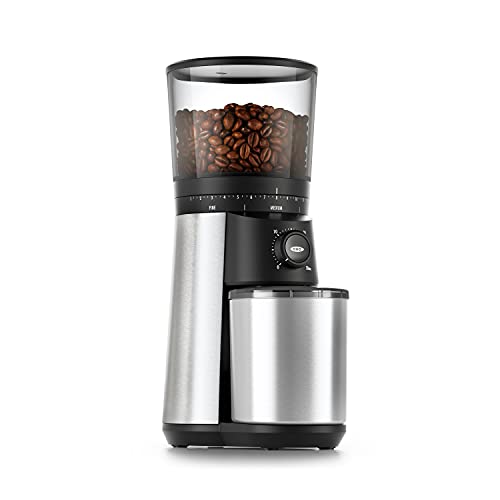
5. OXO Brew Conical Burr Coffee Grinder — Best Budget Electric
OXO built the Brew Conical Burr Grinder around one idea: remove every friction point from the morning routine. The one-touch start with memory is the standout feature — the grinder remembers your last setting, so you push the button and walk away. No resetting, no re-dialing, no mistakes when you're half-awake. Stainless steel conical burrs produce consistent particle sizes across 15 grind settings with micro-adjustments, giving you enough range to cover espresso, drip, pour-over, and French press without professional-level fine-tuning.
The integrated scale system — a built-in timer that runs based on the weight of beans in the hopper — is a thoughtful touch that keeps dosing consistent even as the hopper empties. OXO's build quality is clean and functional: the silver and stainless steel design looks sharp on any counter, and the grounds container seals well to keep coffee fresh between grinds. The noise level is average for this category, neither standout quiet nor particularly loud.
At its price point, the OXO Brew Conical is the best entry into serious home grinding without requiring a major investment. It won't compete with the Baratza lineup on burr quality or adjustment range, but for someone upgrading from a blade grinder for the first time, the gap between this machine and a $200+ grinder is far smaller than the gap between this machine and any blade grinder.
Pros:
- One-touch start with last-setting memory — effortless daily use
- Integrated hopper scale for consistent dosing
- Stainless steel conical burrs produce uniform grounds
- 15 settings plus micro-adjustments for sufficient range
- Clean, attractive design with tight grounds container seal
Cons:
- Fewer settings and less burr precision than Baratza or Breville options
- Not ideal for serious espresso dialing-in
6. 1Zpresso J Manual Coffee Grinder — Best Budget Manual
Manual grinders get a bad reputation from people who've only used cheap ones. The 1Zpresso J erases that reputation. 48mm stainless steel conical burrs in a hand grinder at this price point deliver grinding quality that genuinely outperforms many electric grinders costing significantly more. The 30-click adjustment per rotation gives you fine, reliable control over grind size — enough precision to dial in pour-over and French press accurately, and enough range to handle most brewing methods outside of serious espresso work.
The internal adjustment system is a key design choice. Setting changes are numerical and repeatable: you can move from a V60 setting to French press and back without losing your place. The 35g capacity is enough for two cups at a time, and grinding takes about 60–90 seconds depending on your pace — that's practical, not exhausting. The foldable handle is genuinely useful: push, twist, and it locks flat for storage or travel. For anyone grinding at the office, in a hotel room, or at a campsite, the compact form factor makes this the obvious choice.
If you're traveling frequently, camping, or simply don't want to dedicate counter space to an electric grinder, the 1Zpresso J gives you serious burr performance in a pocketable package. It's also the most economical path to high-quality grinding if budget is your primary constraint.
Pros:
- 48mm stainless steel burrs outperform electric grinders at similar prices
- 30-click adjustment per rotation for precise, repeatable settings
- Compact foldable handle — travel and storage ready
- Numerical internal adjustment system — set and reset easily
- Budget-friendly without sacrificing grind quality
Cons:
- Manual grinding takes 60–90 seconds — not ideal for multiple cups quickly
- 35g capacity limits batch size
- Not optimized for espresso-fine settings
7. Comandante C40 Hand Grinder MK4 — Best Premium Manual
The Comandante C40 MK4 is not a budget purchase. It's a precision instrument. Coffee professionals, competition baristas, and serious home enthusiasts have made the C40 the benchmark against which all other hand grinders are measured, and the MK4 iteration refines an already excellent design. The nitrogen-treated high-alloy steel burrs are the foundation — harder and more precisely machined than what you'll find in any other hand grinder at any price. The result is a particle size distribution that rivals high-end electric flat burr grinders, producing exceptional clarity and sweetness in pour-over and filter applications.
The MK4 redesigned the internal tri-fan axle support to make filling the grinder easier — a practical improvement that matters when you're doing single-dose workflows with 15–20g of coffee. Each MK4 ships with two jars: a brown glass jar for home use (UV-protective, keeps grounds fresh) and a clear polymer jar for travel. Both hold approximately 40g of beans. The German engineering is evident in every detail — the tolerances are tight, the action is smooth, and the grinder feels like it will outlast every electric machine you own.
The C40 is for you if you prioritize grind quality above all else and don't mind the manual workflow. Many specialty coffee professionals use a Comandante as a daily driver precisely because the quality ceiling is higher than what most electric grinders achieve. For everything you need to know about the range of hand grinding options at different price points, see our dedicated guide to the best conical burr coffee grinders.
Pros:
- Nitrogen-treated high-alloy steel burrs — the sharpest and most precise on this list
- Exceptional grind quality rivaling high-end electric flat burr grinders
- Ships with both brown glass and clear polymer jars
- Redesigned tri-fan axle support for easier loading
- Built to last decades with proper care
Cons:
- Premium price — the most expensive option on this list
- Manual operation limits practicality for multiple cups
- No espresso-fine capability in standard configuration
What to Look For When Buying a Burr Grinder
Choosing the right burr grinder means matching the machine to your specific brew methods, budget, and daily workflow. These are the four factors that matter most in 2026.
Burr Type: Flat vs. Conical
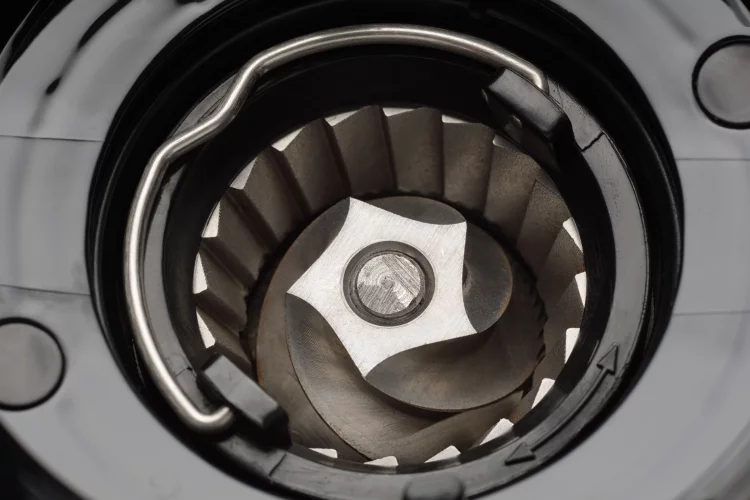
This is the first decision you'll make, and it shapes everything else. According to burr grinder mechanics, the two main designs produce meaningfully different grind profiles.
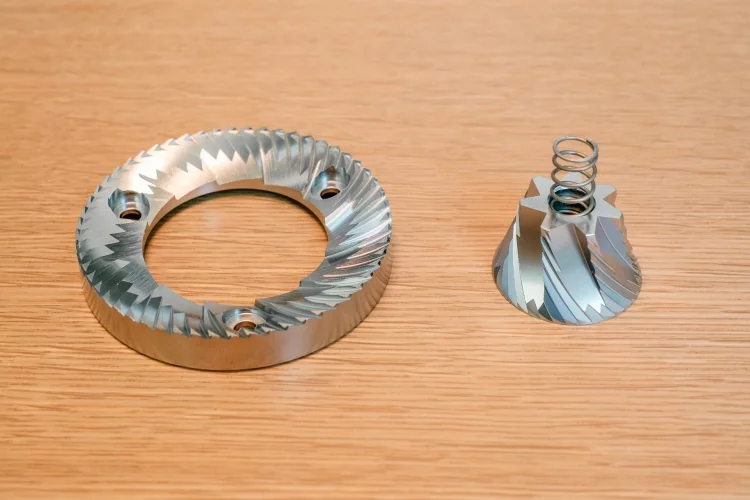
- Flat burrs sit parallel to each other and produce a tighter, more uniform particle distribution. They excel at filter brewing — pour-over, Chemex, cold brew — where clarity and sweetness are the priorities. The Fellow Ode Gen 2 is the example on this list. Flat burrs run hotter and generate more static, but the grind quality ceiling is higher.
- Conical burrs have one burr sitting inside the other at an angle. They run cooler and quieter, retain fewer grounds between uses, and handle a wider range of grind settings — from espresso fine to French press coarse. Baratza, Breville, OXO, and the manual grinders on this list all use conical burrs. They're more versatile for multi-method households.
If you brew only filter coffee and care about maximum cup quality, go flat. If you need espresso capability or brew multiple methods, go conical.
Grind Settings and Adjustment Range
More settings are only valuable if they're evenly distributed across the range you actually use. Consider:
- Espresso requires micro-adjustment — you need dozens of settings just in the fine range. The Baratza Encore ESP's 20 micro-steps for espresso is the right approach.
- Filter methods (pour-over, drip, French press) need coarser settings with reliable consistency at each point.
- 60 settings spread across the full range (like the Breville Smart Grinder Pro) sounds impressive but only matters if those settings are evenly spaced and actually distinct.
- For single-method brewing, fewer settings done well beats more settings done poorly.
Electric vs. Manual
Manual grinders are not inferior — they're a different category with genuine advantages:
- No electricity required — ideal for travel, camping, and small kitchens
- Quieter operation (no motor noise)
- Lower heat generation during grinding (better for light roast clarity)
- The Comandante C40 MK4 produces grind quality that surpasses many electric grinders costing significantly more
The trade-off is speed and convenience. Grinding 30g of coffee by hand takes 60–90 seconds. For single cups, that's fine. For multiple rounds of guests or large batches, electric wins every time.
Dosing and Timer Features
Repeatability is what separates competent grinders from great ones. Look for:
- Digital timer with sub-second precision — the Baratza Virtuoso+ timer (0.1-second increments) and Breville's 0.2-second DosIQ are the standard to aim for
- Memory function — stores your last setting so you don't reset every morning
- Grounds bin clarity — an LED-lit bin (Virtuoso+) or clear container lets you verify your dose visually
- If using a scale instead of a timer, make sure the grinder's output chute is compatible with your workflow
What People Ask
What is a burr grinder and how does it work?
A burr grinder crushes coffee beans between two abrasive surfaces called burrs, rather than cutting them with a spinning blade. The gap between the burrs determines particle size — closer together produces finer grounds for espresso; farther apart produces coarser grounds for French press. Because every bean passes through the same gap, the resulting particle sizes are far more uniform than blade-ground coffee. Uniform particles extract at the same rate, producing a balanced, consistent cup with every brew.
What's the difference between flat burr and conical burr grinders?
Flat burrs sit parallel to each other and produce a very tight, bimodal particle distribution that excels in filter brewing applications — pour-over, Chemex, cold brew. They run hotter and generate more static but produce exceptional cup clarity. Conical burrs have one burr nested inside the other at an angle. They run cooler, quieter, and generate less retention (fewer grounds left in the machine between uses). Conical burrs handle a wider range of settings, making them better suited for households that brew both espresso and filter coffee. Most home grinders under $300 use conical burrs for this reason.
Do I need a different grinder for espresso vs. pour-over?
Ideally, yes — but practically, a dual-range grinder like the Baratza Encore ESP handles both well enough for home use. The challenge is that espresso requires extremely fine, precise adjustment (small changes in grind size create large changes in extraction time and flavor), while filter methods need consistent coarser settings. A grinder optimized purely for espresso wastes its precision range on filter brewing. A grinder optimized for filter brewing often can't go fine enough for espresso. The Encore ESP's dual-range system is specifically designed to solve this problem within a single machine at a reasonable price.
Are manual burr grinders worth buying in 2026?
Yes — absolutely. A quality manual grinder like the Comandante C40 MK4 or the 1Zpresso J produces grind quality that matches or exceeds electric grinders at much higher price points. The burr quality in premium hand grinders is exceptional because the manufacturer doesn't need to build a motor, timer, or housing around the burr set. You get more precision per dollar spent on the grinding mechanism itself. Manual grinders are also quieter, don't require electricity, and travel easily. The only genuine trade-off is time: grinding 30g by hand takes 60–90 seconds, which matters at scale but is trivial for one or two cups.
What grind settings should I use for different brew methods?
Grind settings vary by machine, but the general principle holds across all burr grinders. Espresso needs the finest setting your grinder can achieve — aim for a puck resistance of 20–30 seconds for a 36g yield from 18g of grounds. AeroPress works best at medium-fine, similar to table salt. Pour-over (V60, Chemex) requires medium-coarse, like coarse sand. French press and cold brew use the coarsest setting, resembling sea salt flakes. Always start with the manufacturer's recommendation, then adjust based on your taste: bitter means grind coarser, sour or weak means grind finer.
How often should I clean my burr grinder?
For daily use, a quick brush-out of the grounds chute and bin every week prevents buildup and keeps flavors clean. A deeper burr cleaning — removing and brushing the burr set — should happen every 200–300 grams of coffee ground, or about once a month for most home users. Oily dark roasts clog burrs faster than light roasts and require more frequent cleaning. Never wash burr sets with water unless the manufacturer explicitly says they're water-safe. Grinder cleaning tablets (like Urnex Grindz) are an easy no-disassembly option for monthly maintenance between full cleanings.
Buy on Walmart
- Baratza Encore ESP Coffee Grinder ZCG495BLK, Black — Walmart Link
- Baratza Virtuoso+ Coffee Grinder ZCG587BLK, Black — Walmart Link
- Fellow Ode Gen 2 64mm Flat Burr Coffee Grinder, Single Dose, — Walmart Link
- Breville BCG820DBL Smart Grinder Pro for Coffee and Espresso — Walmart Link
- OXO Brew Conical Burr Coffee Grinder - Silver, Stainless Ste — Walmart Link
- 1Zpresso J Manual Coffee Grinder Silver Capacity 35g with As — Walmart Link
- Comandante C40 Hand Grinder MK4 - Black — Walmart Link
Buy on eBay
- Baratza Encore ESP Coffee Grinder ZCG495BLK, Black — eBay Link
- Baratza Virtuoso+ Coffee Grinder ZCG587BLK, Black — eBay Link
- Fellow Ode Gen 2 64mm Flat Burr Coffee Grinder, Single Dose, — eBay Link
- Breville BCG820DBL Smart Grinder Pro for Coffee and Espresso — eBay Link
- OXO Brew Conical Burr Coffee Grinder - Silver, Stainless Ste — eBay Link
- 1Zpresso J Manual Coffee Grinder Silver Capacity 35g with As — eBay Link
- Comandante C40 Hand Grinder MK4 - Black — eBay Link
Next Steps
- Match your grinder to your primary brew method — if you pull espresso daily, prioritize the Baratza Encore ESP or Virtuoso+; if you brew only filter coffee, look hard at the Fellow Ode Gen 2.
- Check current prices on Amazon for each shortlisted grinder — prices on the Baratza and Breville models fluctuate regularly, and deals appear without warning.
- Read the dedicated espresso grinder guide at Best Coffee Grinder for Espresso if espresso is your primary use case — it covers single-purpose espresso grinders that go beyond what this list includes.
- Consider your budget ceiling honestly — the gap in grind quality between the $100 OXO Brew and the $200 Baratza Virtuoso+ is real and will affect your cup daily; the gap between the Virtuoso+ and grinders at $500+ is smaller and matters mainly to advanced home baristas.
- Order cleaning tablets alongside your grinder — Urnex Grindz or similar products cost under $15 and extend burr life significantly; buying them at setup means you'll actually use them.


About Bryan Albuquerque
Bryan Albuquerque has been passionate about coffee for over a decade, developing hands-on experience with a wide range of home brewing equipment and grinding methods through years of daily practice and systematic testing. His focus is on the grinder side of coffee — burr geometry, grind consistency, retention, and how equipment choices affect extraction across different brewing methods. At KnowYourGrinder, he covers coffee grinder reviews, grind settings guides, and brewing advice for home baristas looking to improve their cup quality.
Get FREE Coffee Gifts now. Or latest free grinders from our best collections.
Disable Ad block to get all the secrets. Once done, hit any button below